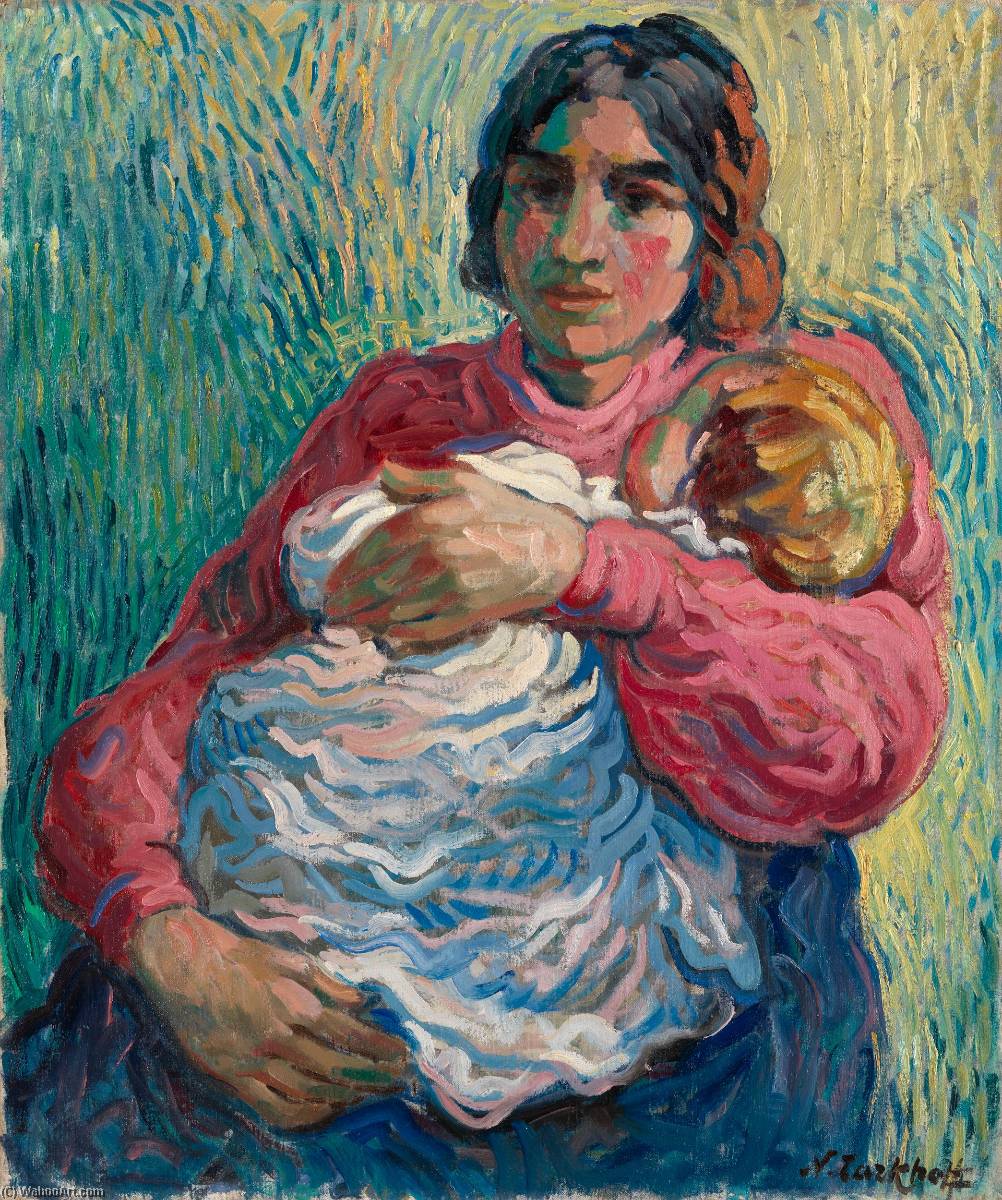
Nicolas Tarkhoff, 1871 – 1930

De 42 beroemdste schilderijen van Nicolas Tarkhoff

Het schilderij dat Nicolas Tarkhoff beroemd maakte, is Madame Tarkhoff with Her Two Children Jean and Boris (1907). Madame Tarkhoff and Her Child (1906) en La Place du Maine, Paris volgen in de harten van verzamelaars en museumbezoekers. Van de 42 werken van Nicolas Tarkhoff in onze catalogus zijn dit de 42 meest bewonderde, elk gepresenteerd met de datum, het museum en wat het uniek maakt.

Gerangschikt op basis van onze populariteitsscore, die de zoekopdrachten, bezoeken en bestellingen voor elk werk combineert. Bijgewerkt in oktober 2026. Elk meesterwerk op deze pagina kan worden besteld als een handgeschilderde olieverfreproductie van museumkwaliteit of als een fine art print, in de door u gekozen afmeting.

Portret van Nicolas Tarkhoff
Nicolas Tarkhoff · 1871 – 1930
Geboren · overleden
1871 – 1930
Stroming
Post-impressionism
Werken in onze catalogus
42
Meest bekend
Madame Tarkhoff with Her Two Children Jean and Boris (1907)

Nicolas Tarkhoff: de tien meesterwerken

Madame Tarkhoff with Her Two Children Jean and Boris (1907) door Nicolas Tarkhoff
1

Madame Tarkhoff with Her Two Children Jean and Boris

1907 · Oil

The composition centers on a woman reclining within the confines of a bed. She is positioned toward the left side of the frame, her body angled to accommodate two children. One child is situated more centrally, appearing awake, while the second child lies toward the right side of the bed in a state of sleep. The woman’s hand is visible in the lower portion of the scene, making contact with…

Madame Tarkhoff and Her Child (1906) door Nicolas Tarkhoff
2

Madame Tarkhoff and Her Child

1906 · Oil

The room holds a heavy, peaceful stillness as a woman reclines upon a bed, her form draped in a deep blue dress. She cradles her infant close to her chest, the two of them sharing a private, soft space amidst the folds of bedding. Sunlight or perhaps a soft lamp filters through the room, catching the texture of the fabric and the gentle curve of a neck adorned with a…

Meer meesterwerken van Nicolas Tarkhoff, van 11 tot 42

Morning by the Water (1907) door Nicolas Tarkhoff
#27

Morning by the Water

1907

The painting Morning by the Water is a beautiful representation of a cityscape by the water, created by the talented artist Nicolas Tarkhoff in 1907. This stunning piece…

Bestel een reproductie →
Landscape (1910) door Nicolas Tarkhoff
#28

Landscape

1910

The Landscape painting by Nicolas Tarkhoff is a beautiful representation of a natural setting, showcasing the artist's ability to capture the essence of the outdoors. Created in 1910,…

Haal het in huis →
My Family door Nicolas Tarkhoff
#29

My Family

The painting My Family by Nicolas Tarkhoff is a beautiful depiction of a woman holding her baby while another child watches from the side. The woman appears to…

Haal het in huis →

De onderwerpen die Nicolas Tarkhoff het meest schilderde

De vier onderwerpen die het meest voorkomen in deze meesterwerken, met van elk het mooiste voorbeeld.

Nicolas Tarkhoff, decennium voor decennium: het iconische schilderij van elk tijdperk

  1. 1890s
  2. 1900s
  3. 1910s

Meesterwerken van Nicolas Tarkhoff: vragen en antwoorden

Waar is Nicolas Tarkhoff het meest bekend om?Toon het antwoord

Madame Tarkhoff with Her Two Children Jean and Boris (1907). Daarna volgen Madame Tarkhoff and Her Child (1906) en La Place du Maine, Paris.

Hoe oud was Nicolas Tarkhoff bij het schilderen van Madame Tarkhoff with Her Two Children Jean and Boris?Toon het antwoord

36 jaar oud: Madame Tarkhoff with Her Two Children Jean and Boris dateert uit 1907 en Nicolas Tarkhoff werd geboren in 1871.

Wat zijn de tien grootste schilderijen van Nicolas Tarkhoff?Toon het antwoord

Madame Tarkhoff with Her Two Children Jean and Boris, Madame Tarkhoff and Her Child, La Place du Maine, Paris, Merry Go Round in Montmarnasse, Goats in the Sunshine, Motherhood, The Kiss, Street Carnival, Paris, Faubourg Saint Antoine en Fair. De bovenstaande ranglijst vermeldt het jaar en het museum van elk werk.

Hoeveel werken heeft Nicolas Tarkhoff geschilderd?Toon het antwoord

Onze catalogus bevat 42 werken van Nicolas Tarkhoff, gedateerd van 1899 tot 1912.

Wanneer schilderde Nicolas Tarkhoff de meesterwerken?Toon het antwoord

In 1900s: 21 van de 42 werken op deze pagina dateren uit die periode, waaronder Madame Tarkhoff with Her Two Children Jean and Boris.

Wat zijn de eerste en laatste beroemde schilderijen van Nicolas Tarkhoff?Toon het antwoord

De oudste op deze pagina is Landscape with Houses (1899), de nieuwste Landscape with Trees, Flowers and Peasant with Plough (1912).

Wat waren de favoriete onderwerpen van Nicolas Tarkhoff?Toon het antwoord

Woman (2), Child (2) en Bed (2), van de 42 werken op deze pagina.

Welke techniek had Nicolas Tarkhoff de voorkeur?Toon het antwoord

Oil: 2 van de 42 werken op deze pagina.

Bij welke kunststroming hoort Nicolas Tarkhoff?Toon het antwoord

Post-impressionism, zoals de schilderijen op deze pagina laten zien.

Kan ik een reproductie van een meesterwerk van Nicolas Tarkhoff bezitten?Toon het antwoord

Ja. Elk schilderij op deze pagina kan worden besteld als een handgeschilderde olieverfreproductie van museumkwaliteit of als een fine art print, in de door u gekozen afmeting, via de eigen pagina van het schilderij.

Het leven van Nicolas Tarkhoff

Early Life and Artistic Awakening

Nicolas Alexandrovich Tarkhoff, born in Moscow on January 20, 1871, emerged from a family of prosperous merchants—a background that initially seemed destined for commerce rather than canvas. However, the young Tarkhoff possessed an innate artistic inclination, described as a “fervent desire to be a painter.” Tragedy marked his childhood; he lost his mother at age three and his father eight years later, experiences that perhaps fostered a sensitivity reflected in his later work. Despite this early loss, his passion for art persisted, though it faced initial resistance from his family who favored more conventional paths. He briefly fulfilled military obligations before finding employment with the Brest-Litovsk Railways—a period of deferment before fully embracing his artistic calling. In 1894, he bravely attempted entry into the School of Painting, Sculpture and Architecture in Moscow, but was rejected due to what was perceived as a “revolutionary temperament.” This rejection didn’t deter him; instead, it propelled him towards Konstantin Korovin's studio in 1897, where he found mentorship within Moscow’s vibrant artistic circles.

Parisian Influences and the Embrace of Post-Impressionism

The late 1890s witnessed a pivotal shift as Tarkhoff journeyed to Paris, a city already pulsating with avant-garde energy. He initially settled in Munich before permanently relocating to the French capital in November 1898. Paris offered not just a change of scenery but an immersion into a world brimming with artistic innovation. Though he enrolled at the Académie Julian under Jean-Paul Laurens, his independent spirit soon led him away from strict academic constraints. He also studied with Luc-Olivier Merson, yet it was the works of Van Gogh, Gauguin, and Cézanne that truly ignited his artistic evolution. These masters revealed “hidden talents” and charted a new course for Tarkhoff’s style—one characterized by expressive brushstrokes, bold color palettes, and an exploration of subjective experience. He quickly absorbed the lessons of Impressionism but moved beyond its purely optical concerns, embracing a more emotionally charged approach that would define his Post-Impressionist identity.

Themes and Techniques: Capturing Light and Emotion

Tarkhoff’s oeuvre is remarkably diverse, encompassing landscapes, genre scenes, still lifes, and portraits. However, certain themes consistently emerge—the bustling life of Paris, the tranquility of rural settings, and intimate moments of family connection. His Parisian paintings capture the energy of boulevards, carnivals, and racing cabs, while his later works reflect a settled life in Orsay, where he resided with his family from 1911. He masterfully employed oil paint to convey not just visual reality but also atmosphere and feeling. Textured brushwork became a hallmark of his style, creating surfaces that shimmered with light and movement. He wasn’t merely depicting scenes; he was translating emotions onto canvas. His use of color was equally significant—vibrant hues were often juxtaposed to create dynamic contrasts and evoke specific moods. Works like “Goats in the Sunshine” exemplify this approach, showcasing a rural idyll bathed in warm light and imbued with a sense of peacefulness. “My Family,” painted during his Russian Post-Impressionist period, reveals a heartwarming tenderness through its expressive style and careful attention to detail.

Recognition and Legacy

Nicolas Tarkhoff achieved considerable recognition during his lifetime, participating in numerous exhibitions across Europe. His work resonated with audiences who appreciated his unique blend of Impressionistic techniques and Post-Impressionist sensibilities. He exhibited at La Libre Esthétique in Paris, showcasing pieces like “Un Jour de neige” and “Notre-Dame,” alongside other prominent artists. Although not as widely celebrated as some of his contemporaries, Tarkhoff’s paintings continue to captivate viewers with their evocative power and emotional depth. His work is represented in various collections, including the Musée du Petit Palais, ensuring that his artistic vision endures for future generations. He stands as a testament to the enduring appeal of Post-Impressionism—a style that prioritized subjective experience and paved the way for modern art movements. His ability to capture serene moments and natural beauty through a unique artistic lens solidifies his place within the rich tapestry of early 20th-century Expressionism, offering a compelling glimpse into the heart and soul of an artist deeply connected to both the world around him and the emotions within.

Alle 42 werken van Nicolas Tarkhoff →