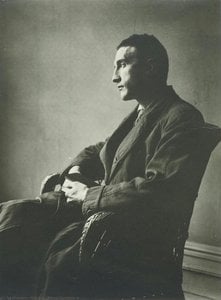
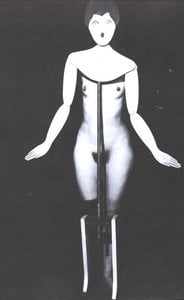
Man Ray, 1890 – 1976

De 100 beroemdste schilderijen van Man Ray

Het schilderij dat Man Ray beroemd maakte is La Galerie Surréaliste, rue Jacques Callot; het hangt in het Museo Oscar Niemeyer, Curitiba. Pisces (1938) en Rayograph (The Kiss) (1922) volgen in de harten van verzamelaars en museumbezoekers. Van de 142 werken van Man Ray in onze catalogus zijn dit de 100 meest bewonderde, elk gepresenteerd met de datum, het museum en wat het uniek maakt.

Gerangschikt op basis van onze populariteitsscore, die de zoekopdrachten, bezoeken en bestellingen voor elk werk combineert. Bijgewerkt in oktober 2026.

Portret van Man Ray
Man Ray · 1890 – 1976
Geboren · overleden
1890 – 1976, Philadelphia
Stroming
Surrealisme
Werken in onze catalogus
142
Meest bekend
La Galerie Surréaliste, rue Jacques Callot
Meeste werken in
Museo Oscar Niemeyer

Man Ray: de tien meesterwerken

La Galerie Surréaliste, rue Jacques Callot door Man Ray
1

La Galerie Surréaliste, rue Jacques Callot

Acrylic On Canvas · Museo Oscar Niemeyer, Curitiba

La Galerie Surréaliste et l'Étoile Scellée : Un Voyage au Cœur de la Créativité Dadaiste La Galerie Surréaliste, située rue Jacques Callot à Paris, fut bien plus qu’une simple adresse artistique ; elle incarnait les aspirations radicales d’une génération marquée par les bouleversements du début du XXe siècle. Fondée en 1926 et dirigée avec passion par Marcel Duchamp et Sophie Babet, cette galerie devint un véritable laboratoire d'expérimentation esthétique et…

Pisces (1938) door Man Ray
2

Pisces

1938 · Oil

Introduction to Man Ray and Surrealism Man Ray, born Emmanuel Radnitzky in 1890, was an American visual artist who spent most of his career in France. He was a significant contributor to the Dada and Surrealist movements, although his ties to each were informal. Man Ray produced major works in a variety of media but considered himself a painter above all. Surrealism is an art movement that emerged in the…

Rayograph (The Kiss) (1922) door Man Ray
3

Rayograph (The Kiss)

1922 · Black and White Photography · MoMA - Museum of Modern Art, New York City

A Dance Between Light and Shadow: Exploring Man Ray’s “The Kiss” Man Ray's "The Kiss," created in 1922 during the heady days of Dada and Surrealism, transcends mere photographic representation; it embodies a radical reimagining of artistic process and perception. This striking photogram—a technique pioneered by Ray himself—captures an intimate moment frozen in time, transforming commonplace objects into symbols of desire and connection. Unlike traditional painting, where artists meticulously render…

Solarisation (1931) door Man Ray
4

Solarisation

1931 · Black and White Photography

In this 1931 black and white photograph, titled Solarisation, Man Ray presents us with a quiet, intimate moment of repose. The subject is a man lying down, his head resting upon his arm in a state of sleep or deep rest. There is a profound sense of stillness here, a pause in time captured through the lens of a man who sought to redefine how we perceive the physical form.

The Pavillion of Elegance door Man Ray
5

The Pavillion of Elegance

Black and White Photography · Museo Oscar Niemeyer, Curitiba

To gaze upon this image is to step directly into the shimmering, slightly unsettling dreamscape of 1925 Paris. It captures not merely a moment in time, but an entire cultural sensibility—the breathless anticipation surrounding modern fashion and the burgeoning power of the photographic gaze. The subject, a woman draped in what appears to be an ocean green Georgette crepe, moves with an almost choreographed grace down a sun-dappled thoroughfare or…

Tristan Tzara and Jean Cocteau door Man Ray
6

Tristan Tzara and Jean Cocteau

Black and White Photography · Museo Oscar Niemeyer, Curitiba

This evocative black and white photograph transports us directly into the vibrant, often bewildering intellectual ferment of the early 20th century. It captures a moment steeped in the spirit of Dadaism and the burgeoning currents of Surrealism—movements that dared to dismantle the very definition of reality. The composition itself feels less like a mere documentation and more like a carefully staged dream sequence, inviting the viewer to question what they…

Nusch eluard with mirror (1935) door Man Ray
7

Nusch eluard with mirror

1935 · Black and White Photography · Kobe Fashion Museum, Kyoto

In the hauntingly beautiful monochrome of "Nusch Eluard with Mirror," captured in 1935, we are invited into a private, ephemeral moment that transcends the boundaries of traditional portraiture. The photograph features Nusch Eluard, a woman who was not only a muse but a profound presence in the Surrealist circle, draped in a delicate veil that clings to her form like a soft shadow. As she holds a mirror before her…

Indestructible Object (or Object to Be Destroyed) (1923) door Man Ray
8

Indestructible Object (or Object to Be Destroyed)

1923 · Photography · MoMA - Museum of Modern Art, New York City

In the annals of modern art, few images possess the unsettling, magnetic pull of Man Ray’s 1923 masterpiece, Indestructible Object (often known as Object to Be Destroyed). To gaze upon this work is to step directly into the fractured psyche of the Surrealist movement, where the boundaries between the living and the mechanical begin to dissolve. The composition presents a disconcerting tableau: a stark, wooden structure that serves as a…

Veiled Erotica door Man Ray
9

Veiled Erotica

Black and White Photography · Museo Oscar Niemeyer, Curitiba

Born in Philadelphia to Russian Jewish immigrant parents, Emmanuel Radnitzky—known universally as Man Ray—was a restless spirit who defied easy categorization. His formative years coincided with the tumultuous period of Dadaism, born from disillusionment with World War I’s horrors and fueled by an uncompromising critique of bourgeois values. Marcel Duchamp's provocative embrace of “ready-made” objects – like *The Gift* – served as a catalyst for Dada artists to dismantle accepted…

(Untitled) door Man Ray
10

(Untitled)

Black and White Photography · Museo Oscar Niemeyer, Curitiba

In the quiet, evocative realm of Man Ray’s photography, we encounter a profound dialogue between the mundane and the metaphysical. This stark black and white composition, often associated with the enigmatic spirit of “The Gift,” transcends mere documentation to become a window into the avant-garde mind. At first glance, the viewer is presented with an abstract arrangement of draped fabric—perhaps a heavy wool—rendered in exquisite detail against a textured surface.…

Meer meesterwerken van Man Ray, van 11 tot 100

The Enigma of Isidore Ducasse (1920) door Man Ray
#11

The Enigma of Isidore Ducasse

1920 · National Gallery of Australia

The Enigma of Isidore Ducasse is an assemblage created by the artist Man Ray. This work originated in 1920 and was later remade in 1972. The object consists…

Nusch with Mirror door Man Ray
#12

Nusch with Mirror

Museo Oscar Niemeyer

In the hauntingly beautiful photograph Nusch with Mirror, the boundaries between reality and illusion dissolve into a singular, breathtaking moment of modernist introspection. Captured by the legendary American…

Dada Portrait door Man Ray
#13

Dada Portrait

Museo Oscar Niemeyer

In the realm of early twentieth-century avant-garde, few names resonate with as much transformative power as Man Ray. His 1923 masterpiece, Dada Portrait, stands as a profound testament…

Natalie Paley Wearing a Sequined Gown by Lelong door Man Ray
#14

Natalie Paley Wearing a Sequined Gown by Lelong

Museo Oscar Niemeyer

Ultimately, “Natalie Paley Wearing a Sequined Gown by Lelong” stands as an enduring emblem of artistic experimentation—a captivating portrait that exemplifies Man Ray’s visionary genius and cements his…

Marcel Duchamp door Man Ray
#15

Marcel Duchamp

Museo Oscar Niemeyer

The photograph by Man Ray of Marcel Duchamp, captured in 1920-21, isn't merely a portrait; it’s a carefully constructed tableau of intellectualism and quiet contemplation. More than just…

Rayograph - 1925 (1925) door Man Ray
#17

Rayograph - 1925

1925 · Museum Boijmans Van Beuningen

Rayograph - 1925 is a Dadaist photogram photographic print created by the artist Man Ray in 1925. This work belongs to the Dadaist movement, a period characterized by…

Café Man Ray door Man Ray
#18

Café Man Ray

Museo Oscar Niemeyer

Café Man Ray: A Surrealist Reverie Revisited The American artist Man Ray (1890-1976) fundamentally reshaped the perception of photography, elevating it from mere documentation to an expressive art…

Dust Breeding (detail) door Man Ray
#19

Dust Breeding (detail)

Museo Oscar Niemeyer

In the hauntingly beautiful detail of Man Ray’s 1920 masterpiece, Dust Breeding, we are invited into a world where the boundaries between reality and dream dissolve into a…

Noire et Blanche door Man Ray
#23

Noire et Blanche

Museo Oscar Niemeyer

Man Ray’s evocative photograph, Noire et Blanche, immediately draws the viewer into a realm where identity blurs and cultural narratives collide. This piece is more than a mere…

Georges Braque door Man Ray
#24

Georges Braque

Museo Oscar Niemeyer

This striking black and white photograph transports us into a moment suspended between the familiar and the avant-garde. At its heart stands a commanding figure, whose direct gaze…

The couple (1914) door Man Ray
#25

The couple

1914 · Sezon Museum of Modern Art

Born Emmanuel Radnitzky in 1890 in Philadelphia, Man Ray was a leading artist of 20th century America. Man Ray awakened to the European avant-garde art at Armory Show…

Pablo Picasso at the Count Étienne de Beaumont’s Ball door Man Ray
#26

Pablo Picasso at the Count Étienne de Beaumont’s Ball

Museo Oscar Niemeyer

Man Ray's captivating photograph, "Pablo Picasso at the Count Étienne de Beaumont’s Ball," isn’t merely a snapshot; it’s a meticulously constructed tableau vivant, a frozen moment brimming with…

Gertrude Stein door Man Ray
#27

Gertrude Stein

Museo Oscar Niemeyer

In the quiet, monochromatic depths of Man Ray’s portrait of Gertrude Stein, we encounter more than just a photographic likeness; we enter a profound dialogue between light and…

Count Étienne de Beaumont door Man Ray
#28

Count Étienne de Beaumont

Museo Oscar Niemeyer

Man Ray’s portrait of Count Étienne de Beaumont isn't merely a likeness; it’s a carefully constructed tableau vivant, a frozen moment capturing the essence of 1920s Parisian high…

ABC door Man Ray
#29

ABC

Museo Oscar Niemeyer

Man Ray's “ABC,” created in 1947, isn’t merely a photograph; it’s an invitation to deconstruct visual language and embrace the inherent ambiguity of perception. Born Emmanuel Radnitzky, later…

Square door Man Ray
#30

Square

Museo Oscar Niemeyer

The Enigma of the Spiral In the quiet intensity of Man Ray’s Square, one is immediately drawn into a rhythmic, swirling dance of typography and form. Created during…

Magnolia door Man Ray
#32

Magnolia

Museo Oscar Niemeyer

In the quiet intersection of reality and dreamscape lies Man Ray’s Magnolia, a breathtaking monochrome study that transcends the boundaries of traditional photography. At first glance, the viewer…

(Untitled) door Man Ray
#33

(Untitled)

Museo Oscar Niemeyer

In the quiet, evocative realm of Man Ray’s “Untitled,” we encounter a profound dialogue between the mundane and the metaphysical. At first glance, the viewer is presented with…

Ondertitel (D2X7S9) (1916) door Man Ray
#35

Ondertitel (D2X7S9)

1916 · Metropolitan Museum of Art

Een Onderwerp van Beweging en Stilte: Een Analyse van Man Rays “Het Mimé Man Ray’s "Het Mimé," geschilderd in 1916, is een kunstwerk dat zich onderscheidt door zijn…

Self-Portrait door Man Ray
#37

Self-Portrait

Museo Oscar Niemeyer

Man Ray's "Self-Portrait," painted in 1927, isn’t merely a depiction of an individual; it’s a carefully constructed meditation on identity, the gaze, and the very act of representation.…

Glass Tears door Man Ray
#38

Glass Tears

Museo Oscar Niemeyer

Man Ray's "Glass Tears," created between 1930 and 1932, isn’t merely a photograph; it’s a distilled emotion captured in stark black and white. The image, a close-up of…

Butterflies door Man Ray
#39

Butterflies

Museo Oscar Niemeyer

Man Ray’s “Butterflies,” created between 1930 and 1935, isn't merely a photograph; it’s a shimmering portal into the heart of Surrealism. This arresting image, captured during a pivotal…

Serious Man, or The Serious One door Man Ray
#40

Serious Man, or The Serious One

Museo Oscar Niemeyer

Serious Man, or The Serious One The American artist Man Ray (1890-1976) fundamentally reshaped photography’s role—shifting it from mere documentation of reality into an expressive art form itself.…

Kiki in Mechanical Ballet, by Fernand Léger door Man Ray
#44

Kiki in Mechanical Ballet, by Fernand Léger

Museo Oscar Niemeyer

Fernand Léger’s “Kiki in Mechanical Ballet,” painted in 1924, isn't merely a depiction of a woman dancing; it’s an immersive plunge into the heart of early 20th-century anxieties…

Lee Miller door Man Ray
#46

Lee Miller

Museo Oscar Niemeyer

In this mesmerizing black and white photograph, the boundaries between reality and dreamscape dissolve, inviting the viewer into the intimate world of Man Ray and his muse, Lee…

Dora Maar door Man Ray
#47

Dora Maar

Museo Oscar Niemeyer

Man Ray’s Dora Maar: A Portrait of Surrealist Intensity Dora Maar, Picasso's muse and enigmatic collaborator, occupies a singular place in the canon of 20th-century art. Man Ray’s…

Yves Tanguy door Man Ray
#49

Yves Tanguy

Museo Oscar Niemeyer

Yves Tanguy: A Surrealist Landscape of Inner Consciousness Yves Tanguy’s “The J. Paul Getty Museum Collection” isn't merely a depiction of an artist; it’s a portal into the…

Untitled (Aztec figurine of the goddess Tlazoteotl) (1932) door Man Ray
#50

Untitled (Aztec figurine of the goddess Tlazoteotl)

1932 · MoMA - Museum of Modern Art

To gaze upon this photograph is to encounter a profound dialogue across millennia—a conversation between the vibrant spiritual life of ancient Mesoamerica and the experimental, shadow-drenched vision of…

Reflections door Man Ray
#51

Reflections

Museo Oscar Niemeyer

Man Ray’s “Reflections,” painted in 1931, stands as a testament to the burgeoning surrealist movement’s fascination with exploring subconscious landscapes and challenging conventional perceptions of reality. Created during…

Arnold Schönberg door Man Ray
#54

Arnold Schönberg

Museo Oscar Niemeyer

Man Ray's 1924 photograph of Arnold Schoenberg isn’t merely a likeness; it’s a carefully constructed tableau, a visual embodiment of the composer’s complex and revolutionary spirit. Captured during…

Kiki door Man Ray
#55

Kiki

Museo Oscar Niemeyer

Man Ray's Kiki de Montparnasse: A Portrait of Liberation The photograph by Man Ray, titled “Kiki de Montparnasse,” transcends mere documentation; it’s an emblem of the exuberant spirit…

Flying Dutchman (1920) door Man Ray
#73

Flying Dutchman

1920 · Metropolitan Museum of Art

In the realm of early twentieth-century modernism, few works capture the ephemeral boundary between reality and imagination as hauntingly as Man Ray’s Flying Dutchman. Created in 1920, this…

Landscape (Paysage Fauve) (1913) door Man Ray
#75

Landscape (Paysage Fauve)

1913 · Smithsonian American Art Museum

We are looking at Landscape (Paysage Fauve), a painting by Man Ray. Created in 1913, this work captures the artist during a formative period of his early career.…

Me, She (1934) door Man Ray
#76

Me, She

1934

A Surreal Encounter: Exploring Man Ray's "Me, She" Man Ray’s “Me, She,” created in 1934, is a captivating example of surrealist photography that continues to intrigue and inspire.…

The Coat Stand (1920) door Man Ray
#77

The Coat Stand

1920

A Surreal Encounter: Deconstructing Identity in Man Ray's "The Coat Stand" Man Ray’s “The Coat Stand” (1920) is a striking black and white photograph that encapsulates the spirit…

Juan Gris door Man Ray
#78

Juan Gris

Museo Oscar Niemeyer

Juan Gris: A Geometric Vision of Surrealism Juan Gris (José Victoriano González-Pérez), born in Madrid in 1887, stands as an enigmatic figure within the vibrant tapestry of early…

Percolator (1917) door Man Ray
#79

Percolator

1917 · Art Institute of Chicago

The work, titled Percolator, is an oil on board painting dating from 1917. It presents a non-representational arrangement of geometric and organic shapes. A vertical, pole-like element occupies…

Departure of Summer (1914) door Man Ray
#80

Departure of Summer

1914 · Art Institute of Chicago

The canvas holds the tension of a moment frozen in 1914. In this oil on canvas work, titled Departure of Summer, the artist Man Ray explores a world…

The Mime (1916) door Man Ray
#87

The Mime

1916 · Metropolitan Museum of Art

Schilderijen van Man Ray per periode

De onderwerpen die Man Ray het meest schilderde

De vier onderwerpen die het meest voorkomen in deze meesterwerken, met van elk het mooiste voorbeeld.

Waar u de schilderijen van Man Ray kunt bekijken

De 8 musea met de meeste schilderijen op deze pagina.

Museum Stad Werken van Man Ray Schilderijen uit deze lijst
Museo Oscar Niemeyer, CuritibaMuseo Oscar Niemeyer Curitiba 40 La Galerie Surréaliste, rue Jacques Callot, The Pavillion of Elegance, Tristan Tzara and Jean Cocteau
MoMA - Museum of Modern Art, New York CityMoMA - Museum of Modern Art New York City 3 Rayograph (The Kiss), Indestructible Object (or Object to Be Destroyed), Untitled (Aztec figurine of the goddess Tlazoteotl)
Metropolitan Museum of Art, New YorkMetropolitan Museum of Art New York 3 Ondertitel (D2X7S9), Flying Dutchman, The Mime
Museum Boijmans Van Beuningen, RotterdamMuseum Boijmans Van Beuningen Rotterdam 2 Rayograph - 1925, The Riddle of Isidore Ducasse
Smithsonian American Art Museum, Washington, D.C.Smithsonian American Art Museum Washington, D.C. 2 Tableau (Untitled), Landscape (Paysage Fauve)
Art Institute of Chicago, ChicagoArt Institute of Chicago Chicago 2 Percolator, Departure of Summer
Israël Museum, JeruzalemIsraël Museum Jeruzalem 4 The Village
Sezon Museum of Modern Art, KaruizawaSezon Museum of Modern Art Karuizawa 2 The couple

Man Ray, decennium voor decennium: het iconische schilderij van elk tijdperk

  1. 1900s
    Untitled (1908) door Man Ray
    Rang 83 / 100

    Untitled

    Leeftijd 10 – 19
  2. 1910s
    The couple (1914) door Man Ray
    #25 van 100

    The couple

    Leeftijd 20 – 29 · Sezon Museum of Modern Art

    Born Emmanuel Radnitzky in 1890 in Philadelphia, Man Ray was a leading artist of 20th century America. Man Ray awakened to the European avant-garde art at Armory Show…

  3. 1920s
    Rayograph (The Kiss) (1922) door Man Ray
    #3 van 100

    Rayograph (The Kiss)

    Leeftijd 30 – 39 · MoMA - Museum of Modern Art

    A Dance Between Light and Shadow: Exploring Man Ray’s “The Kiss” Man Ray's "The Kiss," created in 1922 during the heady days of Dada and Surrealism, transcends mere…

  4. 1930s
    Pisces (1938) door Man Ray
    Rang 2 / 100

    Pisces

    Leeftijd 40 – 49

    Introduction to Man Ray and Surrealism Man Ray, born Emmanuel Radnitzky in 1890, was an American visual artist who spent most of his career in France. He was…

  5. 1940s
  6. 1960s
  7. 1970s
    Cadeau (1972) door Man Ray
    Nr. 48 van 100

    Cadeau

    Leeftijd 80 – 86

Meesterwerken van Man Ray: vragen en antwoorden

Waar is Man Ray het meest bekend om?Toon het antwoord

La Galerie Surréaliste, rue Jacques Callot, Museo Oscar Niemeyer, Curitiba. Daarna volgen Pisces (1938) en Rayograph (The Kiss) (1922).

Wat zijn de tien grootste schilderijen van Man Ray?Toon het antwoord

La Galerie Surréaliste, rue Jacques Callot, Pisces, Rayograph (The Kiss), Solarisation, The Pavillion of Elegance, Tristan Tzara and Jean Cocteau, Nusch eluard with mirror, Indestructible Object (or Object to Be Destroyed), Veiled Erotica en (Untitled). De bovenstaande ranglijst vermeldt het jaar en het museum van elk werk.

Hoeveel werken heeft Man Ray geschilderd?Toon het antwoord

Onze catalogus bevat 142 werken van Man Ray, gedateerd van 1908 tot 1972.

In welke musea kan ik de meesterwerken van Man Ray bewonderen?Toon het antwoord

De meeste bevinden zich in Museo Oscar Niemeyer (Curitiba), MoMA - Museum of Modern Art (New York City) en Metropolitan Museum of Art (New York). De bovenstaande tabel somt de musea één voor één op.

Wanneer schilderde Man Ray de meesterwerken?Toon het antwoord

In 1910s: 19 van de 100 werken op deze pagina dateren uit die periode, waaronder The couple.

Wat zijn de eerste en laatste beroemde schilderijen van Man Ray?Toon het antwoord

De oudste op deze pagina is Untitled (1908), de nieuwste Cadeau (1972).

Wat waren de favoriete onderwerpen van Man Ray?Toon het antwoord

Photography (27), Black and white (10) en Woman (7), van de 100 werken op deze pagina.

Welke techniek had Man Ray de voorkeur?Toon het antwoord

Black and White Photography: 17 van de 100 werken op deze pagina.

Bij welke kunststroming hoort Man Ray?Toon het antwoord

Surrealisme en Dadaism, zoals de schilderijen op deze pagina laten zien.

Welke meesterwerken van Man Ray hangen in het Museo Oscar Niemeyer?Toon het antwoord

La Galerie Surréaliste, rue Jacques Callot, The Pavillion of Elegance en Tristan Tzara and Jean Cocteau behoren tot de 35 werken op deze pagina die in het Museo Oscar Niemeyer, Curitiba worden bewaard.

Het leven van Man Ray

A Life Illuminated by Shadows

Man Ray, geboren als Emmanuel Radnitzky in Philadelphia in 1890, was een geest die zich voortdurend verplaatste en moeite had om in één categorie te passen. Zijn leven, van een ambitieuze jonge kunstenaar tot een baanbrekende fotograaf en filmmaker, is een krachtige illustratie van de artistieke explosie van het begin van de 20e eeuw. De overgang van “Manny” Radnitzky naar de enigmatische Man Ray zelf getuigt al van een kunstenaar die vastbesloten was om een nieuwe identiteit te creëren, los van elke conventie. Zijn families beslissing om naar New York City te verhuizen bleek cruciaal, waardoor hij werd blootgesteld aan de opkomende moderne scene en een levenslange fascinatie met experimenteren ontwikkelde. Vroege invloeden waren onder meer de Europese avant-garde die werden getoond in de 291 Gallery van Alfred Stieglitz, en de rauwe energie van het Ashcan School – een combinatie die subtiel zou beïnvloeden hoe hij later werkte. Hoewel aanvankelijk toegewijd aan schilderkunst, werd fotografie uiteindelijk zijn meest krachtige medium om de grenzen van perceptie en realiteit te verkennen. Hij was niet alleen bezig met het vastleggen van beelden; hij creerde nieuwe manieren om *te zien*. Zijn vroege artistieke inspanningen werden gekenmerkt door een verlangen om af te wijken van traditionele stijlen, beïnvloed door zowel Europese modernisme als de rauwe energie van New York City. De Ferrer Centre, met zijn anarchistische idealen en nadruk op vrije expressie, bevorderde tijdens deze periode een omgeving waarin experimenteren niet alleen werd aangemoedigd maar verwachtte.

Dada, Surrealism, and the Pursuit of the Impossible

Man Rays artistieke reis nam een dramatische wending toen hij in 1915 ontmoette met Marcel Duchamp in New York. Deze ontmoeting leidde tot een gedeelde fascinatie met het uitdagen van traditionele kunstnoties, wat resulteerde in exploraties van “ready-mades” – alledaagse fabriceerde objecten die de status van kunstwerk verhoogden. Deze rebelse geest dwong Ray naar het hart van de Dada beweging, een anti-kunst protest geboren uit de ontgoocheling van de Eerste Wereldoorlog. In de vroege jaren twintig werd hij een centrale figuur in zowel de Dada als Surrealistische kringen die floreerden in Parijs. Hoewel hij nooit volledig zich heeft aangesloten bij een rigide artistieke dogma, omarmde Ray de Surrealisten’s zoektocht naar het onbewuste, dromen en de irrationele. Zijn werk tijdens deze periode wordt gekenmerkt door een dwalende kwaliteit, vaak verontrustend maar onmiskenbaar boeiend. Hij was niet geïnteresseerd in het vastleggen van realiteit zoals die *is*, maar eerder zoals die *voelt* – fragmentarisch, vervormd en doordrenkt met verborgen betekenissen. Deze omhelzing van het onbewuste stelde hem in staat verder te gaan dan alleen representatie naar een exploratie van psychologische toestanden en emotionele resonantie binnen zijn kunst. Zijn samenwerkingen met andere Surrealistische kunstenaars, zoals Salvador Dalí, versterkten zijn positie binnen de beweging, hoewel hij altijd een zekere mate van onafhankelijkheid behield in zijn artistieke visie.

Rayographs and the Alchemy of Light

Misschien is Man Ray het meest bekend om zijn uitvinding van de “rayograph”, een cameraloze fotografische techniek die hij bijna per ongeluk ontdekte. Deze beelden – gemaakt door objecten direct op lichtgevoelig papier te plaatsen en ze bloot te stellen aan licht – resulteerden in etherische, spookachtige composities die conventionele fotografie uitdaagden. De rayograph was niet alleen een alternatieve methode; het was een filosofische verklaring van de aard van fotografie zelf. Door het camera-lens te elimineren, ontkende Ray de illusie van objectiviteit en onthulde hij de inherente subjectiviteit van het medium. Deze waren geen representaties *van* dingen, maar eerder directe afdrukken *van* ze, doordrenkt met een gevoel van mysterie en anderwaardigheid. Naast rayographs, zijn portretten – vooral die van kunstenaars als Lee Miller (die zowel zijn muze als collaboratiewerkster werd) – staan bekend om hun opvallende composities en psychologische diepte. Hij experimenteerde voortdurend met solarisatie, meerdere bloepen en donkerruimte manipulatie, waardoor de grenzen van wat fotografie kon bereiken werden verlegd. Solarisatie, in het bijzonder, werd een kenmerkende techniek, waardoor dramatische omkeringen van toon werden gecreëerd die een element van het onheilspellende toevoegden aan zijn portretten.

Beyond Stillness: Film and a Lasting Legacy

Man Rays artistieke nieuwsgierigheid strekte zich uit tot de wereld van film. Zijn experimentele films, zoals *Le Retour à la Raison* (1923) en *L'Étoile de Mer* (1928), werden gekenmerkt door hun surrealistische beelden, onconventionele montage technieken en afwijzing van narratieve conventies. Deze waren niet verhalen verteld in een traditionele zin; ze waren visuele poëmen, exploraties van vorm, ritme en het onbewuste. Hij gebruikte innovatieve technieken zoals stop-motion animatie en superpositie om verwarrende en dwalende effecten te creëren. Hoewel zijn filmwerk relatief klein in volume was, heeft het een aanzienlijke invloed gehad op latere generaties van avant-garde filmmakers. Door de jaren heen bleef Man Ray experimenteren en uitdagen, weigerend zich te laten beperken door labels of verwachtingen. Hij stierf in Parijs in 1976, nalatend een kunstenaarschap dat niet alleen zijn eigen leven overstijgt maar ook voortdurend inspireert en provoceert. Zijn erfenis ligt niet alleen in zijn technische innovaties, maar ook in zijn onwrikbare toewijding aan artistieke vrijheid en zijn voortdurende zoektocht naar het onmogelijke – een ware pionier die onze perceptie van kunst en realiteit voor altijd heeft veranderd.

A Continuing Influence

  • Photography: Man Ray’s techniques, particularly rayography and solarization, continue to be explored by contemporary photographers.
  • Surrealism: His contributions solidified the movement's visual language and inspired countless artists across disciplines.
  • Experimental Film: His pioneering work in film laid the groundwork for future generations of avant-garde filmmakers.
  • Fashion Photography: Ray’s innovative approach to portraiture and composition influenced the development of modern fashion photography.

Alle 142 werken van Man Ray →