
James Barry, 1799 – 1865

Schilderijen van James Barry: De 31 beroemdste werken, gerangschikt

Het beroemdste schilderij van James Barry is The Birth Of Pandora. Met Kinderszene en Elysium, Or The State Of Final Retribution wordt de trilogie van de drie werken die iedereen herkent voltooid. Onze catalogus bevat 31 werken van James Barry; de 31 hieronder zijn de werken die de wereld het meest bekijkt, elk met het jaartal, het museum waar het zich bevindt en de reden waarom het belangrijk is.

Gerangschikt op basis van onze populariteitsscore, die de zoekopdrachten, bezoeken en bestellingen voor elk werk combineert. Bijgewerkt in oktober 2026. Elk meesterwerk op deze pagina kan worden besteld als een handgeschilderde olieverfreproductie van museumkwaliteit of als een fine art print, in de door u gekozen afmeting.

Portret van James Barry
James Barry · 1799 – 1865
Geboren · overleden
1799 – 1865, Cork
Stroming
Neoclassicism
Werken in onze catalogus
31
Meest bekend
The Birth Of Pandora
Meeste werken in
National Portrait Gallery

De 10 beroemdste schilderijen van James Barry

James Barry, schilderijen 11 tot 31

De onderwerpen die James Barry het meest schilderde

De vier onderwerpen die het meest voorkomen in deze meesterwerken, met van elk het mooiste voorbeeld.

Waar u de schilderijen van James Barry kunt bekijken

De 5 musea met de meeste schilderijen op deze pagina.

Museum Stad Werken van James Barry Schilderijen uit deze lijst
National Portrait Gallery, LondenNational Portrait Gallery Londen 2 Samuel Johnson -, ; Dominique Lefevre; James Paine The Younger
Tate Britain, LondenTate Britain Londen 1 King Lear Mourns Cordelia
National Gallery of Ireland, DublinNational Gallery of Ireland Dublin 1 Self-portrait
Yale Center for British Art, New HavenYale Center for British Art New Haven 1 The Education Of Achilles -
Graves Art GalleryGraves Art Gallery 1 Jupiter Beguiled By Juno On Mount Ida

Vragen over de schilderijen van James Barry

Wat is het beroemdste schilderij van James Barry?Toon het antwoord

The Birth Of Pandora. Daarna volgen Kinderszene en Elysium, Or The State Of Final Retribution.

Wat zijn de top 10 schilderijen van James Barry?Toon het antwoord

The Birth Of Pandora, Kinderszene, Elysium, Or The State Of Final Retribution, Self Portrait, King Lear Weeps over the Body of Cordelia, Christopher Nugent, The Education Of Achilles, Study For Saint Sebastian, Crowning The Victors At Olympia en Male With Arms Spread Wide Seen From Behind. De bovenstaande ranglijst vermeldt het jaar en het museum van elk werk.

Hoeveel schilderijen heeft James Barry gemaakt?Toon het antwoord

Onze catalogus bevat 31 werken van James Barry.

Waar zijn de beroemdste schilderijen van James Barry?Toon het antwoord

De meeste bevinden zich in National Portrait Gallery (Londen), Tate Britain (Londen) en National Gallery of Ireland (Dublin). De bovenstaande tabel somt de musea één voor één op.

Wat schilderde James Barry het vaakst?Toon het antwoord

Portraits (3), Royalty (3) en Gods (3), van de 31 werken op deze pagina.

Bij welke kunststroming behoort James Barry?Toon het antwoord

Neoclassicism, zoals de schilderijen op deze pagina laten zien.

Welke schilderijen van James Barry kan ik zien in het National Portrait Gallery?Toon het antwoord

Samuel Johnson - en ; Dominique Lefevre; James Paine The Younger behoren tot de 2 werken op deze pagina die in het National Portrait Gallery, Londen worden bewaard.

Kan ik een reproductie kopen van een schilderij van James Barry?Toon het antwoord

Ja. Elk schilderij op deze pagina kan worden besteld als een handgeschilderde olieverfreproductie van museumkwaliteit of als een fine art print, in de door u gekozen afmeting, via de eigen pagina van het schilderij.
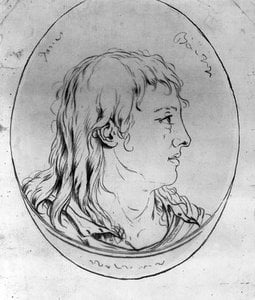
Over James Barry

A Life Shrouded in Secrecy and Artistic Ambition

The story of James Barry is one of remarkable contradiction, a life lived under the weight of carefully constructed deception yet illuminated by genuine artistic talent and unwavering professional dedication. Born either in 1789 or 1799 – the discrepancy itself a testament to the deliberate obfuscation that characterized his existence – in Cork, Ireland, as Margaret Anne Bulkley, Barry navigated a world rigidly defined by gender roles by assuming a male identity. This audacious act wasn’t born of personal inclination towards a different gender, but rather a pragmatic necessity; it was a calculated maneuver to access opportunities denied to women of the era, most notably a career in medicine. The young Margaret came from a family touched by both artistic sensibility – her aunt being the celebrated Irish artist James Barry RA – and financial instability following her father’s dismissal from his post. A complex conspiracy involving her mother, Mary-Ann Bulkley, General Francisco de Miranda, Dr. Edward Fryer, and solicitor Daniel Reardon enabled this transformation, setting in motion a life of extraordinary accomplishment concealed behind a carefully maintained facade.

From Medical Pioneer to Military Surgeon

In 1809, “James Barry” embarked on medical studies at the University of Edinburgh, facing skepticism regarding his youth and perceived effeminacy but ultimately qualifying as a ‘literary and medical student’ and earning a Medicinae Doctor (MD) degree in 1812. Further training followed at Guy’s and St Thomas’ Hospitals in London, culminating in passing the examination of the Royal College of Surgeons of England in 1813. Thus equipped, Barry entered the British Army, embarking on a fifty-year career that saw him rise to the rank of Inspector General – equivalent to a Brigadier General – the second-highest medical office attainable. His service took him across the vast expanse of the British Empire, with significant postings in Cape Town, South Africa, where he championed improvements in hospital conditions and surgical practices. He was a progressive figure, advocating for better sanitation and patient care long before such concepts were widely accepted. Barry’s skill as a surgeon was undeniable; he is credited with performing the first successful caesarean section in Africa – with both mother and child surviving – a testament to his courage and medical prowess. Throughout his military career, Barry remained fiercely independent and often clashed with superiors due to his uncompromising standards and refusal to compromise on patient welfare.

An Artistic Inclination Alongside a Medical Calling

Despite his dedication to medicine—a profession where women were largely excluded—James Barry possessed an undeniable artistic talent that paralleled his medical pursuits. He produced numerous drawings and watercolors, frequently depicting scenes from his military life or portraits of individuals he encountered during his service. These works reveal a keen eye for detail, a sensitivity to composition, and a clear aptitude for capturing the likenesses of his subjects. Though not a professional artist in the same vein as his uncle, James Barry RA, his artistic endeavors were recognized by influential patrons like Sir Thomas Burke, who provided early support. His drawings often served as studies for larger compositions or as personal reflections on his experiences—a testament to his multifaceted personality and intellectual curiosity. The surviving artworks offer glimpses into a private world alongside the public persona of the respected military surgeon. For instance, “Male With Arms Spread Wide Seen From Behind”, a charcoal study executed with masterful technique, exemplifies Barry’s commitment to anatomical precision—a skill honed through his medical training but skillfully applied in an artistic context. This piece showcases Renaissance-inspired artistry and demonstrates Barry's profound understanding of human anatomy.

The Revelation and Enduring Legacy

The extraordinary secret of James Barry's true identity remained concealed until after his death in 1865. The revelation that the highly regarded military surgeon was born female caused considerable stirrings within Victorian society, generating both scandal and fascination. While some viewed it as a transgression against societal norms—a defiance of expectations rooted in patriarchal structures—others recognized Barry’s remarkable achievement: successfully navigating life and attaining professional prominence while concealing his gender during an era characterized by strict limitations for women. James Barry's story has since become a subject of scholarly debate, exploring themes of gender identity, social constraints, and the determination to pursue ambitions regardless of societal pressures. The paucity of biographical information beyond his military career continues to fuel speculation and imaginative storytelling—adding layers of intrigue to this singular figure. Today, James Barry is celebrated as a pioneering surgeon, a symbol of resistance against conventional roles, and an artist whose work deserves acknowledgement alongside his extraordinary life narrative. His legacy resonates with contemporary discussions about transgender experiences, though it’s crucial to interpret his choices within the historical context of the 1860s—a period profoundly shaped by Victorian sensibilities. He remains a compelling figure—challenging established narratives and inspiring ongoing investigation into his multifaceted persona.

Alle 31 werken van James Barry →