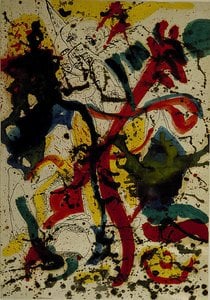
Jackson Pollock, 1912 – 1956

Jackson Pollock: The 100 Most Famous Paintings

Herfstritm No. 30 is the most famous painting by Jackson Pollock. Nummer 1, 1949 (1950) and Convergentie are the next two works the world knows best. From the 186 works of Jackson Pollock in our catalogue, here are the 100 that collectors and museum visitors look at most, with the year, the museum and the story of each.

Ranked by our popularity score, which combines the searches, visits and orders for each work. Updated oktober 2026. Every masterpiece on this page can be ordered as a museum-quality, hand-painted oil reproduction or a fine art print, at the size you choose.

Portrait of Jackson Pollock
Jackson Pollock · 1912 – 1956
Born · died
1912 – 1956, Cody
Movement
Abstract expressionism
Works in our catalogue
186
Most famous
Herfstritm No. 30
Most works at
MoMA - Museum of Modern Art

Top 10: Jackson Pollock's best-known paintings

Herfstritm No. 30 by Jackson Pollock
1

Herfstritm No. 30

Olieverf op canvas

“Autumn Rhythm. Number 30, 1950” staat te boek als een cruciaal werk binnen de baanbrekende bijdrage van Jackson Pollock aan het Abstract Expressionisme. Dit grootschalige canvas is niet louter een schilderij; het is een meeslepende ervaring – een visueel verslag van energie, gebaar en de diep persoonlijke betrokkenheid van de kunstenaar bij het creatieve proces.

Nummer 1, 1949 (1950) by Jackson Pollock
2

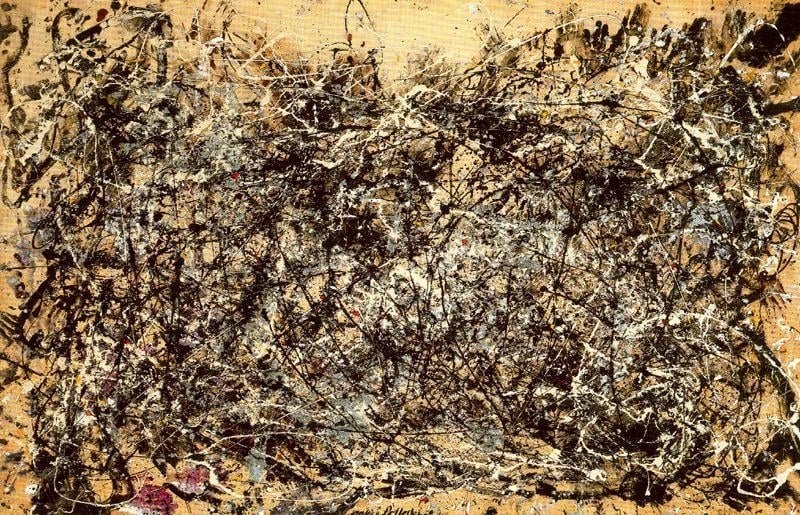
Nummer 1, 1949

1950 · Olieverf op canvas · Private Collection, New York City

Gecreëerd in 1950, belichaamt dit betoverende werk de revolutionaire geest van het Abstract Expressionisme en staat het als een uitstekend voorbeeld van Jackson Pollock’s iconische “drip” techniek. Met indrukwekkende afmetingen van 240 x 120 cm trekt het niet alleen door zijn schaal de aandacht, maar ook door de pure energie die uitgaat van het complexe oppervlak. Het is een werk dat je niet bekijkt, maar ervaart – een visuele symfonie…

Convergentie by Jackson Pollock
3

Convergentie

Olieverf op canvas

Jackson Pollock's Convergence is niet zomaar een schilderij; het is een viscerale ervaring—een monumentaal getuigenis van de kracht van abstracte expressie en een bepalend werk binnen de naoorlogse Amerikaanse kunst. Gecreëerd tijdens een cruciaal moment in de kunstgeschiedenis, belichaamt dit stuk innovatie, daagt het traditionele opvattingen over representatie uit en nodigt het de kijker uit in een dynamische wereld van kleur en energie.

Nummer 1A by Jackson Pollock
4

Nummer 1A

Olieverf op canvas

De Essentie van het Abstract Expressionisme Jackson Pollock's "Number 1A" is een schoolvoorbeeld van het abstract expressionisme, een beweging die de Amerikaanse kunst in het midden van de 20e eeuw radicaal heeft hergedefinieerd. Dit fascinerende werk belichaamt de rauwe energie en spontaniteit waar Pollock om bekend staat, waardoor het een absolute aanrader is voor elke hedendaagse kunstcollectie of modern interieur. Een Dans van Chaos en Controle Het kunstwerk presenteert een…

Wit Licht (1954) by Jackson Pollock
5

Wit Licht

1954 · Olieverf op canvas · MoMA - Museum of Modern Art, New York City

“White Light” is meer dan een schilderij; het is een visuele explosie, een momentopname van intense emotie en creatieve energie. Dit werk, gecreëerd in 1954 door Paul Jackson Pollock, duikt diep in de kern van abstract expressionisme, een beweging die de traditionele grenzen van kunst radicaal veranderde. Het is een bewijs van Pollock’s onconventionele techniek en zijn zoektocht naar het uiten van innerlijke gevoelens zonder de beperkingen van representatie.

One. Number 31, 1950 by Jackson Pollock
6

One. Number 31, 1950

Painting

In the pantheon of modern art, few works command the room with such raw, unbridled intensity as Paul Jackson Pollock’s “One: Number 31, 1950.” To stand before this canvas is to witness a moment of pure, unfiltered creation captured in time. As a cornerstone of the Abstract Expressionist movement, this painting transcends the boundaries of traditional composition, offering instead a dense, rhythmic web of energy that seems to pulse with…

Number 5 (1948) by Jackson Pollock
7

Number 5

1948 · Oil On Canvas

A Universe Unfurled: Decoding Jackson Pollock’s No. 5, 1948 Jackson Pollock’s *No. 5, 1948* isn't simply a painting; it is an event frozen in time – a visual record of energy, gesture, and the very act of creation. This monumental work stands as perhaps the most iconic example of Abstract Expressionism, captivating viewers for decades with its complex layering and seemingly chaotic beauty. It’s a piece that demands attention, sparking…

Mural (1943) by Jackson Pollock
8

Mural

1943 · Acrylic On Canvas

Jackson Pollock's "Mural," completed in 1943, isn't merely a painting; it’s an immersive experience, a visceral embodiment of the burgeoning abstract expressionist movement. Commissioned by Peggy Guggenheim as a centerpiece for her Manhattan townhouse, this monumental work – measuring a commanding 247 x 605 cm – immediately announces Pollock’s arrival as a revolutionary force in the art world. The sheer scale invites contemplation, drawing the viewer into a swirling vortex…

Number 5 (1948) by Jackson Pollock
9

Number 5

1948 · Oil On Canvas

Jackson Pollock’s *No. 5*, created in 1948, stands as an emblem of Abstract Expressionism—a movement that irrevocably altered the landscape of modern art. More than just a painting; it's a visceral embodiment of emotion, intellect, and revolutionary technique, captivating viewers with its mesmerizing complexity and enduring legacy. This monumental canvas, measuring eight by four feet on fiberboard, transcends mere visual representation, inviting contemplation about the very nature of artistic expression…

Alchemy (1947) by Jackson Pollock
10

Alchemy

1947 · Acrylic On Canvas

A Dance of Chaos and Transformation: Exploring Jackson Pollock’s Alchemy The Genesis of Spontaneity Decoding the Drip Technique Historical Resonance and Symbolic Weight A Legacy of Innovation Jackson Pollock’s *Alchemy*, a monumental work from 1947, isn't merely a painting; it’s an immersive experience, a visceral embodiment of the burgeoning Abstract Expressionist movement. Created during a pivotal moment in American art history, this piece captures the raw energy and revolutionary spirit…

The rest of the Jackson Pollock ranking, 11 to 100

Number 6 (1949) by Jackson Pollock
#12

Number 6

1949

Number 6 stands as a pivotal work within Jackson Pollock's oeuvre and the broader movement of Abstract Expressionism. Emerging in post-World War II America, this style rejected traditional…

Commission a hand-painted copy →
Number 23, 1951 by Jackson Pollock
#13

Number 23, 1951

Chrysler Museum of Art

Paul Jackson Pollock's "Number 23, 1951" isn’t merely a painting; it’s an immersion. Created during a pivotal period of his artistic evolution – the “black pourings” – this…

Bring it home →
Number 1 (1948) by Jackson Pollock
#14

Number 1

1948 · MoMA - Museum of Modern Art

Jackson Pollock's "Number 1, 1948," housed within the hallowed halls of the Museum of Modern Art in New York, isn’t merely a painting; it’s an immersion. It’s a…

Bring it home →
There Were Seven in Eight (1945) by Jackson Pollock
#15

There Were Seven in Eight

1945 · MoMA - Museum of Modern Art

A Descent Into Chaotic Beauty The canvas of Jackson Pollock’s 1945 masterpiece, "There Were Seven in Eight," serves as a visceral gateway into the turbulent heart of Abstract…

Bring it home →
Saint by Jackson Pollock
#16

Saint

Jackson Pollock is widely regarded as one of the most influential artists of the 20th century, and his painting Saint is a quintessential example of his unique style.…

Order a reproduction →
The She Wolf (1943) by Jackson Pollock
#17

The She Wolf

1943

Jackson Pollock's “The She Wolf,” completed in 1943, is more than just an abstract canvas; it’s a visceral plunge into the heart of early Abstract Expressionism and a…

Bring it home →
Composition with Pouring II (1943) by Jackson Pollock
#18

Composition with Pouring II

1943

Created in 1943, "Composition with Pouring II" stands as a pivotal work in Jackson Pollock's career and the broader development of Abstract Expressionism. While often considered an early…

Bring it home →
Blue poles (Number 11) (1952) by Jackson Pollock
#19

Blue poles (Number 11)

1952

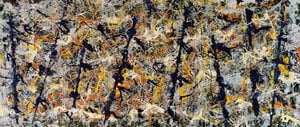
Jackson Pollock’s “Blue Poles (Number 11),” completed in 1952, isn’t merely a painting; it’s an explosion of controlled chaos, a visceral embodiment of the abstract expressionist movement. Measuring…

Commission a hand-painted copy →
Yellow Islands by Jackson Pollock
#21

Yellow Islands

A Symphony of Chaos: Exploring Jackson Pollock’s ‘Yellow Islands’ Jackson Pollock's ‘Yellow Islands’, painted in 1952, stands as a pivotal work within the Abstract Expressionist movement – a…

Bring it home →
The Flame (1938) by Jackson Pollock
#23

The Flame

1938

The painting The Flame consists of oil on fiberboard, measuring 51 x 76 cm. The surface features a central motif of an incandescent blaze that moves through an…

Commission a hand-painted copy →
Portrait and a Dream by Jackson Pollock
#24

Portrait and a Dream

Jackson Pollock’s Portrait and a Dream (1953) isn’t merely a painting; it’s an immersion into the very heart of Abstract Expressionism, a visceral embodiment of the artist’s process…

Order a reproduction →
Number 3 (1948) by Jackson Pollock
#25

Number 3

1948

Jackson Pollock: A Revolutionary in Abstract Expressionism Jackson Pollock (1912-1956) stands as a monumental figure within the abstract expressionist movement, forever altering the trajectory of modern art. His…

Commission a hand-painted copy →
Ocean Greyness by Jackson Pollock
#26

Ocean Greyness

Ocean Greyness is an oil painting created by Jackson Pollock in 1953. This work measures 229 x 146.7 cm and is currently held in the Solomon R. Guggenheim…

Bring it home →
Lucifer (1947) by Jackson Pollock
#28

Lucifer

1947

Jackson Pollock’s “Lucifer,” painted in 1947, isn’t merely a painting; it’s an immersion. Measuring a substantial 268 x 104 cm, this work embodies the raw energy and profound…

Commission a hand-painted copy →
Woman by Jackson Pollock
#29

Woman

Jackson Pollock's “Woman,” completed in 1945 and currently residing within the hallowed halls of the Museum of Modern Art in New York City, isn’t merely a painting; it’s…

Commission a hand-painted copy →
Untitled (Naked Man) by Jackson Pollock
#30

Untitled (Naked Man)

A Figure Forged in Turmoil: Exploring Pollock’s ‘Untitled (Naked Man)’ This powerful painting by Jackson Pollock plunges the viewer into a vortex of emotion and raw energy. Depicting…

Order a reproduction →
Lavender Mist_Number 1 by Jackson Pollock
#31

Lavender Mist_Number 1

Jackson Pollock’s “Lavender Mist_Number 1” isn't merely a painting; it’s an immersion, a visceral experience captured on canvas. This seminal work from the late 1940s embodies the revolutionary…

Order a reproduction →
Birth by Jackson Pollock
#32

Birth

A Tempestuous Birth: Decoding Pollock’s Abstract Vision Jackson Pollock's *Birth* (1948-51) is a pivotal work within his mature “drip” period and a cornerstone of Abstract Expressionism. More than…

Bring it home →
Blue (Moby Dick) by Jackson Pollock
#33

Blue (Moby Dick)

Jackson Pollock's “Blue (Moby Dick),” painted in 1943, isn’t merely a canvas splashed with color; it’s an immersive experience, a visual embodiment of the anxieties and primal forces…

Bring it home →
The key (1946) by Jackson Pollock
#34

The key

1946 · Art Institute of Chicago

A Dance Across Canvas: Exploring Jackson Pollock’s ‘The Key’ Subject Matter & Composition The artwork depicts a group of individuals engaged in various postures—seated on chairs, standing upright,…

Commission a hand-painted copy →
Untitled II by Jackson Pollock
#35

Untitled II

To stand before an Untitled II by Paul Jackson Pollock is not merely to observe paint on canvas; it is to witness an event. It is a raw,…

Order a reproduction →
Cathedral by Jackson Pollock
#36

Cathedral

Introduction to Jackson Pollock and Abstract Expressionism Paul Jackson Pollock, known professionally as Jackson Pollock, was an American painter and a major figure in the abstract expressionist movement.…

Bring it home →
Number 27, 1950 by Jackson Pollock
#38

Number 27, 1950

Jackson Pollock’s ‘Number 27, 1950’: A Symphony of Controlled Chaos Number 27, 1950 is a landmark achievement in the history of Abstract Expressionism, embodying the movement's radical departure…

Commission a hand-painted copy →
Circumcision January (1946) by Jackson Pollock
#40

Circumcision January

1946

Jackson Pollock, a titan of 20th-century art, remains synonymous with abstract expressionism. His painting, Circumcision January, exemplifies his groundbreaking approach and continues to captivate viewers with its dynamic…

Bring it home →
Sheet of Studies (1941) by Jackson Pollock
#41

Sheet of Studies

1941

A Window into Pollock’s Subconscious: “Sheet of Studies” (1941) This intensely energetic work on paper, created in 1941, offers a fascinating glimpse into the formative period of Jackson…

Bring it home →
Number 12, 1949 by Jackson Pollock
#42

Number 12, 1949

A Universe Within: Decoding Jackson Pollock’s “Number 12, 1949” Jackson Pollock's "Number 12, 1949" isn't simply a painting; it’s an event frozen in time – a visual record…

Order a reproduction →
War by Jackson Pollock
#43

War

War: A Descent into Chaos – Jackson Pollock’s Post-Traumatic Masterpiece Jackson Pollock's *War*, painted in 1947, isn’t merely a canvas splashed with color; it’s a visceral embodiment of…

Bring it home →
Marrón y plata by Jackson Pollock
#44

Marrón y plata

A Symphony of Shadow and Silver: Exploring Jackson Pollock’s “Marrón y plata” Jackson Pollock's "Marrón y plata" ("Brown and Silver") stands as a pivotal work within his celebrated…

Bring it home →
Number 10 (1949) by Jackson Pollock
#46

Number 10

1949

A Tempestuous Vision: Exploring Jackson Pollock’s ‘Number 10’ Number 10, created in 1949, stands as a monumental example of Jackson Pollock's revolutionary drip painting technique and the apex…

Commission a hand-painted copy →
Untitled 28 by Jackson Pollock
#47

Untitled 28

A Visceral Encounter: Decoding Jackson Pollock’s “Untitled 28” This intensely compelling work by Jackson Pollock, known simply as “Untitled 28,” offers a raw and unsettling glimpse into the…

Order a reproduction →
Number 25 (1950) by Jackson Pollock
#48

Number 25

1950

To stand before Number 25 is to confront pure, unmediated action. This canvas does not merely depict an image; it records an event—a moment of intense physical and…

Untitled (1939) by Jackson Pollock
#49

Untitled

1939 · Art Institute of Chicago

The canvas known as Untitled emerges from 1939, a moment when Jackson Pollock begins to navigate the turbulent currents of his own creative impulses. This abstract expressionist work…

Commission a hand-painted copy →
Untitled 6 by Jackson Pollock
#50

Untitled 6

A Tempest of Emotion: Exploring Jackson Pollock’s Untitled 6 This captivating work by Jackson Pollock plunges viewers into a dynamic world of abstract expressionism. *Untitled 6* is not…

Order a reproduction →
Full Fathom Five by Jackson Pollock
#51

Full Fathom Five

In the annals of American art history, few works capture the raw, unbridled energy of a movement quite like Paul Jackson Pollock’s Full Fathom Five. Painted in 1947,…

Bring it home →
Figures in a Landscape (1937) by Jackson Pollock
#52

Figures in a Landscape

1937

To encounter Jackson Pollock’s "Figures in a Landscape" is to step into a realm where the boundaries between reality and the subconscious begin to dissolve. Created in 1937,…

Bring it home →
Cut out by Jackson Pollock
#54

Cut out

Jackson Pollock, born on January 28, 1912, was an American painter who played a significant role in the abstract expressionist movement. He is renowned for his unique style…

Commission a hand-painted copy →
Masked Image by Jackson Pollock
#55

Masked Image

The canvas breathes with a restless energy, presenting a singular, stylized visage that seems to emerge from a thicket of overlapping shapes. This is not a portrait in…

Order a reproduction →
Untitled by Jackson Pollock
#56

Untitled

A Glimpse into Pollock’s Preparatory Process: An Early Study in Motion This captivating work on paper offers a rare look into Jackson Pollock's artistic development *before* his iconic…

Order a reproduction →
Portrait of H.M by Jackson Pollock
#57

Portrait of H.M

Paul Jackson Pollock's “Portrait of H.M.”, a work shrouded in mystery and brimming with raw energy, isn’t merely a painting; it’s an immersive experience. Created during a turbulent…

Commission a hand-painted copy →
Summertime: Number 9A (1948) by Jackson Pollock
#58

Summertime: Number 9A

1948 · Tate Modern

Jackson Pollock’s “Summertime: Number 9A,” painted in 1948, isn't merely a canvas splashed with color; it’s an immersive experience, a visceral representation of the artist’s state of mind…

Order a reproduction →
Untitled (1941) by Jackson Pollock
#59

Untitled

1941

A Moment Suspended: Exploring Jackson Pollock’s 1941 Untitled Work This striking work by Jackson Pollock, created in 1941, offers a fascinating glimpse into the artist's formative years –…

Order a reproduction →
Untitled (Silkscreen I) by Jackson Pollock
#60

Untitled (Silkscreen I)

In the realm of Abstract Expressionism, few works capture the raw, unbridled tension of human struggle as poignantly as Paul Jackson Pollock’s “Untitled (Silkscreen I).” This striking black…

Bring it home →
Grayed Rainbow by Jackson Pollock
#61

Grayed Rainbow

Art Institute of Chicago

Jackson Pollock was a revolutionary figure in the abstract expressionist movement, reshaping artistic perception and challenging conventional notions of painting. His groundbreaking drip technique—characterized by pouring and splattering…

Commission a hand-painted copy →
The Water Bull (1946) by Jackson Pollock
#62

The Water Bull

1946 · Stedelijk Museum

Subject and Composition This captivating abstract masterpiece immerses viewers in a whirlwind of vibrant colors and dynamic forms. While its subject remains open to interpretation, the energetic interplay…

Bring it home →
Totem Lesson 2 (1945) by Jackson Pollock
#63

Totem Lesson 2

1945

Totem Lesson 2: An Exploration of Abstract Expressionism’s Chaotic Harmony Paul Jackson Pollock's "Totem Lesson 2," painted in 1945, stands as a cornerstone of Abstract Expressionism—a movement that…

Bring it home →
Figure by Jackson Pollock
#64

Figure

Jackson Pollock, a name synonymous with Abstract Expressionism and the revolutionary ‘drip’ technique, also harbored a period of intensely focused figuration that often goes unacknowledged. The work simply…

Bring it home →
Untitled 9 by Jackson Pollock
#65

Untitled 9

A Tempest of Emotion: Decoding Jackson Pollock’s “Untitled 9” This intensely evocative work by Jackson Pollock, designated “Untitled 9,” plunges the viewer into a swirling vortex of color…

Commission a hand-painted copy →
Stenographic Figure (1942) by Jackson Pollock
#66

Stenographic Figure

1942

Jackson Pollock's 'Stenographic Figure,' painted in 1942, isn’t merely a depiction of a horse and rider; it’s a visceral embodiment of the anxieties and burgeoning freedom defining Abstract…

Order a reproduction →
Number 3 (1949) by Jackson Pollock
#67

Number 3

1949

A Revolution in Paint: Exploring Jackson Pollock’s ‘Number 3’ Jackson Pollock's 'Number 3', created in 1949, stands as a monumental achievement within the Abstract Expressionist movement. Measuring 157…

Bring it home →
Untitled 8 by Jackson Pollock
#68

Untitled 8

The air feels heavy with the restless energy of Jackson Pollock as he confronts the vastness of "Untitled 8." This monumental painting emerges from a period of profound…

Order a reproduction →
Number 8 by Jackson Pollock
#69

Number 8

Jackson Pollock's "Number 8," created in 1949, stands as a pivotal work within the Abstract Expressionist movement. This piece exemplifies Pollock’s revolutionary “drip technique,” where paint was poured…

Bring it home →
Head by Jackson Pollock
#70

Head

A Visceral Exploration of the Human Condition Jackson Pollock’s *Head*, a work shrouded in some mystery due to its lack of definitive dating and detailed documentation, presents a…

Commission a hand-painted copy →
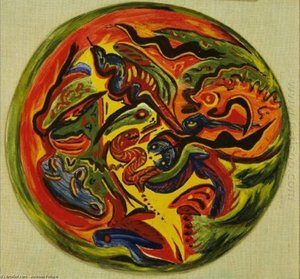
Circle (1941) by Jackson Pollock
#72

Circle

1941

Jackson Pollock’s Circle: A Dance of Color and Chaos Jackson Pollock's “Circle,” painted in 1941, isn’t merely a depiction of a circle; it’s an embodiment of the burgeoning…

Order a reproduction →
Untitled 23 by Jackson Pollock
#73

Untitled 23

A Chaotic Symphony in Black and White: Deconstructing Pollock’s “Untitled 23” Jackson Pollock's "Untitled 23" isn’t merely an ink drawing; it’s a visceral exploration of energy, anxiety, and…

Commission a hand-painted copy →
Easter and the Totem (1953) by Jackson Pollock
#74

Easter and the Totem

1953

Unveiling Jackson Pollock’s “Easter and the Totem” A Masterpiece of Abstract Expressionism: Jackson Pollock's 1953 painting, Easter and the Totem, stands as a pivotal work within the Abstract…

Bring it home →
Untitled (Composition with Pouring I) by Jackson Pollock
#75

Untitled (Composition with Pouring I)

A Revolution in Paint: Exploring Jackson Pollock’s “Untitled (Composition with Pouring I)” This captivating work embodies the raw energy and groundbreaking innovation that defined Jackson Pollock's contribution to…

Bring it home →
Untitled 13 by Jackson Pollock
#76

Untitled 13

In the pantheon of twentieth-century art, few names command as much visceral respect and intrigue as Jackson Pollock. His work Untitled 13 serves as a profound testament to…

Order a reproduction →
Male and Female (1942) by Jackson Pollock
#78

Male and Female

1942

Jackson Pollock: A Pioneer of Abstract Expressionism Jackson Pollock (1912–1956) stands as one of the most transformative figures in 20th-century art, irrevocably altering perceptions of painting and establishing…

Commission a hand-painted copy →
Miners by Jackson Pollock
#79

Miners

Paul Jackson Pollock: A Pioneer of Abstract Expressionism Paul Jackson Pollock (1912-1956) stands as one of the most influential figures in 20th-century art, irrevocably shaping the trajectory of…

Bring it home →
GREETINGS by Jackson Pollock
#80

GREETINGS

Paul Jackson Pollock's “Greetings” stands as a testament to the radical spirit of Abstract Expressionism, encapsulating the movement’s core tenets within a deceptively simple composition. This artwork, created…

Bring it home →
Troubled Queen by Jackson Pollock
#81

Troubled Queen

Een Realm van Innerlijke Onrust: Een Diepgaande Analyse van Jackson Pollock’s Abstracte Visie Jackson Pollock staat bekend om zijn baanbrekende stijl binnen de abstracte expressievorming, een beweging die…

Commission a hand-painted copy →
Number 23 (1948) by Jackson Pollock
#82

Number 23

1948

Jackson Pollock’s “Number 23,” completed in 1948, stands as an undeniable cornerstone of Abstract Expressionism—a movement that fundamentally challenged artistic conventions and prioritized emotional expression over representational accuracy.…

Bring it home →
Untitled (Silkcreen no. VI) by Jackson Pollock
#83

Untitled (Silkcreen no. VI)

A Dance of Chaos and Connection: Exploring Jackson Pollock’s “Untitled (Silkcreen no. VI)” Paul Jackson Pollock's "Untitled (Silkcreen no. VI)" stands as an emblem of Abstract Expressionism, a…

Order a reproduction →
Untitled 27 by Jackson Pollock
#84

Untitled 27

Jackson Pollock's “Untitled 27,” a monumental drip painting from 1950, stands as an emblem of Abstract Expressionism—a movement that irrevocably altered the course of twentieth-century art. More than…

Order a reproduction →
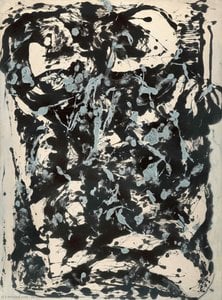
Silver and Black I by Jackson Pollock
#85

Silver and Black I

A Symphony of Chaos: Exploring Jackson Pollock’s “Silver and Black I” “Silver and Black I” is a powerful example of Jackson Pollock's revolutionary contribution to Abstract Expressionism, created…

Commission a hand-painted copy →
Untitled 4 by Jackson Pollock
#86

Untitled 4

In the realm of Abstract Expressionism, few works capture the raw, unbridled energy of the human psyche quite like Paul Jackson Pollock’s Untitled 4. This mesmerizing monochrome composition…

Bring it home →
Shimmering Substance (1946) by Jackson Pollock
#87

Shimmering Substance

1946

Shimmering Substance: A Dance of Chaos and Control Jackson Pollock’s “Shimmering Substance,” completed in 1946, stands as a cornerstone of Abstract Expressionism—a movement that irrevocably altered the landscape…

Order a reproduction →
Composition by Jackson Pollock
#88

Composition

Jackson Pollock executed the painting titled Composition in 1949. This work emerged during a period when the artist was developing a specific approach to the canvas, moving away…

Order a reproduction →
Gothic by Jackson Pollock
#89

Gothic

The canvas known as Gothic emerges from the creative mind of Paul Jackson Pollock. Created in 1944, this work exists within the permanent collection of The Museum of…

Order a reproduction →
Untitled (Cut-out) by Jackson Pollock
#91

Untitled (Cut-out)

In the pantheon of Abstract Expressionism, few works capture the raw, visceral energy of the mid-century avant-garde quite like Paul Jackson Pollock’s "Untitled (Cut-out)." Created in 1954, a…

Bring it home →
Going West (1935) by Jackson Pollock
#92

Going West

1935

Jackson Pollock's "Going West," painted in 1935, isn’t merely a depiction of a winter landscape; it’s a deeply personal narrative woven into the fabric of American pioneering spirit.…

Order a reproduction →
Number 2 (1951) by Jackson Pollock
#93

Number 2

1951

A Symphony of Chaos and Color: Decoding Jackson Pollock’s “Number 2” Jackson Pollock's "Number 2," completed in 1951, stands as a cornerstone of Abstract Expressionism—a movement that irrevocably…

Commission a hand-painted copy →
Number 3, 1950 by Jackson Pollock
#94

Number 3, 1950

A Universe of Color: Exploring Jackson Pollock’s Number 3, 1950 Jackson Pollock's *Number 3, 1950* is arguably one of the most iconic and significant works of Abstract Expressionism.…

Bring it home →
Untitled 1 by Jackson Pollock
#95

Untitled 1

Paul Jackson Pollock (1912-1956), a titan of Abstract Expressionism, remains one of the most enigmatic figures in twentieth-century art. His monumental canvases—like “Untitled 1”—are not merely splashes of…

Commission a hand-painted copy →
Echo by Jackson Pollock
#96

Echo

Jackson Pollock’s “Echo,” Number 25, 1951, stands as a testament to the fervor of Abstract Expressionism—a movement that sought to liberate art from representational constraints and delve into…

Order a reproduction →
Composition with Woman by Jackson Pollock
#97

Composition with Woman

A Vortex of Emotion: Decoding Jackson Pollock’s Abstract Expressionism This captivating painting embodies the raw energy and emotional intensity that define Jackson Pollock's revolutionary contribution to 20th-century art.…

Commission a hand-painted copy →
Untitled (1941) by Jackson Pollock
#98

Untitled

1941

Jackson Pollock's "Untitled," painted in 1941, stands as a cornerstone of Abstract Expressionism—a movement that fundamentally challenged artistic conventions and prioritized spontaneous gesture over meticulous representation. This monumental…

Order a reproduction →
Oranje Hoofd by Jackson Pollock
#99

Oranje Hoofd

Jackson Pollock’s ‘Orange Head’, een werk dat in 1938 werd geschapen, is meer dan zomaar een schilderij; het is een visuele explosie van emotie en een krachtige manifestatie…

Bring it home →
Untitled (13) (1943) by Jackson Pollock
#100

Untitled (13)

1943

Jackson Pollock: A Pioneer of Abstract Expressionism Jackson Pollock (1912-1956) stands as one of the most influential figures in 20th-century art, irrevocably altering the landscape of painting and…

Bring it home →

Jackson Pollock's paintings by period

The subjects Jackson Pollock painted most

The four subjects that return most often among these masterpieces, with the finest example of each.

Where to see Jackson Pollock's paintings

The 6 museums that hold the most of the paintings on this page.

Museum City Works by Jackson Pollock Paintings from this list
MoMA - Museum of Modern Art, New York CityMoMA - Museum of Modern Art New York City 4 Wit Licht, Number 1, There Were Seven in Eight
Art Institute of Chicago, ChicagoArt Institute of Chicago Chicago 3 The key, Untitled, Grayed Rainbow
Private Collection, New York CityPrivate Collection New York City 1 Nummer 1, 1949
Chrysler Museum of Art, NorfolkChrysler Museum of Art Norfolk 1 Number 23, 1951
Tate Modern, LondenTate Modern Londen 1 Summertime: Number 9A
Stedelijk Museum, AmsterdamStedelijk Museum Amsterdam 1 The Water Bull

Jackson Pollock through the decades: one masterpiece for each

  1. 1930s
    The Flame (1938) by Jackson Pollock
    No. 23 of 100

    The Flame

    Age 18 – 27

    The painting The Flame consists of oil on fiberboard, measuring 51 x 76 cm. The surface features a central motif of an incandescent blaze that moves through an…

  2. 1940s
    Number 5 (1948) by Jackson Pollock
    No. 7 of 100

    Number 5

    Age 28 – 37

    A Universe Unfurled: Decoding Jackson Pollock’s No. 5, 1948 Jackson Pollock’s *No. 5, 1948* isn't simply a painting; it is an event frozen in time – a visual…

  3. 1950s
    Nummer 1, 1949 (1950) by Jackson Pollock
    No. 2 of 100

    Nummer 1, 1949

    Age 38 – 44 · Private Collection

    Gecreëerd in 1950, belichaamt dit betoverende werk de revolutionaire geest van het Abstract Expressionisme en staat het als een uitstekend voorbeeld van Jackson Pollock’s iconische “drip” techniek. Met…

Jackson Pollock's paintings: frequently asked questions

What is the most famous Jackson Pollock painting?Show the answer

Herfstritm No. 30. Next come Nummer 1, 1949 (1950) and Convergentie.

Which are the 10 most famous Jackson Pollock paintings?Show the answer

Herfstritm No. 30, Nummer 1, 1949, Convergentie, Nummer 1A, Wit Licht, One. Number 31, 1950, Number 5, Mural, Number 5 and Alchemy. The ranking above gives the year and the museum of each.

How many paintings by Jackson Pollock are there?Show the answer

Our catalogue lists 186 works by Jackson Pollock, dated from 1935 to 1954.

Where can I see the most famous Jackson Pollock paintings?Show the answer

Most of them are in MoMA - Museum of Modern Art (New York City), Art Institute of Chicago (Chicago) and Private Collection (New York City). The table above lists the museums one by one.

In which period did Jackson Pollock paint the best-known works?Show the answer

In 1940s: 29 of the 100 works on this page date from then, among them Number 5.

What is the earliest famous Jackson Pollock painting, and the latest?Show the answer

The earliest on this page is Going West (1935), the latest Wit Licht (1954).

What subjects did Jackson Pollock paint?Show the answer

Drip painting (43), Color field (31) and Chaos (27), among the 100 works on this page.

What did Jackson Pollock paint on, and with what?Show the answer

Acrylic On Canvas: 39 of the 100 works on this page.

Which movement does Jackson Pollock's art belong to?Show the answer

Abstract expressionism, as the paintings on this page show.

What Jackson Pollock paintings does the MoMA - Museum of Modern Art hold?Show the answer

Wit Licht, Number 1 and There Were Seven in Eight are among the 3 works on this page held by the MoMA - Museum of Modern Art, New York City.

Where can I buy a Jackson Pollock reproduction?Show the answer

Yes. Every painting on this page can be ordered as a museum-quality, hand-painted oil reproduction or a fine art print, in the size you choose, from the painting's own page.

Jackson Pollock: biography

Vroege jaren, familie en opleiding

Het verhaal van Paul Jackson Pollock begint in het ruige landschap van Cody, Wyoming, waar hij op 28 januari 1912 werd geboren. Hij was de jongste van vijf broers, geboren uit het huwelijk van Stella May McClure en LeRoy Pollock. Zijn vader werkte als landmeter, een beroep dat constante beweging vereiste door het uitgestrekte Amerikaanse Westen. Dit nomadische bestaan betekende dat de vroege jaren van de jonge jongen werden gekenmerkt door frequente verhuizingen, een rusteloosheid die de verschuivende horizonnen van het werk van zijn vader leek te weerspiegelen. Deze vroege reizen door het Westen boden hem een directe, onmiddellijke ontmoeting met de natuurlijke wereld en de spirituele resonantie van de inheemse Amerikaanse kunst; indrukken die zich lang voordat hij ooit een penseel vasthield, stil in zijn onderbewustzijn zouden nestelen.

Naarmate hij ouder werd, leidde de zoektocht naar een gevoel van thuishoren hem naar de stedelijke energie van de kust. Hij schreef zich in op de Manual Arts High School in Los Angeles, op zoek naar een formele structuur voor zijn ontluikende impulsen. De ware vorming van zijn techniek vond echter pas veel later plaats, toen hij naar New York City verhuisde. Het was daar, bij de Art Students League, dat hij begon aan een lange en transformerende studieperiode. Van 1929 tot 1942 werkte hij onder de begeleiding van Thomas Hart Benton. Terwijl Benton de nadruk legde op ritmische composities en het narratieve gewicht van het Amerikaanse leven, begon de jonge student al te dwalen naar zijn eigen, meer abstracte, innerlijke waarheden.

De Ontwikkeling van een Unieke Techniek

Tegen 1947 had er een diepgaande verschuiving plaatsgevonden in de manier waarop hij het canvas benaderde. Hij maakte afstand van de traditionele ezel en koos er in plaats daarvan voor om zijn doeken rechtstreeks op de vloer te leggen. Deze verandering stelde hem in staat om boven zijn werk te staan, waardoor hij een integraal onderdeel werd van de creatieve handeling zelf. Hij bracht de verf niet simpelweg aan; hij liet de verf druipen, spatten en wierp het van bovenaf op het doek, waarbij de vloeistof in onvoorspelbare patronen naar beneden viel. Deze methode transformeerde de handeling van het schilderen tot een fysieke performance, waarbij de zwaartekracht en de gebaren de uiteindelijke vorm dicteerden.

Zijn instrumenten waren even onconventioneel als zijn methoden. Hij greep naar stokken, messen en zelfs spuiten om het vloeibare medium te manipuleren. Soms gebruikte hij troffels of druppelende, verdunde verf om specifieke texturen te creëren. Hij krabde vaak in het oppervlak of gebruikte vreemde voorwerpen om een dikke korst van verf op te bouwen, wat het werk een tactiele, sculpturale kwaliteit gaf. Dit proces ging minder over gecontroleerd penseelwerk en meer over een ritmische, bijna primitieve ontlading van energie op het oppervlak.

Belangrijke Werken en Artistieke Expressies

Naarmate hij zich losmaakte van de beperkingen van de ezel, begonnen zijn doeken een meer instinctieve en viscerale omgang met het medium te weerspiegelen. In 1943 creëerde hij Mural, een monumentaal werk van circa 2,4 bij 6,1 meter, dat zijn vermogen demonstreerde om een enorm oppervlak te beheersen. Tijdens deze periode leidden zijn verkenningen van het onderbewuste en de handeling van het schilderen zelf tot werken als Eyes in the Heat, vervaardigd rond 1946. Deze stukken waren niet louter afbeeldingen, maar eerder verslagen van een fysieke aanwezigheid, waarbij de beweging van zijn gehele lichaam de plaatsing van elke spat en elke kleurvlek dicteerde.

De jaren die volgden, zagen hem de ritmische, 'all-over' composities perfectioneren die zijn reputatie zouden definiëren. Hij streefde ernaar een gevoel van grenzeloze ruimte te creëren, waarin geen enkel enkel punt de overhand had op de rest. Deze benadering is duidelijk zichtbaar in Number 1, 1949, een werk dat een rauwe uitbarsting van energie vastlegt, en in Lavender Mist, Number 1, 1950, wat een essentieel onderdeel van zijn oeuvre blijft. In deze werken creëert het samenspel tussen controle en toeval een delicaat evenwicht, alsof de verf werd losgelaten in plaats van aangebracht.

Zijn latere experimenten bleven de grenzen verleggen van hoe verf op een horizontaal oppervlak gemanipuleerd kon worden. Hij gebruikte vaak stokken, messen of zelfs de verfblikken zelf om pigment te smijten, wat resulteerde in complexe netwerken van lijnen. Deze methode is duidelijk te zien in Blue Poles, Number 11, 1952 en in het energieke Convergence. Door deze werken bereikte hij een staat waarin het schilderij een eigen leven leek te hebben, voortgekomen uit een diepe onderdompeling in zijn eigen verbeelding.

Mecenassen, Atelier en Opdrachten

Het pad van zijn carrière werd gevormd door zowel maatschappelijke noodzaak als de vrijgevigheid van enkele cruciale steunpilaren. Tussen 1938 en 1942 vond hij stabiel werk als schilder voor het WPA Federal Art Project, een periode die een noodzakelijk ritme bracht in zijn vormende jaren. Deze stabiliteit maakte plaats voor een meer persoonlijke en transformerende alliantie toen Peggy Guggenheim hem in juli 1943 een galeriecontract aanbood. Haar steun bleek meer dan louter professioneel; in 1945 verstrekte zij een aanbetaling van 2.000 dollar om hem te helpen een eigen woning te bemachtigen, een gebaar dat zijn persoonlijke leven diep verweefde met zijn artistieke overleving.

Zijn creatieve leven vond uiteindelijk zijn middelpunt in East Hampton, New York. Daar, in het Pollock-Krasner House and Studio, leefde en werkte hij zij aan zij met zijn echtgenote, Lee Krasner. Het atelier was een plek van intense fysieke beweging, waar de grenzen tussen de kunstenaar en het canvas vervaagden. Hij liet de traditionele ezel vaak achter zich en gaf de voorkeur aan het leggen van zijn doeken op de vloer, om zo de verf van alle kanten te kunnen benaderen. Deze werkruimte was niet louter een plek voor productie, maar een broedplaats van diepe, rusteloze energie waar zijn meest radicale experimenten tot leven kwamen.

Latere Jaren en Dood

Het persoonlijke leven van de kunstenaar was diep verweven met zijn creatieve strijd. In 1945 trouwde hij met de kunstenares Lee Krasner, een verbintenis die een betekenisvolle aanwezigheid vormde in zijn leven tijdens zijn meest transformatieve jaren. Toch bleef er, onder het oppervlak van zijn professionele opmars, een voortdurende schaduw aanwezig. Hij worstelde gedurende zijn hele leven met een alcoholverslaving, een strijd die zijn bestaan vaak bemoeilijkte en zijn vermogen om met de druk van zijn groeiende roem om te gaan, onder druk zette.

Deze interne en externe turbulentie bereikte een tragisch einde in East Hampton, New York, VS. Op 11 augustus 1956 werd zijn leven, op 44-jarige leeftijd, abrupt beëindigd door een plotseling, gewelddadig ongeval. Tijdens het rijden raakte hij betrokken bij een eenzijdig auto-ongeluk veroorzaakt door alcohol. De crash bleek fataal en liet een nalatenschap na die even tumultueus was als de verf die hij over zijn canvassen wierp.

Nalatenschap en invloed op de moderne kunst

De rimpelingen van zijn radicale methoden reikten veel verder dan de studioruimtes van East Hampton. Door de traditionele band tussen de penseel en de ezel te verbreken, werd Jackson Pollock een centrale figuur in de abstract expressionistische beweging, een verschuiving die het traject van de Amerikaanse creativiteit fundamenteel veranderde. Zijn aanwezigheid hielp de positie van New York City te consolideren als een wereldwijd centrum voor moderne kunst, waardoor het hart van de avant-garde verschoof van de Europese dominantie. Hij behoorde tot de eerste Amerikaanse schilders die werden erkend als gelijken van de grote Europese meesters uit de 20e eeuw, waarmee hij bewees dat een nieuwe, visceraal taalgebruik kon ontstaan uit de bodem van de Verenigde Staten.

Zijn invloed fungeerde als een katalysator voor vele daaropvolgende kunststromingen die in zijn kielzog verschenen. De manier waarop hij zich tot het canvas verhield—door het te behandelen als een arena voor fysieke actie in plaats van louter een oppervlak voor representatie—opende de deuren voor velen die het onderbewuste wilden uitdrukken door middel van gebaar. Deze nadruk op het proces van de creatie zelf heeft een blijvende stempel gedrukt op de geschiedenis van de moderne kunst, en verzekerde dat het spontane en het ongeplande voor altijd een plaats zullen behouden in het instrumentarium van de kunstenaar.

Waar u zijn werken vandaag de dag kunt bewonderen

Om de fysieke sporen van zijn beweging werkelijk te ervaren, moet men reizen naar de grote instituten die zijn radicale energie hebben bewaard. In New York City herbergt het Museum of Modern Art verschillende van zijn doeken, waardoor toeschouwers voor de uitgestrekte, ongecentreerde composities kunnen staan die zijn tijdperk definieerden. De National Gallery of Art in Washington D.C. beheert eveneens zijn werken en biedt een ruimte om de ingewikkelde netwerken van kleur te bestuderen die hij met zijn unieke methoden wist te creëren. Aan de andere kant van de Atlantische Oceaan houdt de Tate Gallery in Londen zijn aanwezigheid levend binnen haar collecties, wat ervoor zorgt dat zijn invloed ver reikt tot voorbij de Amerikaanse kusten.

Voor wie op zoek is naar een intiemere verbinding met zijn proces, biedt het Pollock-Krasner House and Studio in East Hampton een diep gevoel van betekenisvolle plek. Deze locatie, een nationaal historisch monument, was de ruimte waar hij en zijn echtgenote, Lee Krasner, leefden en werkten. Het landgoed blijft een vitale schakel met zijn leven en bewaart de omgeving die zijn overgang van traditionele vormen naar de spontane, op de vloer gebaseerde methoden voedde die de koers van de moderne schilderkunst hebben veranderd. Een wandeling door deze ruimtes geeft een tastbaar besef van de schaal en de fysieke realiteit van zijn creatieve strijd.

  • Number 1, 1949
  • Blue Poles: Number 11, 1952
  • Mural (1943)
  • Convergence

All 186 works by Jackson Pollock →