Antoon Van Dyck, 1599 – 1641

Antoon Van Dyck: The 100 Most Famous Paintings

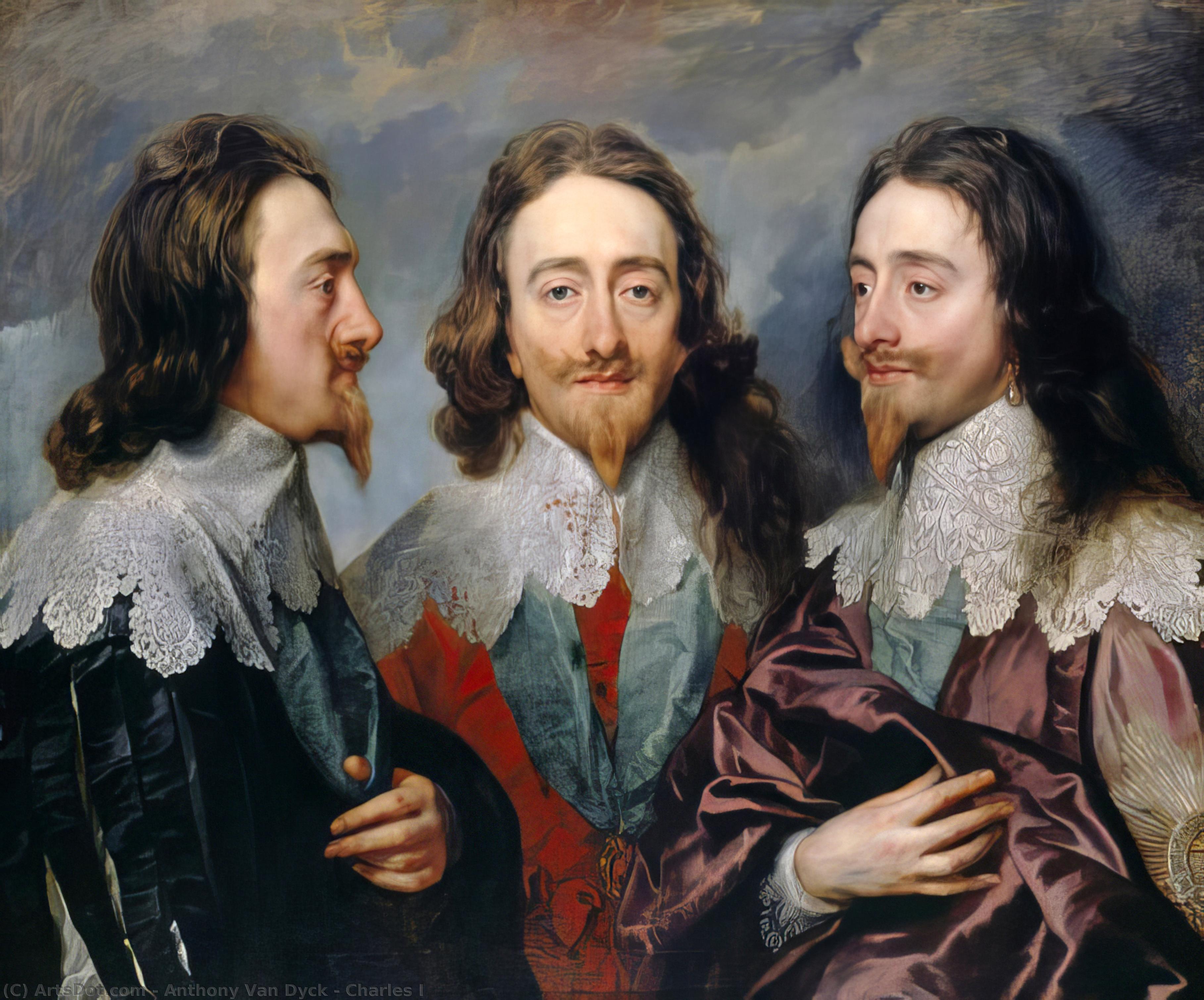
Charles I in Three Positions (1636) is the most famous painting by Antoon Van Dyck, held by the Royal Collection in Londen. Family Portrait (1621) and Portrait of Isabella Clara Eugenia as Widow (1628) are the next two works the world knows best. From the 1,620 works of Antoon Van Dyck in our catalogue, here are the 100 that collectors and museum visitors look at most, with the year, the museum and the story of each.

Ranked by our popularity score, which combines the searches, visits and orders for each work. Updated oktober 2026. Every masterpiece on this page can be ordered as a museum-quality, hand-painted oil reproduction or a fine art print, at the size you choose.

Portrait of Antoon Van Dyck
Antoon Van Dyck · 1599 – 1641
Born · died
1599 – 1641, Antwerpen
Movement
Baroque style
Works in our catalogue
1.620
Most famous
Charles I in Three Positions (1636)
Most works at
Bayerische Staatsgemäldesammlungen

Top 10: Antoon Van Dyck's best-known paintings

Charles I in Three Positions (1636) by Antoon Van Dyck
1

Charles I in Three Positions

1636 · Olieverf op canvas · Royal Collection, Londen

"Charles I in Three Positions" is een opmerkelijke getuigenis van het meesterschap van Sir Anthony van Dyck binnen de barokke portretkunst. Dit meesterwerk op doek, geschilderd tussen 1635 en 1636, toont de uitzonderlijke vaardigheid van deze Vlaamse kunstenaar en zijn diepgaande invloed op de Europese kunst. Het schilderij maakt deel uit van de prestigieuze Koninklijke Collectie en hangt momenteel in de King's Drawing Room op Windsor Castle.

Family Portrait (1621) by Antoon Van Dyck
2

Family Portrait

1621 · Oil On Canvas · Hermitage Museum, Sint-Petersburg

To gaze upon this magnificent family portrait is to step directly into the opulent drawing rooms of the early seventeenth century. It captures not merely three figures—a distinguished man, an elegant woman, and a cherished child—but an entire tableau of familial pride and societal standing. The composition itself speaks volumes; every fold of fabric, every carefully placed hand, contributes to a narrative of enduring connection. The rich, dramatic red background…

Portrait of Isabella Clara Eugenia as Widow (1628) by Antoon Van Dyck
3

Portrait of Isabella Clara Eugenia as Widow

1628 · Oil On Canvas · Museo de Arte de Ponce, Ponce

Sir Anthony van Dyck’s “Portrait of Isabella Clara Eugenia as Widow” is more than just a depiction of a noblewoman; it's a carefully constructed tableau of power, grief, and the enduring legacy of a formidable ruler. Painted in 1628, this oil-on-canvas work transports us to the heart of the Spanish Netherlands during a period of significant political and personal upheaval. Isabella Clara Eugenia, daughter of Philip II of Spain, served…

Jacqueline van Caestre (1622) by Antoon Van Dyck
4

Jacqueline van Caestre

1622 · Oil On Panel · Royal Łazienki Museum, Warschau

The portrait of Jacqueline van Caestre, painted in 1622 by the masterful Sir Anthony van Dyck, is more than a mere likeness; it’s a carefully constructed tableau of wealth, status, and burgeoning domesticity. Within its richly layered composition lies a captivating story of a noblewoman navigating the complexities of marriage and courtly life in 17th-century Antwerp. Van Dyck, already establishing his signature style—characterized by an almost sensual realism and a…

Susanna and the Elders (1622) by Antoon Van Dyck
5

Susanna and the Elders

1622 · Olieverf op canvas · Alte Pinakothek, München

In the grand tapestry of the Flemish Baroque, few works capture the visceral intersection of vulnerability and voyeurism as profoundly as Sir Anthony van Dyck’s Susanna and the Elders. Painted around 1622, this monumental canvas is far more than a mere biblical illustration; it is a psychological drama frozen in time. The scene centers on Susanna, a figure of profound grace and purity, caught in a moment of harrowing intrusion.…

Genoese Noblewoman (1622) by Antoon Van Dyck
6

Genoese Noblewoman

1622 · Oil On Canvas · The Frick Collection, New York City

Anthony van Dyck's "Genoese Noblewoman," painted circa 1625-1627, isn’t merely a portrait; it’s a meticulously crafted window into the opulent world of early 17th-century Genoa. This captivating work, now residing within The Frick Collection in New York City, offers a rare glimpse into the refined tastes and social dynamics of a wealthy Italian city-state – a vibrant hub of commerce, art, and cultural exchange during a period of immense artistic…

Henrietta Maria (1635) by Antoon Van Dyck
7

Henrietta Maria

1635 · Oil On Canvas

The gaze of Henrietta Maria meets the viewer through this commanding portrait by Anthony van Dyck. Executed in 1636, the work captures Henrietta Maria of France in a moment of poised royal dignity. She exists here as the Queen of England, a position she holds through her marriage to King Charles I. The painting functions as a visual declaration of her status and her presence within the English court.

Portrait of Queen Henrietta-Maria (1638) by Antoon Van Dyck
8

Portrait of Queen Henrietta-Maria

1638 · Oil On Canvas · Hermitage Museum, Sint-Petersburg

To stand before this portrait is to encounter the quiet gravity of the seventeenth-century English court. The Queen stands slightly off-center, her figure anchored by the heavy weight of crimson drapery and a draped table. There is a certain stillness here, a moment caught between the political tensions of 1638 and the personal dignity of the sitter. Van Dyck uses light to sculpt her form, pulling her face and chest…

The healing of the paralytic (1620) by Antoon Van Dyck
9

The healing of the paralytic

1620 · Oil On Canvas · Bayerische Staatsgemäldesammlungen, München

In this oil painting, titled The healing of the paralytic, Anthony van Dyck explores a moment of profound spiritual intervention. The work, which dates to about 1618-20, captures the immediate aftermath of a miracle. We find ourselves witnessing the precise instant of transition between infirmity and restoration. The subject matter is drawn from the New Testament, specifically the narratives found in Matthew 9:1-8 or John 5:1-15.

Portrait of Alexandre della Faille (1589-1653) (1632) by Antoon Van Dyck
10

Portrait of Alexandre della Faille (1589-1653)

1632 · Oil On Canvas · Koninklijke Musea voor Schone Kunsten van België, Brussel

A dignified three-quarter length portrait, this work captures a middle-aged man positioned centrally against a dark, atmospheric background. The subject, Alexandre della Faille, is rendered with a sense of quiet authority and formal composure. A voluminous white ruff collar acts as the primary focal point, its crisp texture contrasting sharply against the heavy, dark fabric of his cloak. Light enters from the upper left, casting soft shadows across the right…

The rest of the Antoon Van Dyck ranking, 11 to 100

The Pietà (1629) by Antoon Van Dyck
#12

The Pietà

1629 · Museo del Prado

Step closer to observe the weight of this scene. In this 1629 composition, we find the Virgin Mary cradling the limp, pale body of Christ. The arrangement is…

Order a reproduction →
The Lomellini Family (1627) by Antoon Van Dyck
#16

The Lomellini Family

1627

To stand before 'The Lomellini Family' is to step directly into the gilded drawing rooms of 17th-century Genoese aristocracy. Anthony van Dyck, a painter whose elegance seemed to…

Order a reproduction →
Moses and the Brazen Serpent (1530) by Antoon Van Dyck
#19

Moses and the Brazen Serpent

1530

Moses and the Brazen Serpent by Anthony van Dyck captures a moment of divine intervention from the Book of Numbers. The oil painting on canvas depicts the biblical…

Samson and Delilah (1630) by Antoon Van Dyck
#24

Samson and Delilah

1630 · Kunsthistorisches Museum

In the grand tapestry of the Flemish Baroque, few moments capture the tension between divine strength and human frailty as poignantly as Sir Anthony van Dyck’s Samson and…

Bring it home →
Charles I (1600-49) on Horseback (1635) by Antoon Van Dyck
#26

Charles I (1600-49) on Horseback

1635 · Hampton Court Palace

The scene unfolds with the commanding presence of Charles I (1600-49) on Horseback, a work by the artist Anthony van Dyck. Created in 1635, the portrait captures the…

Bring it home →
Cupid and Psyche (1640) by Antoon Van Dyck
#27

Cupid and Psyche

1640 · Royal Collection

Anthony van Dyck's "Cupid and Psyche," painted in 1640, is more than just a depiction of a mythological romance; it’s a distillation of the Baroque spirit – a…

Bring it home →
Queen Henrietta Maria of England (1620) by Antoon Van Dyck
#28

Queen Henrietta Maria of England

1620 · Bayerische Staatsgemäldesammlungen

In this three-quarter length portrait, Anthony van Dyck positions Queen Henrietta Maria of England slightly off-center. This subtle shift creates a quiet tension within the frame. A luminous…

Bring it home →
Queen Henrietta Maria of England (1639) by Antoon Van Dyck
#30

Queen Henrietta Maria of England

1639 · Statens Museum for Kunst

Queen Henrietta Maria of England, painted by Anthony van Dyck, captures the queen consort of Charles I. Dated 1636, the portrait presents the woman who was born in…

Bring it home →
Saint Sebastian and the Angel (1631) by Antoon Van Dyck
#31

Saint Sebastian and the Angel

1631 · Galleria Sabauda

A diagonal line cuts through the composition, pulling the eye from the descending angel down to the slumped, pale form of Saint Sebastian. The saint’s skin is luminous,…

Bring it home →
Portrait of a painter (1640) by Antoon Van Dyck
#32

Portrait of a painter

1640 · Kunstmuseum Basel

We are looking at Portrait of a painter, a work by Sir Anthony van Dyck. Created about 1640, this piece presents a man whose identity is tied closely…

Bring it home →
St Jerome (1620) by Antoon Van Dyck
#35

St Jerome

1620 · Nationalmuseum

The composition centers on the muscular, elderly figure of St. Jerome, positioned in a wilderness setting. His torso is partially exposed, draped in a voluminous red cloth that…

Order a reproduction →
Venetia, Lady Digby (1634) by Antoon Van Dyck
#36

Venetia, Lady Digby

1634

To stand before this magnificent portrait is to step directly into the dramatic heart of the seventeenth century. Sir Anthony van Dyck’s depiction of Venetia, Lady Digby is…

Order a reproduction →
Crucifixion (1622) by Antoon Van Dyck
#38

Crucifixion

1622 · San Zaccaria

Sir Anthony van Dyck's 1622 depiction of the Crucifixion is not merely a representation of a biblical event; it’s a visceral exploration of human suffering and spiritual anguish,…

Commission a hand-painted copy →
Ottaviano Canevari (1627) by Antoon Van Dyck
#40

Ottaviano Canevari

1627 · The Frick Collection

Sir Anthony van Dyck’s 1627 portrait of Ottaviano Canevari is more than simply a likeness; it's a carefully constructed tableau of intellect, status, and the quiet dignity of…

Bring it home →
Lamentation of Christ (1620) by Antoon Van Dyck
#41

Lamentation of Christ

1620 · Bayerische Staatsgemäldesammlungen

In this 1620 work, we find ourselves drawn into a tight, pyramidal arrangement of figures that centers entirely on the lifeless body of Christ. A heavy, sacred silence…

Commission a hand-painted copy →
Saint Sebastian (1620) by Antoon Van Dyck
#44

Saint Sebastian

1620 · Bayerische Staatsgemäldesammlungen

The oil on canvas known as Saint Sebastian is an artwork by Anthony van Dyck. Created about 1620, the painting captures a moment of martyrdom. The figure is…

Order a reproduction →
Sir Kenelm Digby (1640) by Antoon Van Dyck
#47

Sir Kenelm Digby

1640 · National Portrait Gallery

To gaze upon this portrait of Sir Kenelm Digby is to step directly into the opulent, charged atmosphere of the early seventeenth century English court. The subject, depicted…

Commission a hand-painted copy →
Portrait of an Old Man (1618) by Antoon Van Dyck
#49

Portrait of an Old Man

1618 · Liechtenstein Museum

Sir Anthony van Dyck's "Portrait of an Old Man," painted circa 1618, is more than a simple likeness; it’s a profound meditation on time, wisdom, and the quiet…

Order a reproduction →
Portrait of a Man (1922) by Antoon Van Dyck
#50

Portrait of a Man

1922 · Bayerische Staatsgemäldesammlungen

This work is a Portrait of a Man by the Flemish Baroque artist Anthony van Dyck. Dated 1922, the painting presents a formal, full-length composition. The subject is…

Order a reproduction →
Charles I in Three Positions (1636) by Antoon Van Dyck
#51

Charles I in Three Positions

1636 · Royal Collection

In the grand tapestry of Baroque portraiture, few works command the room with as much quiet authority as Sir Anthony van Dyck’s “Charles I in Three Positions.” Completed…

Order a reproduction →
Portrait of a Genovese Gentleman (1621) by Antoon Van Dyck
#53

Portrait of a Genovese Gentleman

1621 · Gemäldegalerie

To stand before this portrait is to step directly into the opulent, sophisticated world of early 17th-century European aristocracy. Sir Anthony van Dyck, the Flemish master whose brushstrokes…

Order a reproduction →
Portrait of a Man (1618) by Antoon Van Dyck
#58

Portrait of a Man

1618 · Liechtenstein Museum

Sir Anthony van Dyck's “Portrait of a Man,” painted circa 1618-1619, is not merely a likeness; it’s a carefully constructed meditation on presence and authority. This small yet…

Commission a hand-painted copy →
Marie de Raet (1631) by Antoon Van Dyck
#59

Marie de Raet

1631 · Wallace Collection

To stand before Marie de Raet is to be enveloped in the profound stillness of the early seventeenth century. This magnificent portrait by Sir Anthony van Dyck, dating…

Bring it home →
The Virgin and Child (1631) by Antoon Van Dyck
#63

The Virgin and Child

1631 · Buckingham Palace

In this Baroque oil painting, the Virgin Mary is positioned at the center of a pyramidal structure, cradling the Christ Child. She wears a rose-colored tunic beneath a…

Order a reproduction →
Lord George Stuart (1638) by Antoon Van Dyck
#64

Lord George Stuart

1638 · National Portrait Gallery

To gaze upon this portrait of Lord George Stuart is to step directly into the opulent, yet deeply thoughtful, world of early seventeenth-century English aristocracy. Sir Anthony van…

Order a reproduction →
Queen Henrietta Maria (1760) by Antoon Van Dyck
#66

Queen Henrietta Maria

1760 · Birmingham Museum and Art Gallery

In this oil on canvas work from 1636, Sir Anthony van Dyck presents Queen Henrietta Maria. The portrait captures the queen, who lived from 1609 to 1669, with…

Order a reproduction →
The Polish Rider (1620) by Antoon Van Dyck
#69

The Polish Rider

1620 · Bayerische Staatsgemäldesammlungen

The composition is dominated by the diagonal movement of the horse and rider. This movement creates a sense of forward momentum across the canvas. The subject is a…

Order a reproduction →
Koningin Henrietta Maria (1636) by Antoon Van Dyck
#73

Koningin Henrietta Maria

1636 · Metropolitan Museum of Art

Anthony van Dyck's "Koningin Henrietta Maria," geschilderd in 1636, is meer dan louter een portret; het is een minutieus vervaardigd document van macht, geloof en de complexe diplomatieke…

Order a reproduction →
Lady Dacre (1633) by Antoon Van Dyck
#74

Lady Dacre

1633 · Denver Art Museum

Sir Anthony van Dyck’s “Lady Dacre” is not merely a portrait; it's a carefully constructed tableau of Renaissance elegance, imbued with subtle symbolism and the quiet dignity of…

Commission a hand-painted copy →
Charles i - (16) by Antoon Van Dyck
#76

Charles i - (16)

In this work, titled Charles i - (16), Anthony van Dyck presents a formal bust-length depiction of the monarch. The subject is Charles I, who held the titles…

Bring it home →
Deux têtes d (1650) by Antoon Van Dyck
#77

Deux têtes d

1650 · Musée des Beaux-Arts de Lyon

Sir Anthony van Dyck's "Deux têtes d" – literally, “Two Heads” – is not merely a painting; it’s an arresting tableau of psychological depth and subtle drama. Completed…

Bring it home →
Christ carrying the Cross by Antoon Van Dyck
#83

Christ carrying the Cross

Musei di Strada Nuova

In Christ carrying the Cross by Anthony van Dyck, the viewer is met with a tightly cropped, bust-length portrait. The composition focuses entirely on the upper torso and…

Bring it home →
Ecce Homo (1626) by Antoon Van Dyck
#85

Ecce Homo

1626 · The Barber Institute of Fine Arts

Sir Anthony van Dyck’s “Ecce Homo,” painted circa 1625-1626, is not merely a depiction of Christ before Pilate; it's an intensely human portrayal of sorrow, humility, and the…

Bring it home →
Margareta Snyders (1620) by Antoon Van Dyck
#86

Margareta Snyders

1620

To gaze upon Anthony Van Dyck's portrait of Margareta Snyders is to step directly into the opulent, emotionally charged world of the early seventeenth century. This painting, executed…

Bring it home →
Margareta de Vos (1620) by Antoon Van Dyck
#87

Margareta de Vos

1620 · The Frick Collection

Sir Anthony van Dyck’s “Margareta de Vos,” painted in 1620, is more than just a portrait; it's a meticulously crafted tableau of wealth, status, and subtle artistry. This…

Order a reproduction →
Portrait of a Man (1618) by Antoon Van Dyck
#90

Portrait of a Man

1618 · Liechtenstein Museum

In this formal portrait from 1618, Sir Anthony van Dyck presents a man positioned slightly off-center, facing forward to engage the viewer directly. The composition is characterized by…

Bring it home →
Portrait of James Hamilton (1630) by Antoon Van Dyck
#92

Portrait of James Hamilton

1630 · Liechtenstein Museum

A Noble Presence: Unveiling Anthony van Dyck’s Portrait of James Hamilton The image before you captures not merely a likeness, but the very essence of 17th-century power and…

Bring it home →
Charles I op een paard (1635) by Antoon Van Dyck
#93

Charles I op een paard

1635 · National Gallery

Anthony van Dyck’s *Charles I op het paard* is meer dan slechts een portret; het is een visuele weergave van macht, trots en een subtiele melancholie. Gemaakt in…

Bring it home →
The Lomellini Family (1626) by Antoon Van Dyck
#96

The Lomellini Family

1626 · National Gallery of Scotland

To stand before Sir Anthony van Dyck’s “The Lomellini Family” is to step directly into the gilded drawing rooms of seventeenth-century Genoa, where the air feels heavy with…

Commission a hand-painted copy →
Samson en Dalila (1620) by Antoon Van Dyck
#97

Samson en Dalila

1620

Dit krachtige meesterwerk verbeeldt op levendige wijze het bijbelse verhaal van Samson en Delila, waarbij een cruciaal moment vol spanning, verraad en emotionele intensiteit wordt vastgelegd. De scène…

Order a reproduction →
Abraham and Isaac (1617) by Antoon Van Dyck
#98

Abraham and Isaac

1617 · Národní galerie Praha

Sir Anthony van Dyck's “Abraham and Isaac,” painted in 1617, is more than just a biblical scene; it’s a profound meditation on faith, obedience, and the agonizing weight…

Commission a hand-painted copy →
Portrait of Anna van Craesbecke (1635) by Antoon Van Dyck
#99

Portrait of Anna van Craesbecke

1635 · Staatliche Museen

Sir Anthony van Dyck’s “Portrait of Anna van Craesbecke,” painted in 1635, is more than just a likeness; it's a meticulously crafted tableau of aristocratic life and the…

Bring it home →
A wooded ridge (1630) by Antoon Van Dyck
#100

A wooded ridge

1630 · Art Gallery of South Australia

Sir Anthony van Dyck's "A Wooded Ridge," painted around 1630, isn’t merely a landscape; it’s an invitation into a hushed and contemplative realm. This evocative piece, rendered in…

Bring it home →

Antoon Van Dyck's paintings by period

The subjects Antoon Van Dyck painted most

The four subjects that return most often among these masterpieces, with the finest example of each.

Where to see Antoon Van Dyck's paintings

The 8 museums that hold the most of the paintings on this page.

Museum City Works by Antoon Van Dyck Paintings from this list
Bayerische Staatsgemäldesammlungen, MünchenBayerische Staatsgemäldesammlungen München 57 The healing of the paralytic, Equestrian Portrait of Charles I of England, Queen Henrietta Maria of England
Hermitage Museum, Sint-PetersburgHermitage Museum Sint-Petersburg 25 Family Portrait, Portrait of Queen Henrietta-Maria, Portrait of Charles I, King of the Great Britain (1600-1649)
Royal Collection, LondenRoyal Collection Londen 29 Charles I in Three Positions, Cupid and Psyche, Charles I in Three Positions
Liechtenstein Museum, WenenLiechtenstein Museum Wenen 23 Portrait of an Old Man, Portrait of a Man, Portrait of a Man
The Frick Collection, New York CityThe Frick Collection New York City 8 Genoese Noblewoman, Ottaviano Canevari, Margareta de Vos
Wallace Collection, LondenWallace Collection Londen 9 Queen Henrietta Maria, Marie de Raet
National Portrait Gallery, LondenNational Portrait Gallery Londen 6 Sir Kenelm Digby, Lord George Stuart
Scottish National Portrait Gallery, EdinburghScottish National Portrait Gallery Edinburgh 5 Thomas Hamilton, 2nd Earl of Haddington, 1600 - 1640, Alexander Henderson (c.1583–1646), Presbyterian Divine and Diplomatist

Antoon Van Dyck through the decades: one masterpiece for each

  1. 1610s
    The Martyrdom of Saint Sebastian (1616) by Antoon Van Dyck
    #45 of 100

    The Martyrdom of Saint Sebastian

    Age 11 – 20 · Bayerische Staatsgemäldesammlungen

    The Martyrdom of Saint Sebastian emerges from the shadows of the Baroque era, a religious work that captures a moment of profound transition. In this painting by Sir…

  2. 1620s
    Family Portrait (1621) by Antoon Van Dyck
    #2 of 100

    Family Portrait

    Age 21 – 30 · Hermitage Museum

    To gaze upon this magnificent family portrait is to step directly into the opulent drawing rooms of the early seventeenth century. It captures not merely three figures—a distinguished…

  3. 1630s
    Charles I in Three Positions (1636) by Antoon Van Dyck
    Rank 1 / 100

    Charles I in Three Positions

    Age 31 – 40 · Royal Collection

    "Charles I in Three Positions" is een opmerkelijke getuigenis van het meesterschap van Sir Anthony van Dyck binnen de barokke portretkunst. Dit meesterwerk op doek, geschilderd tussen 1635…

  4. 1640s
    Queen Henrietta Maria (1640) by Antoon Van Dyck
    No. 17 of 100

    Queen Henrietta Maria

    Age 41 – 42 · Wallace Collection

    The Queen sits in a moment of quiet poise, her figure angled slightly away from the viewer to create a sense of graceful movement. She is draped in…

Antoon Van Dyck's paintings: frequently asked questions

What is the most famous Antoon Van Dyck painting?Show the answer

Charles I in Three Positions (1636), Royal Collection, Londen. Next come Family Portrait (1621) and Portrait of Isabella Clara Eugenia as Widow (1628).

At what age did Antoon Van Dyck paint Charles I in Three Positions?Show the answer

37 years old: Charles I in Three Positions dates from 1636 and Antoon Van Dyck was born in 1599.

Which are the 10 most famous Antoon Van Dyck paintings?Show the answer

Charles I in Three Positions, Family Portrait, Portrait of Isabella Clara Eugenia as Widow, Jacqueline van Caestre, Susanna and the Elders, Genoese Noblewoman, Henrietta Maria, Portrait of Queen Henrietta-Maria, The healing of the paralytic and Portrait of Alexandre della Faille (1589-1653). The ranking above gives the year and the museum of each.

How many paintings by Antoon Van Dyck are there?Show the answer

Our catalogue lists 1,620 works by Antoon Van Dyck, dated from 1616 to 1641.

Where can I see the most famous Antoon Van Dyck paintings?Show the answer

Most of them are in Bayerische Staatsgemäldesammlungen (München), Hermitage Museum (Sint-Petersburg) and Royal Collection (Londen). The table above lists the museums one by one.

In which period did Antoon Van Dyck paint the best-known works?Show the answer

In 1630s: 44 of the 100 works on this page date from then, among them Charles I in Three Positions.

What is the earliest famous Antoon Van Dyck painting, and the latest?Show the answer

The earliest on this page is The Martyrdom of Saint Sebastian (1616), the latest Portrait of Prince Charles Louis, Elector Palatine (1641).

What subjects did Antoon Van Dyck paint?Show the answer

Man (22), Portraiture (19) and Portrait (18), among the 100 works on this page.

What did Antoon Van Dyck paint on, and with what?Show the answer

Oil On Canvas: 75 of the 100 works on this page.

Which movement does Antoon Van Dyck's art belong to?Show the answer

Baroque style, as the paintings on this page show.

What Antoon Van Dyck paintings does the Bayerische Staatsgemäldesammlungen hold?Show the answer

The healing of the paralytic, Equestrian Portrait of Charles I of England and Queen Henrietta Maria of England are among the 10 works on this page held by the Bayerische Staatsgemäldesammlungen, München.

Where can I buy a Antoon Van Dyck reproduction?Show the answer

Yes. Every painting on this page can be ordered as a museum-quality, hand-painted oil reproduction or a fine art print, in the size you choose, from the painting's own page.

Antoon Van Dyck: biography

Vroege Leven, Familie en Opleiding

Geboren in Antwerpen op 22 maart 1599, trad Antoon Van Dyck een wereld binnen van handel en vakmanschap. Hij was het zevende van twaalf kinderen uit het huwelijk van Maria Cupers en Francoïs "Frans" van Dijck, een zijdehandelaar. Deze opvoeding in een welgesteld huishouden bood een stabiel fundament voor een kind dat al vroeg een opmerkelijk, vroegrijp talent voor de beeldende kunsten toonde. Al op tienjarige leeftijd begon zijn formele opleiding in de schilderkunst onder de bezielende begeleiding van Hendrick van Balen de Oude.

Zijn ontwikkeling werd gekenmerkt door een razendsnelle opmars binnen de traditionele structuren van de Vlaamse kunstwereld. Hij bleef niet lang in de status van louter leerling; zijn technische vaardigheid stelde hem in staat om met een verbazingwekkende snelheid naar artistieke onafhankelijkheid te groeien. Tegen 18 oktober 1617 had hij de belangrijke mijlpaal bereikt van toelating tot het Antwerps Sint-Lucasgilde als een vrijmeester. Deze vroege professionele erkenning kondigde de komst aan van een talent dat al snel de grenzen van zijn geboortestad zou overschrijden.

  • Zelfportret (gedateerd 1613–14)

De Invloed van Peter Paul Rubens

De koers van de carrière van Antoon Van Dyck werd fundamenteel gevormd door zijn verblijf in het atelier van Peter Paul Rubens. Dit was geen gewone leertijd; de jonge kunstenaar klom op tot de positie van hoofdassistent van de meester, een rol die zowel technische precisie als het vermogen vereiste om een complexe visuele taal volledig te doorgronden. Rubens zelf erkende het uitzonderlijke talent van zijn protegé en omschreef de jonge man als de beste van al zijn leerlingen. Dit mentorschap bood Antoon Van Dyck een directe verbinding met de belangrijkste artistieke stromingen van de zeventiende eeuw, waardoor hij de creatie van monumentale composities en het beheer van een uiterst productief atelier van dichtbij kon aanschouwen.

De invloed van Rubens uitte zich in de gedeelde focus op expressie, gebaar en vorm die de jonge kunstenaar vormgaf. Hoewel Antoon Van Dyck uiteindelijk een verfijndere en meer ingetogen stijl zou ontwikkelen, werden zijn vroege jaren doorgebracht met het nabootsen van de energie en de scherpe observatiekracht van zijn mentor. Hij leerde de vitaliteit van het leven te vertalen naar olieverf en pigment, een vaardigheid die hem er later toe in staat stelde om de robuuste energie van de Rubensiaanse stijl te overstijgen en te bewegen naar iets subtielers. De technische fundamenten die in dit atelier werden gelegd, boden hem de noodzakelijke instrumenten voor zijn uiteindelijke opmars naar de koninklijke hoven van Europa.

Artistieke reizen in Italië en Genua

Tegen de tijd dat hij zijn late tienerjaren bereikte, had Antoon Van Dyck al succesvol gevestigd als een onafhankelijk schilder, een prestatie die hem het noodzakelijke momentum gaf voor zijn vertrek uit de Lage Landen. Tussen 1621 en het einde van 1627 reisde hij door Italië, een periode die zijn vermogen zou verfijnen om te navigeren door de complexe sociale hiërarchieën van de Europese adel. Deze reisperiode was minder een zoektocht en meer een strategische onderdompeling in de visuele taal van de mediterrane elite.

Zijn verblijf in Genua bleek bijzonder betekenisvol. Hij vond een constante stroom van cliënten onder de Genuese patriciërs, wier aristocratische gevoel voor esthetiek naadloos aansloot bij zijn in ontwikkeling zijnde stijl. Zijn portretten van deze lokale families werden met grote belangstelling in de stad ontvangen, wat hem vestigde als een meester die in staat was de specifieke waardigheid te vangen die de hogere samenleving vereiste. In deze portretten ging hij verder dan loutere gelijkenis; hij wist de sociale status en het innerlijke karakter van zijn modellen werkelijk tot leven te wekken.

Dienst aan het Engelse Hof

De verbinding van Antoon Van Dyck met de Engelse kroon begon al lang voordat hij zich definitief in Londen vestigde. In 1620 trad hij in dienst bij koning James I, een kortstondig verblijf dat voorafging aan zijn uitgebreide reizen door Italië en de Spaanse Nederlanden. Deze jaren van constante beweging en uiteenlopende opdrachten vormden de perfecte voorbereiding op een veel diepgaandere aankomst. Tegen 1632 was hij teruggekeerd naar Engeland en had hij zich gevestigd aan het hof, de plek waar zijn reputatie als een vooraanstaand portretmeester definitief zou worden bezegeld. In datzelfde jaar werd hij benoemd tot 'principalle Paynter in Ordinary to their Majesties', een prestigieuze positie die hem in het absolute hart van het koninklijk leven plaatste.

Zijn aanwezigheid in Londen transformeerde de visuele taal van de monarchie fundamenteel. Hij brak met de rigide, formele portretkunst van het verleden en koos er in plaats daarvan voor om de koning en de aristocratie te presenteren met een gevoel van moeiteloze gratie en natuurlijke autoriteit. Zijn unieke vermogen om de ware essentie en het karakter van zijn geportretteerden te vangen, maakte hem de leidende hofschilder van Engeland. Hij legde niet simpelweg gezichten vast; hij construeerde een beeld van macht dat het Engelse hof gedurende generaties zou blijven beïnvloeden. Zijn werk uit deze periode bracht een gevoel van waardigheid en beheersing voort dat de esthetiek van een heel tijdperk zou definiëren.

Techniek en Artistieke Stijl

Antoon Van Dyck beschikte over een technische veelzijdigheid die hem in staat stelde om naadloos te bewegen tussen de rijke, pasteuze aanbreng van olieverf en de precieze, scherpe lijnen van de etskunst. Als een bekwame tekenaar begreep hij de structurele noodzaak van een krachtig fundament voordat hij tot kleur kwam. Zijn composities rustten vaak op een meesterlijke ordening van vorm, waarbij hij gebruikmaakte van een dramatisch samenspel tussen licht en schaduw om de contouren van zijn onderwerpen te definiëren. Dit gebruik van chiaroscuro verleende zijn werk een diepgaand gevoel van volume en diepte, in het bijzonder in zijn religieuze en mythologische scènes, waar het licht uit de duisternis leek te treden om een specifieke handeling of gezichtsuitdrukking te accentueren.

Zijn kleurenpalet kenmerkte zich door diepe, verzadigde tinten en een obsessieve aandacht voor de kleinste texturen. Of hij nu de glans van zijde vastlegde of de subtiele poriën van de menselijke huid, hij behield een verfijning die de zwaarte van sommige van zijn tijdgenoten vermeed. Deze precisie beperkte zich niet tot zijn officiële opdrachten; zijn vermogen om beweging en karakter te vangen stelde hem in staat uit te blinken in diverse genres, van de grootsheid van mythologische verhalen tot de intieme psychologische diepgang van zijn portretten. Hij bezat een bijzonder talent om licht in te zetten om de sociale status of het innerlijke temperament van een geportretteerde te suggereren, waarbij hij vaak gracieuze gebaren en zorgvuldig gekozen achtergronden gebruikte om het individu te omlijsten.

Nalatenschap en Blijvende Invloed

De dood van Sir Anthony van Dyck in Londen op 9 december 1641 markeerde het einde van een carrière die de visuele taal van de Europese hoven al fundamenteel had herschept. In de voetsporen van Peter Paul Rubens kwam hij naar voren als de meest betekenisvolle Vlaamse schilder van de zeventiende eeuw. Zijn aanwezigheid aan het Engelse hof vestigde een standaard voor de portretkunst die de richting van de kunst voor de daaropvolgende 150 jaar zou bepalen. Hij bezat het unieke vermogen om de sociale status en het karakter van zijn onderwerpen te definiëren door middel van een verfijnde techniek die een ijkpunt werd voor opeenvolgende generaties schilders.

Zijn impact reikte veel verder dan de grenzen van Engeland. Gedurende deze periode oefende zijn werk een diepgaande invloed uit op de kunst die in heel Europa werd geproduceerd. Deze reikwijdte werd gevoed door zijn veelzijdigheid, waarbij hij moeiteloos bewoog tussen de eisen van religieuze narratieven en de geraffineerde behoeften van de aristocratie. Hij legde niet louter gezichten vast; hij construeerde een beeld van autoriteit en gratie dat de voorkeur vormde voor hen die macht en status wilden uitstralen.

  • Charles I in Three Positions (1636)
  • The Balbi Children
  • Zelfportret (1622)

All 1620 works by Antoon Van Dyck →