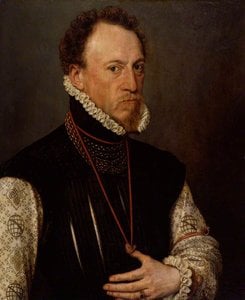
Anthonis Mor, 1519 – 1575

Anthonis Mor: The 75 Most Famous Paintings

Cardinal Granvelle's Dwarf (1560) is the most famous painting by Anthonis Mor, held by the Louvre in Parijs. Portrait of Mary, Queen of England (1554) and Queen Mary Tudor of England (1554) are the next two works the world knows best. From the 75 works of Anthonis Mor in our catalogue, here are the 75 that collectors and museum visitors look at most, with the year, the museum and the story of each.

Ranked by our popularity score, which combines the searches, visits and orders for each work. Updated oktober 2026. Every masterpiece on this page can be ordered as a museum-quality, hand-painted oil reproduction or a fine art print, at the size you choose.

Portrait of Anthonis Mor
Anthonis Mor · 1519 – 1575
Born · died
1519 – 1575, Utrecht
Movement
Northern renaissance
Works in our catalogue
75
Most famous
Cardinal Granvelle's Dwarf (1560)
Most works at
Museo del Prado

Top 10: Anthonis Mor's best-known paintings

Cardinal Granvelle's Dwarf (1560) by Anthonis Mor
1

Cardinal Granvelle's Dwarf

1560 · Oil On Panel · Louvre, Parijs

To stand before Anthonis Mor Van Dashorst’s Cardinal Granvelle's Dwarf is to step directly into the opulent, richly textured world of the sixteenth-century Dutch aristocracy. This oil on panel painting, executed in 1560, transcends a mere portrait; it is a meticulously crafted tableau vivant, whispering tales of power, lineage, and social standing. The subject—a young boy with dwarfism, adorned in clothing of breathtaking extravagance—is presented not just as an individual,…

Portrait of Mary, Queen of England (1554) by Anthonis Mor
2

Portrait of Mary, Queen of England

1554 · Oil On Panel · Szépművészeti Múzeum, Boedapest

Anthonis Mor van Dashorst captured the likeness of Mary Tudor in 1554, a period defined by the shifting religious and political tides of the Northern Renaissance. The subject sits with a stern, direct gaze that meets the viewer without hesitation. Her red hair is framed by a structured, ruffled collar, a detail rendered with meticulous precision. Through the use of chiaroscuro, Mor employs a controlled interplay of light and shadow…

Queen Mary Tudor of England (1554) by Anthonis Mor
3

Queen Mary Tudor of England

1554 · Oil On Panel · Museo del Prado, Madrid

The portrait of Queen Mary Tudor of England, executed by Antonis Mor in 1554, captures a sovereign at a threshold of history. She sits as the sole surviving child of Henry VIII and Catherine of Aragon, a figure of singular lineage. The oil on panel preserves her likeness during a season of profound political and religious shifts. Her presence is fixed, a quiet anchor amidst the changing tides of the…

Portrait of William of Orange (1555) by Anthonis Mor
4

Portrait of William of Orange

1555 · Oil On Panel · Staatliche Museen, Kassel

To stand before this portrait of William of Orange is to encounter not merely a likeness, but an embodiment of nascent authority. Rendered in the meticulous vein of the Northern Renaissance, the work captures the sitter in a moment of profound stillness, yet one charged with palpable resolve. The composition immediately draws the eye into the three-quarter view, presenting a figure encased in elaborate armor against a background so deep…

Joanna of Austria (1560) by Anthonis Mor
5

Joanna of Austria

1560 · Oil On Canvas · Museo del Prado, Madrid

Antonis Mor's Joanna of Austria presents a formal likeness of the princess, who was the daughter of Emperor Charles V and sister to King Philip II of Spain. The subject commissioned this portrait personally, seeking a representation that reflected her specific station and history. In 1552, she married the Portuguese Prince John Manuel, a union that defined her political and personal landscape during the mid-sixteenth century.

Portrait of a lady (1557) by Anthonis Mor
7

Portrait of a lady

1557 · Oil On Canvas · National Gallery of Victoria, Melbourne

A single light source from the upper left carves the subject out of a dark, indeterminate void. She is a presence of quietude, a three-quarter length figure caught in a moment of poised introspection. The darkness behind her pushes her forward, making the pale skin of her forehead and cheek feel immediate, almost tactile. Her expression is calm, a mask of high social status that hides the pulse of the…

Catherine of Hapsburg, the Wife of King John III of Portugal (1552) by Anthonis Mor
8

Catherine of Hapsburg, the Wife of King John III of Portugal

1552 · Oil On Panel · Museo del Prado, Madrid

The gaze of Catherine of Hapsburg, the Wife of King John III of Portugal, meets the viewer from within this formal portrait. Painted by Antonis Mor, the work captures the presence of Catherine of Austria in a moment of quiet, regal composure. She occupies the space with a heavy, dignified stillness that speaks to her high station and the weight of her lineage.

Margaret Duchess of Parma / Mary of Portugal Wife of Alessandro Farnesse (1565) by Anthonis Mor
10

Margaret Duchess of Parma / Mary of Portugal Wife of Alessandro Farnesse

1565 · Oil On Panel · Museo del Prado, Madrid

Two women exist in a state of perpetual prayer, suspended within the dark, velvet silence of a Renaissance interior. Margaret, Duchess of Parma, and Mary of Portugal appear as twin pillars of piety, their profiles or three-quarter views turned toward an unseen divine presence. The air around them feels heavy, thick with the solemnity of their task. They do not look at the viewer; instead, their gazes drift downward or…

The rest of the Anthonis Mor ranking, 11 to 75

Portrait of a man (1550) by Anthonis Mor
#11

Portrait of a man

1550 · Kunsthistorisches Museum

The gaze of the sitter in Portrait of a man meets us from across the centuries, a silent encounter captured by the hand of Antonis Mor. This work,…

Bring it home →
Philip II (1555) by Anthonis Mor
#12

Philip II

1555 · Museo del Prado

The air in the room seems to thicken around the figure of Philip II. He sits in a three-quarter view, his gaze meeting the viewer with a steady,…

Order a reproduction →
Portrait of a Seated Woman (1565) by Anthonis Mor
#13

Portrait of a Seated Woman

1565 · Art Institute of Chicago

The artwork titled Portrait of a Seated Woman was executed by the Netherlandish painter Antonis Mor. This oil on panel work dates to about 1565. The subject is…

Order a reproduction →
Margaret, Duchess of Parma (1562) by Anthonis Mor
#14

Margaret, Duchess of Parma

1562 · Staatliche Museen zu Berlin

In this portrait, we encounter Margaret, Duchess of Parma, captured in a moment of quiet, aristocratic composure. The subject is presented in a close-up view, her face and…

Order a reproduction →
Lady with the Jewel (1552) by Anthonis Mor
#17

Lady with the Jewel

1552 · Museo del Prado

A single woman occupies the center of this 1552 portrait, her presence defined by a quiet, aristocratic poise. She is positioned in a three-quarter length pose, her body…

Order a reproduction →
Emperor Maximilian II (1550) by Anthonis Mor
#18

Emperor Maximilian II

1550 · Museo del Prado

In this vertical, three-quarter length portrait from 1550, Emperor Maximilian II is presented against a dark, near-black background. The subject stands slightly off-center, positioned with a calm and…

Order a reproduction →
Lady with Gold Chains (1560) by Anthonis Mor
#22

Lady with Gold Chains

1560 · Museo del Prado

In this three-quarter length portrait from circa 1560, we encounter a woman who commands the space through a profound, self-possessed stillness. She is positioned slightly off-center, emerging from…

Commission a hand-painted copy →
Portrait of a Lady (1538) by Anthonis Mor
#23

Portrait of a Lady

1538 · Museo del Prado

The artwork titled Portrait of a Lady is an oil on canvas painting by the artist Antonis Mor. This portrait depicts a noblewoman, presented in a three-quarter length…

Order a reproduction →
Portrait of a Man (1561) by Anthonis Mor
#65

Portrait of a Man

1561 · Mauritshuis

Anthonis Mor van Dashorst came from Utrecht and specialised in portraits. He received commissions from various members of the Habsburg court, for which he travelled extensively in Europe.…

Bring it home →
Portrait of a Gentleman (1569) by Anthonis Mor
#66

Portrait of a Gentleman

1569 · National Gallery of Art

Shown from the thighs up against a dark background, a man with light skin, wearing a black satin jerkin with puffed breeches, stands with his hand on the…

Order a reproduction →

The subjects Anthonis Mor painted most

The four subjects that return most often among these masterpieces, with the finest example of each.

Where to see Anthonis Mor's paintings

The 8 museums that hold the most of the paintings on this page.

Museum City Works by Anthonis Mor Paintings from this list
Museo del Prado, MadridMuseo del Prado Madrid 13 Queen Mary Tudor of England, Joanna of Austria, Jane Dormer, Duchess of Feria (?)
Rijksmuseum, AmsterdamRijksmuseum Amsterdam 5 Portrait of Philippe de Montmorency, Count of Horne, Admiral of the Netherlands, Member of the Council of State, Anthonis Mor (copy after), 1540 - 1650, Sir Thomas Gresham, Anne Fernel, the Wife of Sir Thomas Gresham
Szépművészeti Múzeum, BoedapestSzépművészeti Múzeum Boedapest 3 Portrait of Mary, Queen of England, Knight of the Spanish St James Order, Portrait of the Philip II, King of Spain
Kunsthistorisches Museum, WenenKunsthistorisches Museum Wenen 3 Portrait of Anton Perrenot de Granvelle, Portrait of a man, Anne of Austria, Queen of Spain
Mauritshuis, Den HaagMauritshuis Den Haag 3 Steven van Herwijck, Portrait of a Goldsmith, Portrait of a Man
Gemäldegalerie Alte Meister im Schloss Wilhelmshöhe, KasselGemäldegalerie Alte Meister im Schloss Wilhelmshöhe Kassel 2 Portrait of a young prince, Portrait of Jean Lecocq (1559)
Gemäldegalerie, BerlijnGemäldegalerie Berlijn 2 The Utrecht canons Cornelius van Horn and Anthonis Taets van Ameronghen, The Corpse of Christ
Hispanic Society Museum - Library, New YorkHispanic Society Museum - Library New York 2 Fernando Álvarez de Toledo, Third Duke of Alba, Portrait of a Man

Anthonis Mor through the decades: one masterpiece for each

  1. 1530s
    Portrait of a Lady (1538) by Anthonis Mor
    #23 of 75

    Portrait of a Lady

    Age 11 – 20 · Museo del Prado

    The artwork titled Portrait of a Lady is an oil on canvas painting by the artist Antonis Mor. This portrait depicts a noblewoman, presented in a three-quarter length…

  2. 1540s
    Portrait of Anton Perrenot de Granvelle (1549) by Anthonis Mor
    Rank 9 / 75

    Portrait of Anton Perrenot de Granvelle

    Age 21 – 30 · Kunsthistorisches Museum

    This portrait of Anton Perrenot de Granvelle, also known as Antoine Perrenot, called Granvelle, was executed by the Dutch Renaissance painter Antonis Mor. Painted in 1549, the work…

  3. 1550s
    Portrait of Mary, Queen of England (1554) by Anthonis Mor
    Rank 2 / 75

    Portrait of Mary, Queen of England

    Age 31 – 40 · Szépművészeti Múzeum

    Anthonis Mor van Dashorst captured the likeness of Mary Tudor in 1554, a period defined by the shifting religious and political tides of the Northern Renaissance. The subject…

  4. 1560s
    Cardinal Granvelle's Dwarf (1560) by Anthonis Mor
    No. 1 of 75

    Cardinal Granvelle's Dwarf

    Age 41 – 50 · Louvre

    To stand before Anthonis Mor Van Dashorst’s Cardinal Granvelle's Dwarf is to step directly into the opulent, richly textured world of the sixteenth-century Dutch aristocracy. This oil on…

  5. 1570s

Anthonis Mor's paintings: frequently asked questions

What is the most famous Anthonis Mor painting?Show the answer

Cardinal Granvelle's Dwarf (1560), Louvre, Parijs. Next come Portrait of Mary, Queen of England (1554) and Queen Mary Tudor of England (1554).

At what age did Anthonis Mor paint Cardinal Granvelle's Dwarf?Show the answer

41 years old: Cardinal Granvelle's Dwarf dates from 1560 and Anthonis Mor was born in 1519.

Which are the 10 most famous Anthonis Mor paintings?Show the answer

Cardinal Granvelle's Dwarf, Portrait of Mary, Queen of England, Queen Mary Tudor of England, Portrait of William of Orange, Joanna of Austria, Jane Dormer, Duchess of Feria (?), Portrait of a lady, Catherine of Hapsburg, the Wife of King John III of Portugal, Portrait of Anton Perrenot de Granvelle and Margaret Duchess of Parma / Mary of Portugal Wife of Alessandro Farnesse. The ranking above gives the year and the museum of each.

How many paintings by Anthonis Mor are there?Show the answer

Our catalogue lists 75 works by Anthonis Mor, dated from 1538 to 1574.

Where can I see the most famous Anthonis Mor paintings?Show the answer

Most of them are in Museo del Prado (Madrid), Rijksmuseum (Amsterdam) and Szépművészeti Múzeum (Boedapest). The table above lists the museums one by one.

In which period did Anthonis Mor paint the best-known works?Show the answer

In 1550s: 30 of the 75 works on this page date from then, among them Portrait of Mary, Queen of England.

What is the earliest famous Anthonis Mor painting, and the latest?Show the answer

The earliest on this page is Portrait of a Lady (1538), the latest Portrait of Hubert Goltzius (1574).

What subjects did Anthonis Mor paint?Show the answer

Woman (14), Black dress (10) and Portrait (8), among the 75 works on this page.

What did Anthonis Mor paint on, and with what?Show the answer

Oil On Canvas: 14 of the 75 works on this page.

Which movement does Anthonis Mor's art belong to?Show the answer

Northern renaissance and Renaissance, as the paintings on this page show.

What Anthonis Mor paintings does the Museo del Prado hold?Show the answer

Queen Mary Tudor of England, Joanna of Austria and Jane Dormer, Duchess of Feria (?) are among the 13 works on this page held by the Museo del Prado, Madrid.

Where can I buy a Anthonis Mor reproduction?Show the answer

Yes. Every painting on this page can be ordered as a museum-quality, hand-painted oil reproduction or a fine art print, in the size you choose, from the painting's own page.

Anthonis Mor: biography

Anthonis Mor van Dashorst: De Schilder van Koninklijke Waardigheid

Anthonis Mor van Dashorst (1517-1577) staat als een hoeksteen van de Nederlandse Renaissance-portretkunst, waarbij hij het minutieuze realisme en de symbolische diepgang belichaamt die zo kenmerkend zijn voor zijn tijdperk. Geboren in Utrecht, Nederland, kwam hij voort uit een familie die diep geworteld was in de artistieke traditie – zijn vader was een beeldhouwer, waarmee een bloedlijn werd gevestigd die volledig gewijd was aan de visuele representatie. Hoewel de biografische details over zijn leven enigszins schaars blijven, spreekt het enorme oeuvre van Mor boekdelen over zijn talent en zijn onwankelbare toewijding aan het vastleggen van de essentie van zijn onderwerpen. Hij verwierf al snel grote bekendheid door zijn vermogen om de adel met een ongeëvenaarde nauwkeurigheid af te beelden, wat hem opdrachten opleverde van invloedrijke figuren in heel Europa. Zijn vormende jaren buiten zijn opvoeding in Utrecht zijn niet met zekerheid vastgesteld, maar het is bekend dat hij in Antwerpen onder de meester Pieter Bruegel de Oude studeerde. Daar absorbeerde hij Bruegels meesterlijke observatie van de menselijke natuur en het landschap, invloeden die diep doordrongen in de artistieke visie van Mor. Zijn verblijf in Antwerpen bleek cruciaal voor zijn artistieke rijping. Hij verfijnde zijn vaardigheden naast tijdgenoten zoals Quentin Massys en Hendrik Golse, en doopte zich in het levendige artistieke milieu van de Vlaamse Republiek. Deze blootstelling stimuleerde een verfijnd begrip van perspectief en chiaroscuro—technieken die hij met meesterschap hanteerde om zijn portretten te verlichten met een dramatisch spel van licht en schaduw.

De Regeerperiode van Mary Tudor: Een Meesterwerk van de Noordelijke Renaissance

De roem van Mor steeg spectaculair na de voltooiing van zijn portret van Mary Tudor, koningin van Engeland (1554). Dit monumentale canvas vormt het hoogtepunt van Mor's artistieke kunnen. Met een bijna obsessieve aandacht voor detail vastgelegd, vangt het werk de koninklijke houding en de innerlijke beheersing van Mary—een getuigenis van Mor's vermogen om psychologische nuance te combineren met fysieke gelijkenis. De compositie is uiterst evenwichtig, waarbij gebruik wordt gemaakt van een piramidale structuur en subtiele plooien in de draperie om de status en waardigheid van Mary te benadrukken. Bovendien creëert het gebruik van chiaroscuro een betoverend samenspel van licht en donker, dat het gezicht van Mary accentueert en een aura van plechtige grandeur uitstraalt. Dit portret bezegelde de reputatie van Mor als een van de belangrijkste portrettisten van zijn tijd en blijft een gevierd voorbeeld van de kunst uit de Noordelijke Renaissance. Mor profiteerde sterk van koninklijk mecenaat en ontving opdrachten van vorsten door heel Europa, waaronder Filips II van Spanje. Deze prestigieuze opdrachten boden hem de ruimte om ambitieuze projecten te verkennen en zijn artistieke stijl te verfijnen, wat zijn nalatenschap als hofschilder verder versterkte. Naast het portret van Mary Tudor nam Mor talloze opdrachten aan voor prominente staatslieden, diplomaten en aristocraten. Zijn kenmerkende stijl—gekenmerkt door minutieus realisme, meesterlijk perspectief en expressieve lichtwerking—werd direct herkenbaar. Hij gaf er consequent de voorkeur aan om niet enkel het uiterlijk, maar ook het karakter en de emotie over te brengen, waardoor hij zijn portretten verhief van loutere gelijkenissen tot diepgaande verklaringen over de menselijke waardigheid.

Invloed en Nalatenschap

De invloed van Mor reikte veel verder dan zijn directe tijdgenoten. Zijn nauwgezette benadering van de portretkunst schiep een precedent voor latere generaties kunstenaars, die hij inspireerde om te streven naar grotere nauwkeurigheid en psychologisch inzicht. Hij was een voorvechter van de humanistische idealen die tijdens de Renaissance heersten, wat zijn onwankelbare geloof weerspiegelde in de kracht van de kunst om de menselijke ervaring te verlichten. Vandaag de dag blijven de schilderijen van Mor van Dashorst een wereldwijd publiek fascineren; zij dienen als blijvende herinneringen aan de artistieke genialiteit die werd bereikt tijdens de Nederlandse Gouden Eeuw—een periode gedefinieerd door innovatie, ambitie en een diepgaande waardering voor schoonheid.

All 75 works by Anthonis Mor →