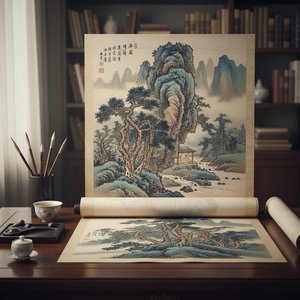
Sui Dynasty Art: A Bridge Between Antiquity and Innovation
The Sui dynasty (581–618) stands as a singular moment in Chinese history – a brief but brilliant reunification following centuries of fragmentation, yet simultaneously marked by ambitious projects that reshaped the nation’s landscape and solidified its cultural legacy. Its artistic output reflects this duality: grounded in traditions inherited from previous dynasties while embracing new ideas and techniques that paved the way for the Tang dynasty's golden age. Understanding Sui art requires delving into a context defined by political stability, economic prosperity fueled by agricultural reforms like the Equal Field System, and an unprecedented flourishing of Buddhism – factors which profoundly impacted artistic sensibilities and production.
Origins and Patronage
Born in obscurity, Yang Jian emerged from the military aristocracy of Northwest China—a lineage steeped in Xianbei traditions that valued strength and honor alongside Confucian ideals. Ascending to power through shrewd political maneuvering after deposing Yuwen Chan, Yang Jian skillfully consolidated his rule by leveraging Confucian scholars’ support, establishing a centralized bureaucracy modeled on Qin precedent, and prioritizing Han cultural identity. This patronage extended across all artistic disciplines—painting, sculpture, calligraphy, ceramics—creating an environment where creativity thrived and ambitious undertakings were undertaken to commemorate imperial achievements and express religious devotion. The dynasty's rulers actively commissioned monumental works celebrating their reign and bolstering the prestige of Buddhism, a religion that had gained considerable traction during the preceding Northern Zhou era. This patronage was instrumental in fostering artistic innovation and ensuring the preservation of cultural heritage—a testament to Sui emperors’ commitment to upholding Confucian values and promoting intellectual pursuits.
Painting: Landscape and Narrative
Sui painting largely adhered to established conventions of landscape art—particularly those developed during the Tang dynasty—emphasizing grandeur, serenity, and symbolic representation. Artists skillfully employed techniques like misty landscapes (yunshan hua), capturing ethereal beauty and conveying philosophical contemplation. However, Sui painters also experimented with narrative scenes depicting historical events and mythological tales, demonstrating a willingness to engage with literary traditions. Notable examples include depictions of battles commemorating military victories and portrayals of Buddhist deities—often imbued with vibrant colors and intricate details reflecting the influence of Central Asian artistic styles brought into China during Yang Jian’s reign. The Grand Canal project itself served as inspiration for monumental paintings illustrating its construction, highlighting the dynasty's commitment to ambitious infrastructural endeavors. These landscapes weren’t merely aesthetically pleasing; they functioned as vehicles for conveying moral lessons—a hallmark of Sui artistic philosophy.
Sculpture: Stone Buddhas and Imperial Portraiture
The Sui dynasty witnessed a remarkable resurgence in stone sculpture, largely driven by Buddhist patronage. Fo Guang Shan Museum’s “Xuanzang” exemplifies this artistic fervor—a colossal Buddha statue crafted with meticulous attention to detail and bathed in dramatic lighting that evokes profound peace and wisdom. The statue's stylistic influences draw upon Gandhara art, reflecting the cosmopolitan spirit of the era and demonstrating Sui artists’ ability to assimilate foreign techniques while maintaining core aesthetic principles. Beyond monumental sculptures, Sui portraiture showcased refined artistic skill—often utilizing ivory or jade—to commemorate emperors and officials. These portraits captured likenesses with remarkable accuracy, incorporating symbolic elements that conveyed status and virtue—a testament to the dynasty's dedication to preserving Confucian ideals of governance and scholarship. The meticulous craftsmanship evident in both Buddhist statues and imperial portraits underscored Sui artists’ mastery of traditional sculptural techniques.
Legacy and Influence
Though the Sui dynasty’s reign was tragically curtailed by rebellions and internal strife, its artistic achievements endured as a cornerstone of Chinese cultural heritage. The Equal Field System, coupled with the patronage of Buddhism and the Grand Canal project—a feat of engineering that connected disparate regions—established precedents for subsequent dynasties. More importantly, Sui art fostered an aesthetic sensibility characterized by grandeur, serenity, and symbolic depth—influencing generations of artists who would shape the artistic landscape of China for centuries to come. Its legacy continues to inspire admiration for its technical mastery and its profound engagement with philosophical and religious ideas – securing its place as a pivotal chapter in the unfolding narrative of Chinese civilization. The enduring beauty and spiritual resonance of Sui art serve as a reminder of China’s rich artistic tradition and its capacity for transformative innovation.