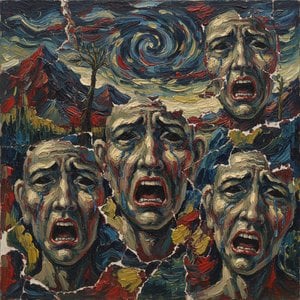
Stanley Pinker: A Namibian Visionary Embracing Fauvist Color
Stanley Faraday Pinker (1924-2012) stands as a pivotal figure in Namibian art history and a prominent voice within the international Fauvist movement. Born in Windhoek, Namibia—then South West Africa—his formative years instilled an enduring fascination with the dramatic landscapes of his homeland, influencing his artistic vision throughout his prolific career. Pinker’s journey from youthful exploration to celebrated artist exemplifies dedication to craft and unwavering commitment to capturing the essence of visual experience. Early Life & Education: Pinker's upbringing in Windhoek exposed him to the rugged beauty of Namibia, shaping his artistic sensibilities early on. He pursued formal art training at the Continental Art School of Cape Town under Maurice van Essche—a formative encounter that instilled a lifelong appreciation for meticulous observation and stylistic experimentation—and later honed his skills at Hammersmith School of Art in London with Alistair Grant, broadening his artistic horizons beyond Namibian borders. This dual education provided him with a foundational understanding of both European artistic traditions and the unique visual vocabulary of Southern Africa. Fauvist Influence & Artistic Style: Pinker’s artistic style is undeniably rooted in Fauvism—a movement characterized by bold, unrestrained color palettes and expressive brushstrokes—which emerged in France during the early 20th century. He embraced this revolutionary approach, prioritizing emotional impact over realistic representation, resulting in canvases brimming with vibrant hues that convey a palpable sense of energy and immediacy. Artists like Matisse and Derain served as inspiration for Pinker’s stylistic choices, encouraging him to liberate color from its conventional constraints and utilize it as a primary vehicle for conveying feeling. His technique involved layering pigments thickly onto the canvas—a hallmark of Fauvist practice—creating textured surfaces that pulsated with luminous shades. Notable Works & Exhibitions: Pinker’s oeuvre encompasses a diverse range of subjects—primarily landscapes—executed with meticulous attention to detail and infused with Fauvist fervor. Among his most celebrated pieces are “Sun and Moon Flower,” a captivating depiction of Namibian flora rendered in luminous shades of orange, yellow, and magenta—a testament to his ability to transform natural forms into emotionally resonant compositions—and “The Wheel of Life,” which embodies the artist's exploration of spiritual themes through color and gesture. His work has graced prestigious galleries internationally, including The Stanley & Audrey Burton Gallery in Leeds—where it was showcased alongside other prominent Fauvist artists—and the University of Iowa Museum of Art, cementing his reputation as a visionary interpreter of visual experience. Furthermore, Grahams Gallery hosted a retrospective exhibition highlighting his artistic evolution and showcasing the breadth of his oeuvre. Teaching Legacy: Beyond his artistic accomplishments, Pinker dedicated himself to nurturing young talent—serving as a professor at Michaelis School of Fine Art in Cape Town until 1986—leaving an indelible mark on the Namibian art community and fostering generations of aspiring artists. He instilled in his students a passion for experimentation and encouraged them to embrace bold artistic visions, shaping the trajectory of Namibian art for decades to come. His influence extended beyond the classroom, inspiring countless individuals to pursue creative endeavors with unwavering determination. Recognition & Institutional Presence: Pinker’s paintings achieved remarkable success at auction houses globally, reflecting their considerable artistic merit and collector demand. A landmark sale in March 2014 saw “Love,” a vibrant depiction of a woman lounging with a cigarette—a quintessential example of Fauvist style—fetch R3.4 million at Strauss & Co., establishing a world record for the artist. Subsequent auctions confirmed Pinker’s position as one of Namibia's most valuable artistic treasures, demonstrating his ability to capture and convey profound emotional resonance through color and form. His work continues to resonate with collectors and art historians alike—a testament to its enduring aesthetic power and symbolic significance.Vraag & Antwoord
Waar zijn de kunstwerken van Stanley Faraday Pinker ingedeeld op onderwerp?
De Onderwerpsatlas van Stanley Faraday Pinker is een pagina waarop de kunstwerken van de kunstenaar worden weergegeven op basis van hun onderwerp.
Kan ik het kleurgebruik van Stanley Faraday Pinker in al het werk bestuderen?
Het kleurgebruik van Stanley Faraday Pinker in de werken die op deze website worden vermeld, kan worden bestudeerd op de Paletgenoom pagina van de kunstenaar.
Waar komt Stanley Faraday Pinker vandaan?
Stanley Faraday Pinker werd geboren in Namibië.
Wat zijn de geboorteplaats en het geboortejaar van Stanley Faraday Pinker?
Stanley Faraday Pinker werd geboren in Windhoek in 1924.
In welke historische periode werkte Stanley Faraday Pinker?
Stanley Faraday Pinker werkte in de Moderne tijd-periode. Deze periode plaatst het oeuvre van de kunstenaar in een historisch kader.
Is er een virtuele 3D-rondleiding door de werken van Stanley Faraday Pinker?
De kunstwerken van Stanley Faraday Pinker zijn te bewonderen in een 3D-galerie op de 3D-museum pagina van de kunstenaar.
In welke stad en welk land is Stanley Faraday Pinker geboren?
Stanley Faraday Pinker werd geboren in Windhoek, in Namibië.