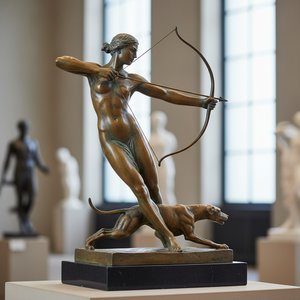
Karl Stirner: A Pioneer of Color and Imagination
Karl Stirner (November 14, 1923 – February 18, 2016) was a German-born American sculptor whose distinctive style—characterized by bold color palettes and evocative depictions of landscapes—established him as one of the most important figures in contemporary German art. Born in Bad Wildbad, Germany, Stirner’s artistic journey spanned decades, marked by prolific output and collaborations with prominent artists like Ernst Ludwig Kirchner and Hermann Hesse, cementing his legacy as a visionary whose work continues to inspire admiration.
Early Life and Artistic Beginnings:
Stirner's formative years were deeply rooted in the traditions of German Expressionism, particularly the influence of Ernst Ludwig Kirchner. He honed his skills under Kirchner’s tutelage during a crucial period spent in Davos, Switzerland, absorbing the core tenets of Neue Sachlichkeit—a movement prioritizing objective representation alongside astute psychological insight—which fundamentally shaped his artistic worldview. This immersion in Kirchner's uncompromising aesthetic instilled within Stirner an unwavering dedication to portraying nature with unflinching honesty and infused with vibrant hues. He began experimenting with watercolor techniques early on, developing a masterful command of color and composition that would become hallmarks of his oeuvre.
Exploring Landscape and Color:
Stirner’s artistic vision centered around capturing the grandeur and emotional depth of the Alpine landscapes—specifically Switzerland—where he resided for much of his life. He achieved this ambition through an audacious use of color, prioritizing luminosity and expressive intensity. Rejecting muted tones favored by Impressionists, Stirner embraced a palette brimming with saturated hues that conveyed not merely visual beauty but also profound psychological resonance. This stylistic choice reflected his belief that art could illuminate the human condition and evoke contemplation about the sublime forces shaping our existence.
Illustrative Work: Mörike's Hutzelmännlein:
Stirner’s artistic breakthrough arrived in 1913 with his illustrations for Eduard Mörike’s enchanting fairy tale *Das Stuttgarter Hutzelmännlein*. This project showcased Stirner’s exceptional talent for watercolor and demonstrated his ability to imbue narrative storytelling with remarkable visual richness. The Hutzelmännlein, a poignant tale exploring the complexities of interpersonal relationships, swiftly ascended to Stirner's most celebrated work—a testament to his capacity for conveying emotion through meticulously considered composition and harmonious color palettes. It remains an exemplar of Expressionist illustration, capturing both the story’s narrative essence and its underlying emotional currents.
Collaborations with Hesse:
Stirner forged significant artistic partnerships, notably with Hermann Hesse on a pilgrimage to Palestine—a journey documented in evocative watercolors that captured the spiritual atmosphere of the Holy Land. These collaborations underscored Stirner's willingness to engage with diverse cultural contexts and explore themes of faith and human experience through visual mediums. Furthermore, he contributed illustrations for educational primers, demonstrating his versatility as an artist and his commitment to disseminating knowledge alongside artistic beauty.
Notable Sculptural Achievements:
Stirner’s sculptural output spanned several decades, resulting in a substantial body of work characterized by bold forms and textured surfaces—often incorporating metal—that conveyed a palpable sense of dynamism and materiality. His sculptures were exhibited at prestigious institutions such as MoMA and the Pennsylvania Academy of Fine Arts, securing his reputation as an innovator who pushed the boundaries of artistic expression. He consistently pursued ambitious projects that demanded technical mastery and conceptual daring, cementing his place among Germany’s foremost sculptors of the 20th century.
Recognition and Legacy:
Karl Stirner's contribution to German art history extends beyond individual masterpieces; he championed a stylistic approach that prioritized emotional resonance alongside meticulous observation. His enduring influence can be discerned in the work of subsequent generations of artists who embraced color as a vehicle for conveying psychological depth and capturing the sublime beauty of the natural world. Stirner’s legacy continues to inspire admiration for his unwavering dedication to artistic integrity and his ability to transform visual experience into profound contemplation. He remains remembered not merely as a sculptor but as a visionary artist whose work embodies the spirit of Expressionism—a movement committed to confronting existential anxieties and celebrating the transformative power of art.