A Pioneering American Portraitist: The Life and Art of Joshua Johnson
Joshua Johnson, often hailed as the first African-American professional artist, remains a figure shrouded in mystery yet undeniably significant in the annals of early American art. Born in 1763, his life story is pieced together from fragments – advertisements, bills of sale, and the portraits themselves, which offer the most compelling evidence of his existence and talent. Unlike many artists of his time whose biographies are well-documented through academies and patronage networks, Johnson emerged from relative obscurity to establish a thriving portrait practice in Baltimore during the late 18th and early 19th centuries. His journey was remarkable not only for its artistic success but also for navigating the complex racial landscape of a nation grappling with slavery and nascent abolitionist sentiments. He wasn’t simply *a* painter; he was a businessman, an entrepreneur, and a testament to the power of self-determination in the face of systemic barriers.
Early Life and Apprenticeship – Unraveling the Enigma
The details surrounding Johnson's early life are sparse. It is believed he was born free in Baltimore, Maryland, though his parents’ status remains unknown. Around 1786, he began an apprenticeship with Charles Wilson Peale, a prominent portrait painter known for his depictions of Revolutionary War heroes and still lifes. This period proved crucial to Johnson's artistic development, exposing him to the techniques and conventions of academic painting prevalent at the time. However, the circumstances surrounding his departure from Peale’s studio are unclear. Some accounts suggest he left due to racial prejudice or a disagreement over wages, while others indicate a voluntary end to the apprenticeship after several years. Regardless, Johnson quickly established himself independently, placing advertisements in local newspapers as early as 1796 offering portrait services. These ads were groundbreaking – they boldly declared his profession and sought clientele without relying on the traditional patronage system that often excluded artists of color. He advertised initially as a “portrait painter” but later refined his branding to emphasize his skill and experience, attracting a diverse range of sitters.
Style and Technique: Echoes of Reynolds and American Sensibilities
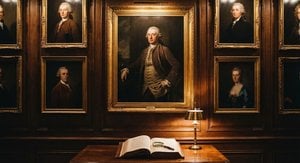
Johnson’s artistic style reveals a fascinating blend of influences. While trained by Peale, his work demonstrates a clear affinity for the British portraitist Sir Joshua Reynolds, whose elegant compositions, soft lighting, and emphasis on characterization resonated deeply with Johnson's aesthetic sensibilities. This is reflected in the refined poses, graceful drapery, and subtle psychological insights found in many of his portraits. However, Johnson wasn’t merely an imitator; he adapted Reynolds’ style to suit American tastes and the specific needs of his clientele. His paintings often feature simpler backgrounds than those favored by Reynolds, focusing instead on capturing the likeness and social standing of his sitters. He employed a meticulous technique, building up layers of paint to create realistic textures and luminous skin tones.
His portraits are characterized by a sense of dignity and composure, regardless of the sitter’s race or social class. Johnson's ability to convey personality through subtle gestures and facial expressions is particularly noteworthy, making his work stand out from other portraitists of the period.
A Diverse Clientele: Painting Across Social Lines
What truly sets Joshua Johnson apart is the remarkable diversity of his clientele. In a society deeply divided by race and class, he painted portraits of both white and Black individuals, wealthy merchants and modest farmers, free people and enslaved persons. This inclusivity was unprecedented for an artist of his time. His sitters included members of prominent Baltimore families, such as the Taney family (whose patriarch, Roger B. Taney, would later become Chief Justice of the Supreme Court), alongside lesser-known individuals seeking to commemorate their lives and status.
The portraits of African Americans are particularly significant, offering a rare glimpse into the lives and identities of those often marginalized in historical records. These paintings served not only as personal mementos but also as powerful statements of self-worth and agency in a society that denied Black individuals basic human rights. Johnson’s willingness to paint across social lines suggests a pragmatic approach to building his business, but it also hints at a deeper commitment to representing the full spectrum of American society.
Legacy and Historical Significance: Rediscovering a Lost Voice
Despite achieving considerable success during his lifetime, Joshua Johnson largely faded from historical memory after his death in 1832. His work was rediscovered in the late 20th century, sparking renewed interest in his life and art. Today, he is recognized as a pioneering figure in American portraiture, whose paintings offer invaluable insights into the social, cultural, and racial dynamics of the early republic.
- His portraits challenge conventional narratives about the history of American art,
- demonstrating that artistic talent existed outside the established academies and patronage networks.
- Johnson’s work provides a unique perspective on the lives of African Americans during a period of slavery and transition,
- offering a counterpoint to dominant representations of race and identity.
His legacy extends beyond his artistic achievements; he stands as an inspiring example of resilience, entrepreneurship, and the enduring power of art to transcend social barriers. The ongoing research into his life and work continues to reveal new details about this remarkable artist, solidifying his place as a vital voice in the American artistic canon.