A Chronicler of Viennese Society: The Life and Art of Josef Kriehuber
Josef Kriehuber, born in Vienna on December 14th, 1800, wasn’t a revolutionary artist seeking to shatter conventions. Instead, he quietly became one of the most prolific and insightful chroniclers of 19th-century Viennese society through his extraordinary mastery of lithography. His life was less about grand pronouncements and more about meticulous observation – capturing the essence of everyday life, social standing, and the spirit of an era with a remarkable dedication to detail. Kriehuber’s journey began within the established framework of the Vienna Academy under Hubert Maurer, but it was his embrace of lithography that truly ignited his artistic passion and ultimately defined his legacy. This innovative technique, allowing for rapid and affordable image reproduction, democratized portraiture, making it accessible to a wider audience than ever before – an audience he served with unwavering commitment. He wasn’t merely replicating appearances; he was crafting visual records, meticulously documenting the nuances of status, personality, and the very atmosphere of his time.The Biedermeier Portraitist: A Window into an Era
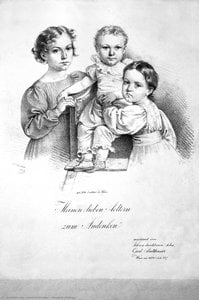
Kriehuber's artistic development blossomed fully within the context of the Biedermeier period (roughly 1815-1848). This era, born from the aftermath of Napoleon’s tumultuous reign, was characterized by a profound shift in values – a retreat from grandiosity and an embrace of domesticity, simplicity, and the ordinary. These core principles resonated deeply with Kriehuber's artistic sensibilities. Initially exploring landscape lithography, it was portraiture where his talent truly flourished. He became astonishingly prolific, producing over 3000 lithographs – a staggering number that speaks not only to his exceptional skill but also to the immense demand for his work within Viennese society. His clientele encompassed a remarkably diverse range: from the nobility and influential government officials to prominent merchants and ordinary citizens seeking a lasting visual representation of themselves or their loved ones. Kriehuber’s portraits weren't idealized fantasies; they were strikingly accurate depictions, imbued with a palpable sense of character and social standing. He possessed an uncanny ability to discern not just physical resemblance but also the subtle nuances of personality, capturing the very soul of his subjects in each image. His meticulous attention to detail – the way a hand was held, the expression on a face, the drape of clothing – combined with a keen understanding of human psychology, allowed him to create portraits that felt remarkably intimate and profoundly revealing.Beyond Likeness: Documenting Vienna’s Cultural Landscape
While celebrated for his captivating portraits, Kriehuber's artistic vision extended far beyond individual representation. Recognizing the importance of capturing the broader cultural landscape, he increasingly focused on documenting scenes from Viennese life – particularly the vibrant atmosphere of the Prater park. His lithographs depicting the Prater offer invaluable glimpses into 19th-century Viennese society and culture. These weren’t simply picturesque views; they were snapshots of a thriving community, revealing details about fashion trends, social interactions, and the recreational habits of the time. He captured the energy and excitement of the Prater, showcasing its diverse attractions – from carousel rides to shooting galleries – and the people who flocked there to enjoy themselves. This dedication to capturing the essence of Vienna cemented his position as a visual historian, preserving for posterity the sights and sounds of a rapidly evolving city. His work served as a vibrant testament to the dynamism and spirit of Viennese life.Technique and Influences: The Master of Lithography
Kriehuber’s artistic success was inextricably linked to his mastery of lithography – a technique he embraced with unwavering dedication. He wasn't simply replicating existing methods; he pushed the boundaries of what was possible, developing his own distinctive style within this medium. His technical skill lay in his ability to achieve remarkable detail and tonal range through careful stone preparation, precise etching techniques, and meticulous printing processes. The resulting images possessed a depth and richness that were rarely seen in contemporary portraiture. While pinpointing specific artistic influences on Kriehuber is challenging – he wasn’t overtly imitating any particular master or adhering to a strict stylistic school – his work reflects broader trends of the time, emphasizing realism and accuracy. He was undoubtedly influenced by the prevailing desire for truthful representation in art, alongside the growing popularity of portraiture as a means of documenting social status and personal identity. His style is characterized by meticulous draftsmanship, precise execution, and an ability to convey both physical likeness and psychological depth – a testament to his exceptional skill and artistic vision.Legacy and Recognition: A Lasting Impression
Kriehuber’s influence extended beyond the sheer volume of his output. He served as a teacher at the Theresianum Academy in Vienna, imparting his technical expertise and fostering the talents of future generations of artists. In 1860, he received significant recognition with the Franz Joseph Order, acknowledging his contributions to Austrian art and culture. However, the rise of photography towards the end of his life presented a considerable challenge to his profession. As photographic portraiture became increasingly accessible and affordable, demand for lithographic portraits declined, leading to financial hardship in his later years. Despite this adversity, Kriehuber continued to work diligently until his death on May 30th, 1876, leaving behind an extraordinary body of work that continues to captivate and inform us today. His legacy lies not only in the sheer number of portraits he created but also in their historical significance as a visual record of 19th-century Central European society – a testament to his dedication, skill, and profound understanding of human nature. Collections of his works are proudly displayed at the Albertina museum and the Austrian National Library, ensuring that his art will continue to be appreciated by generations to come. His work remains a poignant reminder of the power of observation and the enduring appeal of capturing the essence of the human spirit.Vraag & Antwoord
Welke kleuren gebruikte Josef Kriehuber het meest vaak?
De Paletgenoom van Josef Kriehuber is een pagina die het kleurprofiel van het oeuvre van de kunstenaar presenteert.
Kan ik de werken van Josef Kriehuber verkennen op onderwerp?
De Onderwerpsatlas van Josef Kriehuber is een pagina waarop de kunstwerken van de kunstenaar worden weergegeven op basis van hun onderwerp.
Hoeveel kunstwerken van Josef Kriehuber zijn beschikbaar om te bekijken?
U kunt 130 kunstwerken werken van Josef Kriehuber bekijken op de Alle kunstwerken-pagina.