Hugh Goldwin Rivière (1869–1956): A Painter of Light and Shadow
Hugh Goldwin Rivière (1869–1956) was a British portraitist whose distinctive style blended realism with an ethereal quality, reflecting the enduring influence of Pre-Raphaelitism. Born in Bromley, Kent, he descended from Huguenot ancestors who had fled persecution in France during the Reformation—a heritage that instilled within him a deep appreciation for detail and artistic integrity. His father, Briton Rivière, was himself a celebrated animal painter, establishing a lineage dedicated to capturing the beauty of the natural world with meticulous observation and expressive brushwork. This formative influence profoundly shaped Rivière’s artistic vision.
Rivière pursued his studies at Royal Academy Schools in London, honing his skills in draughtsmanship and mastering techniques vital for achieving nuanced tonal gradations—a hallmark of his oeuvre. He quickly gained recognition as a portrait artist, establishing himself amongst the prominent figures of his time. His membership into the Royal Society of Portrait Painters cemented his reputation as one of Britain’s leading artists, demonstrating both artistic excellence and social standing. Rivière's prolific output spanned decades, producing over 300 paintings and prints that explore themes ranging from literary subjects to depictions of historical events and portraits of prominent individuals.
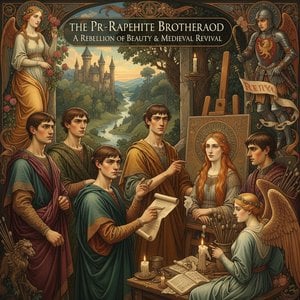
His artistic style is characterized by a masterful command of light and shadow—a technique borrowed directly from the Pre-Raphaelites—who championed detailed observation and symbolic representation. Rivière’s canvases often depict scenes bathed in soft, diffused illumination, creating an atmosphere of contemplative serenity. He meticulously rendered textures and surfaces with remarkable accuracy, capturing subtle nuances of color and form that convey a profound sense of realism. Consider his portrait of Sir Squire Bancroft, executed in 1900—a study in muted greens and browns—which exemplifies Rivière’s ability to imbue his subjects with dignity and character. Similarly, his depiction of William Archibald Spooner at New College Oxford showcases an astute understanding of psychological expression.
Rivière's artistic legacy extends beyond individual portraits; he contributed significantly to the decorative arts, designing murals for various public buildings and collaborating on theatrical productions. His work graced venues such as the Victoria Art Gallery in Bath and Guildhall Art Gallery, showcasing his versatility and commitment to elevating visual culture. Furthermore, Rivière’s prints—particularly those illustrating lines from Christina Rossetti and Tennyson—demonstrated his talent for capturing literary themes with artistic sensitivity.
Today, Rivière's paintings reside in numerous prestigious collections worldwide, including the Victoria and Albert Museum and the Royal Shakespeare Company. His enduring influence can be seen in the continuing appreciation of Pre-Raphaelite aesthetics and the meticulous craftsmanship evident in his portraits—a testament to a lifetime devoted to capturing beauty and conveying emotion through masterful artistic technique. The Hugh Lane Gallery houses an impressive collection of his works, offering visitors a chance to experience firsthand the captivating power of Rivière’s vision.