Franz Ehrlich, 1907 – 1984

De 100 beroemdste schilderijen van Franz Ehrlich

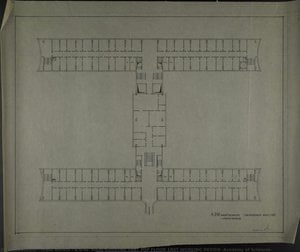
Het schilderij dat Franz Ehrlich beroemd maakte is 3e VERDIEPING (Ontwerp voor een buitenlandse vertegenwoordiging van de DDR. Plattegrond); het hangt in het Bauhaus Dessau Stiftung, Dessau-Roßlau. LBH BUILDING MACHINERY WOODWORKING MACHINERY HALL 5 (Leipzig Trade Fair, plan view exhibition stand) (1949) en 4 Armchairs. Een Bank. volgen in de harten van verzamelaars en museumbezoekers. Van de 101 werken van Franz Ehrlich in onze catalogus zijn dit de 100 meest bewonderde, elk gepresenteerd met de datum, het museum en wat het uniek maakt.

Gerangschikt op basis van onze populariteitsscore, die de zoekopdrachten, bezoeken en bestellingen voor elk werk combineert. Bijgewerkt in november 2026.

Portret van Franz Ehrlich
Franz Ehrlich · 1907 – 1984
Geboren · overleden
1907 – 1984, Reuth
Stroming
Bauhaus
Werken in onze catalogus
101
Meest bekend
3e VERDIEPING (Ontwerp voor een buitenlandse vertegenwoordiging van de DDR. Plattegrond)
Meeste werken in
Bauhaus Dessau Stiftung

Franz Ehrlich: de tien meesterwerken

3e VERDIEPING (Ontwerp voor een buitenlandse vertegenwoordiging van de DDR. Plattegrond) door Franz Ehrlich
1

3e VERDIEPING (Ontwerp voor een buitenlandse vertegenwoordiging van de DDR. Plattegrond)

Acryl op canvas · Bauhaus Dessau Stiftung, Dessau-Roßlau

Een Architectonische Schets van Een Verloren Wereld De afbeelding presenteert een zwart-wit architectuurtekening van een vloerplan, waarschijnlijk voor een gebouw dat de DDR ( Duitse Democratische Republiek) vertegenwoordigde. Het is een gedetailleerde technische schets met duidelijke labeling van ruimtes. Een kunstenaarlijke interpretatie zou het werk niet zijn; het is een functioneel document dat eerder gericht is op het weergeven van een bepaalde tijd en plaats dan op het verkregen emotioneel…

LBH BUILDING MACHINERY WOODWORKING MACHINERY HALL 5 (Leipzig Trade Fair, plan view exhibition stand) (1949) door Franz Ehrlich
2

LBH BUILDING MACHINERY WOODWORKING MACHINERY HALL 5 (Leipzig Trade Fair, plan view exhibition stand)

1949 · Ink On Paper · Bauhaus Dessau Stiftung, Dessau-Roßlau

To gaze upon this drawing is not merely to observe lines on paper; it is to step into the very sinews of early 20th-century commerce and innovation. This plan view, documenting the LBH Building Machinery Woodworking Machinery Hall 5 at the Leipzig Trade Fair in 1949, transports us directly to a moment when industry was meticulously laid bare for public scrutiny. The work by Franz Ehrlich possesses an almost archaeological…

4 Armchairs. Een Bank. door Franz Ehrlich
3

4 Armchairs. Een Bank.

Acryl op canvas · Bauhaus Dessau Stiftung, Dessau-Roßlau

Franz Ehrlich en het ontwerp voor een kantoor van de vicepresident van de Akademie der Wissenschaften Het Duitse kunstenaarschap kent weinig namen die zo volledig zijn ingebakken in de geschiedenis als Franz Ehrlich (1907-1984). Een architect, kalligrafist en grafisch ontwerper met een bijzondere betrokkenheid bij het communistische beweging, Ehrlich staat voor een unieke combinatie van technische bekwaamheid en artistieke gevoeligheid. Zijn werk wordt gekenmerkt door een eenvoudige schoonheid die voortkomt…

Bookshop Hauptstraße / Transversal section (FDGB Bookshop (1949) door Franz Ehrlich
4

Bookshop Hauptstraße / Transversal section (FDGB Bookshop

1949 · Acryl op canvas · Bauhaus Dessau Stiftung, Dessau-Roßlau

Franz Ehrlich’s pencil drawing, titled “Bookshop Hauptstraße / Transversal Section (FDGB Bookshop “Gutenberg” Dresden),” offers a captivating glimpse into the architectural ethos of the Bauhaus movement and embodies a profound appreciation for simplicity and functionality. Executed in 1949, this piece transcends mere representation; it’s an exercise in distilling complex spatial relationships into meticulously crafted lines—a hallmark of Ehrlich's distinctive artistic vision.

The new city is built on labour... (Design for competition Dresden) (1952) door Franz Ehrlich
5

The new city is built on labour... (Design for competition Dresden)

1952 · Acrylic · Bauhaus Dessau Stiftung, Dessau-Roßlau

Franz Ehrlich's 1952 sketch, "The New City is Built on Labour...", isn’t merely a design proposal for a competition in Dresden; it’s a poignant testament to post-war reconstruction and the enduring spirit of a city striving to rebuild itself. Captured with a restrained graphite palette against aged paper, the image possesses an immediate intimacy – as if we've stumbled upon a forgotten blueprint, imbued with the hopes and anxieties of…

Untitled (Leipzig Spring Trade Fair 1949, plan view exhibition stand SANAR) (1949) door Franz Ehrlich
7

Untitled (Leipzig Spring Trade Fair 1949, plan view exhibition stand SANAR)

1949 · Graphite Pencil · Bauhaus Dessau Stiftung, Dessau-Roßlau

To gaze upon this piece is not merely to look at an old drawing; it is to step directly into the meticulous, hopeful atmosphere of post-war reconstruction. This architectural plan, documenting the exhibition stand for SANAR at the Leipzig Spring Trade Fair in 1949, transcends its function as a mere technical diagram. It captures a moment of profound societal yearning—the desire to rebuild, to trade, and to establish normalcy after…

110.4% plan fulfilment in Leipzig. Report by Leipzig City Council (Brochure) (1949) door Franz Ehrlich
8

110.4% plan fulfilment in Leipzig. Report by Leipzig City Council (Brochure)

1949 · Print · Bauhaus Dessau Stiftung, Dessau-Roßlau

This arresting piece, "110.4% plan fulfilment in Leipzig. Report by Leipzig City Council," offers more than just a depiction; it presents a carefully curated moment of civic aspiration frozen in time. Created in 1949, this work emerges from the immediate aftermath of global upheaval, carrying the weight and earnest optimism characteristic of post-war German art. The very title suggests an adherence to collective goals—a tangible measure of success presented as…

A.D.W. MAIN BUILDING GROUND FLOOR 1RST WORKING DESIGN V.2 (Academy of Sciences, floor plan) (1976) door Franz Ehrlich
9

A.D.W. MAIN BUILDING GROUND FLOOR 1RST WORKING DESIGN V.2 (Academy of Sciences, floor plan)

1976 · Drawing · Bauhaus Dessau Stiftung, Dessau-Roßlau

To gaze upon this drawing is not merely to observe lines on paper; it is to step into the very sinews of thought and collaboration. This depiction, titled A.D.W. Main Building Ground Floor 1Rst Working Design V.2, offers a meticulous glimpse into an academic heart—the Academy of Sciences. It functions as more than just a floor plan; it is a captured moment of intellectual potential, a diagram of human endeavor…

63 - 64 (Painting with violin, New Year (1964) door Franz Ehrlich
10

63 - 64 (Painting with violin, New Year

1964 · Colored Pencil · Bauhaus Dessau Stiftung, Dessau-Roßlau

This captivating piece, "63 - 64 (Painting with violin, New Year)," immediately draws the viewer into a realm of delicate fantasy. It is a truly unique confluence where the structured elegance of a musical instrument meets the unrestrained vitality of nature's bloom. At its heart lies a violin, not merely depicted, but seemingly grown—a beautiful marriage of crafted wood and organic life. The composition centers around this focal point, from…

Meer meesterwerken van Franz Ehrlich, van 11 tot 100

1933 (photo-sculptural advertising project) (1933) door Franz Ehrlich
#11

1933 (photo-sculptural advertising project)

1933 · Bauhaus Dessau Stiftung

The image presents a black and white photograph of a work titled 1933, which functions as a photo-sculptural advertising project. The composition is centered on a clock face…

2-family house (Floor plan) (1939) door Franz Ehrlich
#12

2-family house (Floor plan)

1939 · Bauhaus Dessau Stiftung

To gaze upon this architectural rendering by Franz Ehrlich is not merely to look at lines on paper; it is to step into the very blueprint of a…

Painting with violin (1979) door Franz Ehrlich
#14

Painting with violin

1979 · Bauhaus Dessau Stiftung

A violin rests at the center of a quiet, structured world. It is a shape of curves caught within a grid of straight lines. The instrument is not…

Floorplan slaapkamer (met binnenhuisinrichting) (1962) door Franz Ehrlich
#16

Floorplan slaapkamer (met binnenhuisinrichting)

1962 · Bauhaus Dessau Stiftung

Een Architectonische Visie op Geborgenheid: Een Onderzoek naar het Werk van Franz Ehrlich Het werkstuk "Floor plan Sleeping room (with interior furnishings)" biedt een fascinerende blik op de…

TABLE AND UPHOLSTERED BENCH (1955) door Franz Ehrlich
#64

TABLE AND UPHOLSTERED BENCH

1955 · Bauhaus Dessau Stiftung

In the quiet precision of Franz Ehrlich’s 1955 drawing, Table and Upholstered Bench, we encounter a profound dialogue between structural integrity and domestic comfort. This graphite pencil work…

PROF. DR. BAUMANN HOUSE EXECUTION (foundation plan) (1962) door Franz Ehrlich
#75

PROF. DR. BAUMANN HOUSE EXECUTION (foundation plan)

1962 · Bauhaus Dessau Stiftung

In the quiet intersection of architecture and fine art lies the profound beauty of PROF. DR. BAUMANN HOUSE EXECUTION (foundation plan), a masterful work by the German visionary…

SALES COUNTER (1957) door Franz Ehrlich
#77

SALES COUNTER

1957 · Bauhaus Dessau Stiftung

In the delicate lines of "SALES COUNTER," created in 1957 by the visionary German artist Franz Ehrlich, we are transported to a moment frozen in time. This captivating…

2 SINGLE BEDS B RANGE (Standardized unit furniture (1966) door Franz Ehrlich
#78

2 SINGLE BEDS B RANGE (Standardized unit furniture

1966 · Bauhaus Dessau Stiftung

In the quiet, monochromatic realm of Franz Ehrlich’s 1966 drawing, 2 SINGLE BEDS B RANGE, we are invited into a space where utility and elegance exist in perfect,…

ARMREST CHAIR (with tubular steel frame) (1970) door Franz Ehrlich
#79

ARMREST CHAIR (with tubular steel frame)

1970 · Bauhaus Dessau Stiftung

Franz Ehrlich's 1970 drawing, "ARMREST CHAIR (with tubular steel frame)," isn’t merely a schematic of a chair; it’s a distilled essence of mid-century modern design philosophy. Created during…

1970 (New Year (1970) door Franz Ehrlich
#80

1970 (New Year

1970 · Bauhaus Dessau Stiftung

In the quiet intersection of memory and minimalism, Franz Ehrlich’s "1970 (New Year)" stands as a profound meditation on the passage of time. This evocative work, captured through…

LIVING ROOM CABINET door Franz Ehrlich
#99

LIVING ROOM CABINET

Bauhaus Dessau Stiftung

In the quiet intersection of functional design and artistic expression lies the Living Room Cabinet, a captivating study by the German master Franz Ehrlich. This particular piece, extracted…

Het Schilderen met viool (1973) door Franz Ehrlich
#100

Het Schilderen met viool

1973 · Bauhaus Dessau Stiftung

Een Gebroken Harmonie: Een Onderzoek naar ‘Painting with Violin’ van Franz Ehrlich De kunstenaar Franz Ehrlich, geboren in 1907 en overleden in 1984 in Reuth, Duitsland, staat bekend…

Schilderijen van Franz Ehrlich per periode

De onderwerpen die Franz Ehrlich het meest schilderde

De vier onderwerpen die het meest voorkomen in deze meesterwerken, met van elk het mooiste voorbeeld.

Waar u de schilderijen van Franz Ehrlich kunt bekijken

Het museum met de meeste schilderijen op deze pagina.

Museum Stad Werken van Franz Ehrlich Schilderijen uit deze lijst
Bauhaus Dessau Stiftung, Dessau-RoßlauBauhaus Dessau Stiftung Dessau-Roßlau 100 3e VERDIEPING (Ontwerp voor een buitenlandse vertegenwoordiging van de DDR. Plattegrond), LBH BUILDING MACHINERY WOODWORKING MACHINERY HALL 5 (Leipzig Trade Fair, plan view exhibition stand), 4 Armchairs. Een Bank.

Franz Ehrlich, decennium voor decennium: het iconische schilderij van elk tijdperk

  1. 1930s
    1933 (photo-sculptural advertising project) (1933) door Franz Ehrlich
    Nr. 11 van 100

    1933 (photo-sculptural advertising project)

    Leeftijd 23 – 32 · Bauhaus Dessau Stiftung

    The image presents a black and white photograph of a work titled 1933, which functions as a photo-sculptural advertising project. The composition is centered on a clock face…

  2. 1940s
  3. 1950s
  4. 1960s
  5. 1970s
  6. 1980s

Meesterwerken van Franz Ehrlich: vragen en antwoorden

Waar is Franz Ehrlich het meest bekend om?Toon het antwoord

3e VERDIEPING (Ontwerp voor een buitenlandse vertegenwoordiging van de DDR. Plattegrond), Bauhaus Dessau Stiftung, Dessau-Roßlau. Daarna volgen LBH BUILDING MACHINERY WOODWORKING MACHINERY HALL 5 (Leipzig Trade Fair, plan view exhibition stand) (1949) en 4 Armchairs. Een Bank..

Wat zijn de tien grootste schilderijen van Franz Ehrlich?Toon het antwoord

3e VERDIEPING (Ontwerp voor een buitenlandse vertegenwoordiging van de DDR. Plattegrond), LBH BUILDING MACHINERY WOODWORKING MACHINERY HALL 5 (Leipzig Trade Fair, plan view exhibition stand), 4 Armchairs. Een Bank., Bookshop Hauptstraße / Transversal section (FDGB Bookshop, The new city is built on labour... (Design for competition Dresden), CABINET DISPLAY CASE, Untitled (Leipzig Spring Trade Fair 1949, plan view exhibition stand SANAR), 110.4% plan fulfilment in Leipzig. Report by Leipzig City Council (Brochure), A.D.W. MAIN BUILDING GROUND FLOOR 1RST WORKING DESIGN V.2 (Academy of Sciences, floor plan) en 63 - 64 (Painting with violin, New Year. De bovenstaande ranglijst vermeldt het jaar en het museum van elk werk.

Hoeveel werken heeft Franz Ehrlich geschilderd?Toon het antwoord

Onze catalogus bevat 101 werken van Franz Ehrlich, gedateerd van 1933 tot 1981.

In welke musea kan ik de meesterwerken van Franz Ehrlich bewonderen?Toon het antwoord

De meeste bevinden zich in Bauhaus Dessau Stiftung (Dessau-Roßlau). De bovenstaande tabel somt de musea één voor één op.

Wanneer schilderde Franz Ehrlich de meesterwerken?Toon het antwoord

In 1960s: 32 van de 100 werken op deze pagina dateren uit die periode, waaronder CABINET DISPLAY CASE.

Wat zijn de eerste en laatste beroemde schilderijen van Franz Ehrlich?Toon het antwoord

De oudste op deze pagina is 1933 (photo-sculptural advertising project) (1933), de nieuwste 1 stuk archiefkast (met tubulaire stalen poten en marmeren tafelblad) (1981).

Wat waren de favoriete onderwerpen van Franz Ehrlich?Toon het antwoord

Architecture (15), Floor plan (13) en Technical drawing (11), van de 100 werken op deze pagina.

Welke techniek had Franz Ehrlich de voorkeur?Toon het antwoord

Drawing: 12 van de 100 werken op deze pagina.

Bij welke kunststroming hoort Franz Ehrlich?Toon het antwoord

Bauhaus, zoals de schilderijen op deze pagina laten zien.

Welke meesterwerken van Franz Ehrlich hangen in het Bauhaus Dessau Stiftung?Toon het antwoord

3e VERDIEPING (Ontwerp voor een buitenlandse vertegenwoordiging van de DDR. Plattegrond), LBH BUILDING MACHINERY WOODWORKING MACHINERY HALL 5 (Leipzig Trade Fair, plan view exhibition stand) en 4 Armchairs. Een Bank. behoren tot de 100 werken op deze pagina die in het Bauhaus Dessau Stiftung, Dessau-Roßlau worden bewaard.

Het leven van Franz Ehrlich

vroege jaren en opleiding

Franz Ehrlich, een vooraanstaande Duitse architect, kalligraaf en grafisch ontwerper, werd geboren in 1907. Zijn vormende jaren werden gekenmerkt door een aangeboren aanleg voor de kunsten, wat hem ertoe bracht om van 1927 tot 1930 in te schrijven bij het Bauhaus in Dessau. Deze prestigieuze instelling speelde een cruciale rol in de vorming van Ehrlichs artistieke perspectief en introduceerde hem in de avant-garde bewegingen van die tijd.

artistieke carrière en communistische verbondenheid

Ehrlichs band met de communistische partij had een diepgaande impact op zijn leven en carrière. In 1935 werd hij gearresteerd en gevangen gezet door het nazi-regime, een gebeurtenis die de koers van zijn artistieke ambities ingrijpend veranderde. Ondanks deze enorme uitdagingen bleef Ehrlich bijdragen aan de kunstwereld, waarmee hij een nalatenschap achterliet die zowel inspirerend als aangrijpend is.

opmerkelijke werken

Enkele van Ehrlichs meest bijzondere werken omvatten:

musea en collecties met het werk van Ehrlich

WahooArt.com herbergt een uitgebreide collectie van Ehrlichs werken, waaronder de bovengenoemde stukken. Ook de Bauhaus Dessau Foundation (Dessau-Roßlau, Duitsland) vormt een belangrijk depot van zijn artistieke inspanningen.

nalatenschap en impact

De bijdragen van Franz Ehrlich aan de kunstwereld zijn veelzijdig en weerspiegelen zijn brede scala aan interesses en talenten. Zijn ervaringen, zowel creatief als persoonlijk, bieden waardevolle inzichten in het snijvlak van kunst en politiek tijdens een cruciaal moment in de Duitse geschiedenis.