GRATIS KUNSTADVIES

x

Kerngegevens

  • Art period: Modern
  • Born: 1949
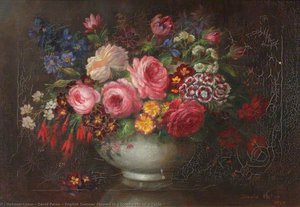
  • Top-ranked work: Flowers in a Ceramic Vase on a Table
  • Top 3 works:
    • Flowers in a Ceramic Vase on a Table
    • Anemones in a Blue and White Chinoiserie Vase on a Table
    • Flowers in a Green Glass Jug on a Table
  • Toon meer…
  • Works on APS: 10
  • Copyright status: Under copyright
  • Museums on APS:
    • National Trust
    • National Trust
    • National Trust
    • National Trust
    • National Trust

Kunstquiz

Er is slechts één correct antwoord op elke vraag.

Vraag 1:
Betty Parsons was primarily known for her work as an art dealer specializing in which movement?
Vraag 2:
In what year did Betty Parsons open her gallery, the Betty Parsons Gallery?
Vraag 3:
According to the provided text, what was Andy Warhol's initial career before transitioning into fine art?
Vraag 4:
What event led to Andy Warhol being shot in 1968?
Vraag 5:
Which of the following best describes Andy Warhol's collaboration in the mid-1980s?

Early Life and Artistic Beginnings

Jacquie Stevens, born in 1949 to the Winnebago tribe in Nevada, carries within her a profound connection to both ancestral traditions and the burgeoning world of contemporary art. Raised primarily by her grandparents, she experienced a childhood steeped in Native American culture, a heritage that would profoundly influence her artistic vision long after she began formally studying art. Her early life instilled in her a deep respect for storytelling, symbolism, and the intricate relationship between humans and the natural world – elements that would become recurring themes in her work. Stevens’ formal training commenced at the Institute of American Indian Art in Santa Fe, New Mexico, an institution renowned for fostering artistic talent within Native communities and providing a platform for diverse cultural expressions. This formative period exposed her to a rich tapestry of Indigenous art forms, including weaving, pottery, and traditional painting techniques, alongside broader explorations of modern and contemporary art movements.

Transitioning to Contemporary Art – A New Voice

Following her studies at the Institute of American Indian Art, Stevens embarked on a journey that saw her increasingly engaged with the world of contemporary art. While maintaining strong ties to her Native heritage, she began to develop a distinctive artistic voice characterized by layered symbolism and a nuanced exploration of identity. Her work often draws upon traditional motifs and narratives, reinterpreting them through a distinctly modern lens. Stevens’ early pieces frequently incorporate elements of abstraction alongside recognizable imagery, creating a visual dialogue between the familiar and the unfamiliar. This deliberate juxtaposition reflects her desire to bridge cultural divides and offer fresh perspectives on established artistic conventions.

Influences and Artistic Style

Stevens' work is deeply informed by both her Native American heritage and the broader landscape of 20th-century art. The influence of Abstract Expressionism, particularly the emphasis on emotional intensity and spontaneous gesture, can be discerned in some of her later pieces. However, unlike many Western artists who adopted these techniques wholesale, Stevens imbues them with a distinctly Indigenous sensibility. Her use of color is often vibrant and symbolic, drawing upon traditional Native palettes and their associated meanings. Furthermore, she frequently incorporates natural materials – such as feathers, beads, and woven textiles – into her work, grounding it in the tangible realities of her cultural background. The layering of imagery—traditional symbols alongside contemporary forms—creates a complex visual language that invites viewers to engage with multiple levels of meaning.

Major Achievements and Legacy

Jacquie Stevens’ career has been marked by a consistent commitment to artistic exploration and cultural dialogue. Her work has been exhibited in numerous galleries and museums across the United States, garnering critical acclaim for its originality and depth. She has also received several awards and grants recognizing her contributions to contemporary Native American art. Beyond her individual achievements, Stevens' work plays an important role in fostering cross-cultural understanding and promoting a more inclusive vision of the art world. Her ability to seamlessly blend traditional motifs with modern techniques serves as a powerful reminder of the enduring relevance of Indigenous cultures and their capacity to inspire new forms of artistic expression. Her ongoing practice continues to evolve, reflecting her lifelong engagement with both her heritage and the ever-changing landscape of contemporary art.

Continuing Exploration

Stevens remains an active artist today, continually pushing the boundaries of her creative practice. Her work is characterized by a persistent curiosity and a willingness to experiment with new materials and techniques. She frequently returns to themes of identity, spirituality, and the relationship between humans and the natural world—subjects that have remained central to her artistic vision throughout her career. Her legacy lies not only in the beauty and complexity of her individual artworks but also in her role as a bridge between cultures and a champion for Indigenous voices within the art community.