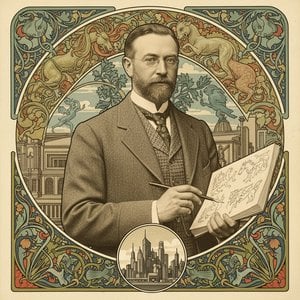
Daniel Dickinson: The Quiet Master of Miniature Portraiture
The world of 19th-century American art often celebrates grand narratives – the sweeping landscapes, the heroic historical paintings. Yet, nestled within this larger scene lies a quieter, more intimate story, told through the delicate brushstrokes and meticulous detail of miniature portraitists like Daniel Dickinson (1795-1877). Born in Milton, Connecticut, into a family steeped in artistic tradition – his father was also an amateur painter, and he had siblings who pursued various creative paths – Dickinson’s journey wasn't one of flamboyant ambition but rather a slow, deliberate cultivation of skill and a profound understanding of capturing the essence of his subjects. His legacy isn’t found in museum halls filled with colossal canvases, but in the intimate worlds contained within small, exquisitely rendered portraits that offer glimpses into the lives and social standing of prominent figures like Judge Ewing and members of the Dickinson family.
Dickinson's early training was largely shaped by his brother, Anson Dickinson, a renowned miniature portraitist. While Anson’s style leaned towards a more theatrical and flamboyant approach – incorporating dramatic backgrounds and a bolder palette – Daniel developed a distinctly refined aesthetic. He absorbed elements of Malbone’s influence, known for his luminous ivory miniatures, as well as the techniques of Joseph Wood and John Wesley Jarvis, creating a unique blend that is both elegant and subtly expressive. This synthesis resulted in portraits characterized by a careful balance between realism and artistic interpretation. Dickinson's use of watercolor on ivory became particularly notable, allowing him to achieve remarkable luminosity and depth within the confines of the small format.
The Philadelphia Years: Success and Artistic Evolution
Following his formative years in New Haven, where he studied under Nathaniel Jocelyn, Dickinson established himself as a successful portraitist in Philadelphia during the late 1810s and 1840s. This period marked a significant turning point in his artistic development. He quickly gained recognition for his ability to capture not just physical likenesses but also the personalities of his subjects. His portraits were regularly exhibited at the Pennsylvania Academy of Fine Arts and the Artists’ Fund Society, reflecting the high esteem in which he was held by the art community. Dickinson's style evolved during this time, moving away from the stark backgrounds favored by earlier miniature painters towards more nuanced compositions that incorporated atmospheric effects and subtle tonal variations. He began to experiment with a looser brushstroke, injecting a sense of spontaneity and immediacy into his work – a departure from the rigid formality of his early portraits.
A key element of Dickinson’s technique involved creating a feigned landscape background, often rendered in delicate washes of watercolor. This practice, influenced by both Anson and Malbone, added depth and context to the portrait, suggesting a narrative beyond the immediate subject. However, Dickinson distinguished himself from his brother through a greater emphasis on modeling the face – utilizing strong contrasts between light and shadow to create a sense of three-dimensionality. His portraits were frequently mistaken for those of Anson, yet subtle differences in brushwork and tonal values revealed Dickinson’s unique artistic voice.
Beyond the Brush: Horticulture and Legacy
As the rise of photography began to challenge the demand for traditional portraiture in the mid-19th century, Dickinson shifted his focus from painting to horticulture. He established a successful rose and grape nursery in Camden, New Jersey, dedicating himself to cultivating beauty in a different medium. This transition reflects not a decline in artistic talent but rather a pragmatic response to changing economic realities. Despite abandoning portraiture, Dickinson never entirely relinquished his artistic sensibilities; he continued to experiment with painting on canvas during the 1830s, producing works that demonstrated a growing mastery of oil paint and a willingness to explore new subjects.
Daniel Dickinson’s contribution to American art is often overlooked, overshadowed by more prominent figures. However, his meticulous attention to detail, his refined aesthetic, and his ability to capture the essence of his subjects within the intimate confines of miniature portraiture make him a significant figure in 19th-century American art. His portraits offer valuable insights into the social and cultural landscape of his time, providing glimpses into the lives of prominent figures and reflecting the evolving artistic trends of the era. His work continues to be studied by art historians and collectors alike, reminding us that beauty and significance can often be found in the quietest corners of the art world.
Notable Works
- Portrait of a Gentleman (1822): A quintessential example of Dickinson’s early style, showcasing his meticulous attention to detail and refined technique. The painting exemplifies Neoclassical elegance with a focus on status and Victorian era refinement.
- Mr. Hagner (circa 1823-1824): Demonstrates the artist’s early experimentation with background techniques, foreshadowing his later developments in atmospheric perspective.
- Portrait of a Gentleman (1827): A refined miniature portrait reflecting the Victorian era status and showcasing Dickinson's mastery of watercolor on ivory.
Historical Context & Influences
Dickinson’s artistic development was deeply intertwined with the broader cultural context of early 19th-century America. The rise of miniature portraiture coincided with a growing interest in self-representation and social status, as wealthy Americans sought to document their lives and achievements through commissioned portraits. Dickinson's work reflects this trend, capturing the elegance and refinement associated with the upper classes. He was influenced by European artistic traditions, particularly the Italian Renaissance and Neoclassicism, but also adapted these influences to create a distinctly American style. The influence of his brother, Anson Dickinson, is undeniable, yet Daniel developed his own unique voice through experimentation and a careful observation of his subjects.