Benjamin D. Sigmund: A Vision of Rural England
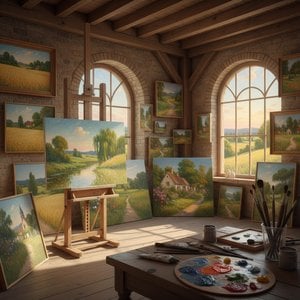
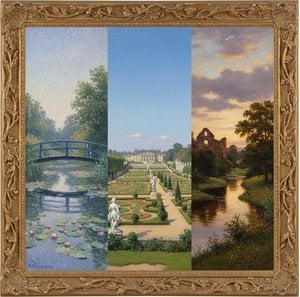
The landscapes of Benjamin D. Sigmund, a British watercolourist active during the late 19th and early 20th centuries, offer a serene and meticulously observed glimpse into the heart of rural England. More than mere depictions of picturesque scenery, his paintings are imbued with a quiet charm, capturing not just the visual beauty but also a sense of timelessness and gentle contentment. Sigmund’s work stands as a testament to the Victorian appreciation for the countryside – a retreat from the burgeoning industrial world – and reflects a deep connection to the natural rhythms of life.
Born in St. Luke's, Middlesex, around 1857 (though precise dates remain elusive), Sigmund’s early life was rooted in London and later extended to Maidenhead, Berkshire. He developed an enduring fascination with the English countryside, embarking on extensive travels throughout Devon, Cornwall, Wales, and Buckinghamshire – regions renowned for their dramatic landscapes and traditional rural communities. This intimate familiarity with these locales profoundly shaped his artistic vision, informing a style characterized by delicate brushwork, subtle tonal variations, and a remarkable ability to convey atmosphere.
Sigmund’s artistic journey began in the 1880s, gaining recognition through exhibitions at prestigious venues such as the Royal Academy (from 1880 to 1903), the Society of British Artists, and the New Watercolour Society. His paintings frequently showcased scenes of idyllic rural life – children playing amidst rolling fields, shepherds tending their flocks, and quaint villages nestled within verdant valleys. A key element in his work is a masterful use of light and shadow, creating a sense of depth and realism while simultaneously evoking a feeling of warmth and tranquility. He was particularly drawn to the golden hues of summer evenings and mornings, capturing the fleeting beauty of these moments with remarkable precision.
While Sigmund’s style can be broadly categorized as Victorian landscape painting, his work possesses a distinctive quality that sets him apart. Influenced by the Pre-Raphaelites' emphasis on detailed observation and their romanticized portrayal of nature, he eschewed overtly dramatic compositions in favor of quieter, more contemplative scenes. His paintings often feature a sense of stillness and solitude, inviting the viewer to pause and appreciate the simple pleasures of rural life. There’s an echo of Constable’s atmospheric landscapes, but Sigmund's work possesses a greater intimacy and a subtle, almost melancholic beauty.
The Influence of Victorian Landscape Painting
Sigmund’s artistic development was undoubtedly shaped by the prevailing trends in Victorian landscape painting. The mid-19th century witnessed a surge of interest in depicting the English countryside, fueled by a growing desire for escape from the pressures of urban life and industrialization. Artists like John Constable and J.M.W. Turner established precedents for capturing the atmospheric qualities of nature – light, color, and weather – with unprecedented realism. Sigmund’s work builds upon this tradition, refining and adapting these techniques to create his own unique vision.
However, unlike some of his contemporaries who embraced grand, sweeping vistas, Sigmund focused on smaller, more intimate scenes. He was particularly interested in capturing the details of rural life – the textures of fields, the patterns of clouds, the expressions on the faces of villagers. This meticulous attention to detail reflects a broader Victorian fascination with observation and documentation, exemplified by figures like Sir Francis Darwin, who meticulously documented the flora and fauna of Britain.
Furthermore, Sigmund’s work aligns with the Pre-Raphaelite movement's emphasis on truth to nature and its rejection of academic conventions. The Pre-Raphaelites sought to revive the artistic styles of the medieval period, believing that they offered a more authentic representation of reality than the idealized forms favored by Renaissance artists. Sigmund’s paintings share this commitment to naturalism, eschewing artificiality in favor of a direct and honest portrayal of the English countryside.
Technique and Style
Sigmund's technical skill is evident in his masterful use of watercolour – a medium that allows for delicate gradations of tone and subtle shifts in color. He employed a layering technique, building up washes of paint to create depth and luminosity. His brushwork is generally loose and expressive, conveying the fleeting qualities of light and atmosphere. He was particularly adept at capturing the reflections on water surfaces, creating shimmering effects that add to the sense of tranquility.
A key characteristic of his style is his use of color – often muted and earthy tones, punctuated by bursts of vibrant hues. He skillfully employed complementary colors to create visual interest and depth, while also utilizing atmospheric perspective to suggest distance. His compositions are typically balanced and harmonious, with a clear sense of foreground, middle ground, and background. The paintings frequently feature a limited palette, relying on subtle variations in tone and color to convey mood and atmosphere.
His subjects often include scenes of rural life – children playing, shepherds tending their flocks, farmers working the land, and villagers engaged in everyday activities. These scenes are rendered with remarkable detail and sensitivity, capturing not just the visual appearance but also the essence of rural England. He frequently depicted landscapes bathed in golden light, evoking a sense of nostalgia and timelessness.
Legacy and Significance
Despite his relatively modest recognition during his lifetime, Benjamin D. Sigmund’s paintings have gained increasing appreciation in recent years. His work is now recognized as an important contribution to the history of British watercolour painting, offering a unique perspective on the English countryside. His meticulous observation, delicate brushwork, and evocative use of color continue to captivate viewers today.
Sigmund’s paintings are particularly valued for their ability to transport the viewer to a bygone era – a time when rural life was simpler and more connected to nature. His work serves as a reminder of the beauty and tranquility that can be found in the English countryside, and it offers a valuable glimpse into the artistic sensibilities of the Victorian period.
His paintings are held in private collections and occasionally appear at auction, demonstrating continued interest in his work. The James Alder Fine Art gallery currently holds several examples of Sigmund’s work, showcasing his talent for capturing the essence of rural England. Further research into his life and oeuvre continues to shed light on this talented but often overlooked artist.
Vraag en antwoord
Hoe vind ik werken van Benjamin D. Sigmund in een specifiek kleurenpalet?
De werken van Benjamin D. Sigmund kunnen op basis van kleurpalet worden bekeken op de Op kleurpalet pagina van de kunstenaar.
Is er een tijdlijn van de werken van Benjamin D. Sigmund?
Er bestaat een tijdlijn van de werken van Benjamin D. Sigmund: op de Chronologie kunstwerken pagina van de kunstenaar staan de kunstwerken in chronologische volgorde van creatie.
Waar komt Benjamin D. Sigmund vandaan?
Benjamin D. Sigmund werd geboren in United Kingdom.