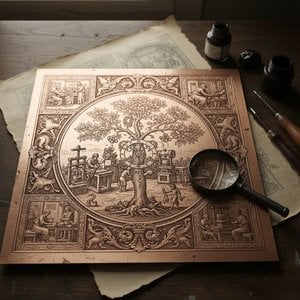
A Legacy Etched in Tradition: The Life and Art of Anthony Enebeli
Anthony Enebeli, born in 1956 in the small Nigerian village of Ugiliamai, is a pivotal figure in contemporary African printmaking. His artistic journey isn’t merely about creating visually striking works; it's a profound act of cultural preservation, a dedicated effort to document and celebrate the fading traditions of the Anioma people. Growing up immersed in the rich festivals, customs, and daily life of his community provided Enebeli with an inexhaustible source of inspiration that continues to fuel his artistic vision. He wasn’t simply observing; he was absorbing a way of life deeply connected to its history, spirituality, and communal bonds—a world rapidly changing under the influence of modernity.
The Mentorship of Onobrakpeya and the Rise of a Printmaker
Enebeli's formal artistic training began under the tutelage of Bruce Onobrakpeya, a highly respected Nigerian artist renowned for his pioneering work in printmaking and his commitment to African art traditions. This mentorship proved transformative. Onobrakpeya instilled in Enebeli not only technical mastery—particularly in etching techniques—but also a deep understanding of the power of art as a vehicle for cultural expression and social commentary. Enebeli quickly distinguished himself, becoming one of Nigeria’s best-known printmakers and carrying forward Onobrakpeya's legacy while forging his own distinct artistic path. He embraced the complexities of etching, utilizing its nuanced capabilities to capture the delicate textures and emotional depth inherent in Anioma culture.
Exploring the Vanishing World of the Anioma People
The core focus of Enebeli’s work lies in portraying the traditions of the Anioma people – a region steeped in history and unique cultural practices. His etchings are not static representations but rather dynamic narratives that bring to life vibrant festivals, intricate marriage customs, and energetic dances. He meticulously depicts scenes of communal gatherings, religious ceremonies, and everyday activities, offering viewers a glimpse into a world often overlooked or misunderstood.
His art serves as a powerful counter-narrative to the homogenizing forces of globalization, ensuring that these traditions are not forgotten but actively remembered and celebrated. The evocative imagery in his prints isn’t simply about recording what *was*; it's about prompting reflection on what is being lost and the importance of safeguarding cultural heritage for future generations.
Technique as Testimony: Etching and the Art of Detail
Enebeli’s choice of etching as his primary medium is particularly significant. The process itself—involving the careful application of acid to a metal plate to create intricate lines and textures—mirrors the painstaking detail with which he approaches his subject matter.
Each line, each shadow, becomes a testament to the richness and complexity of Anioma culture. He often works in series, exploring different facets of a single tradition or event, allowing for a deeper understanding of its nuances. His use of metal foil adds another layer of depth and texture, enhancing the visual impact of his prints and creating a sense of tactile realism. The resulting artworks are not merely images; they are tangible records of a living culture, imbued with emotion and historical significance.
Historical Significance and Contemporary Relevance
Anthony Enebeli’s contribution to contemporary African art extends beyond his technical skill and artistic vision. He has played a crucial role in elevating printmaking as a legitimate and powerful form of artistic expression within Nigeria and internationally. His work challenges conventional notions of what constitutes “high art” by focusing on the traditions and experiences of often marginalized communities. In an increasingly interconnected world, Enebeli’s art serves as a vital reminder of the importance of cultural diversity and the need to preserve indigenous knowledge systems.
- His prints are exhibited in galleries and museums worldwide.
- He continues to inspire a new generation of artists to explore their own cultural heritage.
- Enebeli’s work fosters dialogue about identity, tradition, and the impact of globalization on local cultures.
His legacy is etched not only in the metal plates he meticulously carves but also in the hearts and minds of those who encounter his powerful and evocative art.