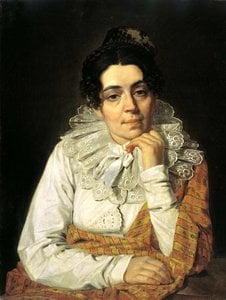
Alexei Gavrilovich Venetsianov (1780-1847): Pionier van het Russische boerenleven in de kunst
- Geboren: Moskou, Rusland, 1780
- Overleden: 1847
Alexei Gavrilovich Venetsianov is een spilfiguur in de Russische kunstgeschiedenis, gevierd om zijn baanbrekende afbeeldingen van het boerenleven en de dagelijkde ervaringen van gewone mensen. Geboren in een koopmansfamilie van Griekse afkomst in Moskou, werd zijn artistieke reis gekenmerkt door zowel persoonlijke strijd als belangrijke bijdragen aan de ontwikkeling van een uitgesproken Russische nationale stijl.
Vroege leven en artistieke ontwikkeling
- Vroege carrière: Venetsianov volgde aanvankelijk een carrière in de burgerlijke dienst voordat hij zich volledig aan de kunst wijdde. Hij verhuisde naar Sint-Petersburg, waar hij begon te studeren door werken uit de Hermitage-collectie te kopiëren en zich te oefenen in het maken van portretten.
- Invloed van Borovikovsky: Een cruciale periode in zijn ontwikkeling omvatte een leertijd onder Vladimir Borovikovsky, een vooraanstaande Russische portrettist uit die tijd. Het leven in het huis van Borovikovsky bood onschatbare training en blootstelling aan gevestigde artistieke praktijken.
- Vroege strijd: Ondanks zijn getoonde talent kreeg Venetsianov moeite met het verkrijgen van opdrachten als vrijgevestigd portrettist, wat de uitdagingen onderstreepte waar kunstenaars buiten formele academische instellingen mee te maken kregen.
- Academische erkenning: In 1811 kreeg hij erkenning van de Academie van Beeldende Kunsten, waarbij hij de titel van academicus werd toegekende voor zijn zelfportret en een portret van K.I. Golovachevsky en jongere leerlingen. Dit markeerde een belangrijke stap in zijn carrière.
De verschuiving naar landelijke scènes en het stichten van zijn eigen school
- Toewijding aan de kunst: In 1819 wijdde Venetsianov zich besluiteloos volledig aan de kunst, verliet hij de burgerlijke dienst en kocht hij een dorp genaamd Safonkovo waar hij zich vestigde. Dit markeerde een keerpunt in zijn artistieke focus.
- Observatie van de natuur & het landelijke leven: Het leven in Safonkovo gaf hem directe toegang tot het landelijke landschap en de boerengemeenschappen die centrale thema's in zijn werk zouden worden. Hij observeerde en beeldde scènes uit de natuur en het dagelijks leven nauwgezet af, waarmee hij de essentie van het 19e-eeuwse Rusland vastlegde.
- Pionier in de weergave van het boerenleven: Venetsianov wordt algemeen erkend als de eerste Russische kunstenaar die het boerenleven zo authentiek en gevoelig systematisch heeft verbeeld. Zijn werken gingen voorbij aan geromantiseerde of geïdealiseerde representaties en boden een realistisch kijkje in hun wereld.
- Oprichting van een kunstschool: Vanaf de jaren 1820 begon Venetsianov jonge mensen uit arme milieus, waaronder lijfeigenen zoals Grigory Soroka, aan te trekken om hen schilderen te leren. Dit leidde tot de oprichting van zijn eigen informele schildersschool, een bewijs van zijn toewijding aan het stimuleren van artistiek talent en het bevorderen van toegankelijkheid tot kunsteducatie.
- Koninklijk mecenaat: Tsaar Nicolaas I erkende de bijdrage van Venetsianov aan nationale trends in de kunst en benoemde hem tot hofschilder, wat cruciale financiële steun bood voor zijn school.
Belangrijke werken en artistieke stijl
- Opmerkelijke schilderijen: Het oeuvre van Venetsanov omvat talrijke belangrijke werken zoals "Portret van een boerenmeisje", "De maaier op een dorsvloer", "Boerenmeisje met korenbloemen", "Lente, op geploegde grond", "Zomer, het maaien", "Zakharka", "Meisje in een geruit sjaal", "Meisje met een kalfje", "Waarzeggen", "Kind van een boer met melk" en "Zuigeling met een kind".
- Realistische stijl: Zijn stijl wordt gekenmerkt door realisme, aandacht voor detail en een naturalistische weergave van licht en schaduw. Hij hanteerde een benadering van directe observatie, waarbij hij de texturen van kleding, de gezichtsuitdrukkingen en de nuances van het landelijke landschap vastlegde.
- Invloed van de barok: Hoewel hij vooral bekend staat om zijn realistische afbeeldingen, vertoont het werk van Venetsianov ook invloeten uit de barokperiode, met name in zijn gebruik van dramatische belichting en textuurrijke impasto (zoals te zien in "Hoofd van een oude boer").
Nalatenschap en historische betekenis
- Fundament voor het Russisch realisme: De pionierende focus van Venetsianov op het boerenleven legde de basis voor de ontwikkeling van het Russisch realisme in de kunst. Zijn werk plaveide de weg voor latere generaties kunstenaars die sociale realiteiten met eerlijkheid en empathie wilden afbeelden.
- Nationale identiteit: Door het leven en de strijd van gewone Russen te verbeelden, droeg Venetsianov aanzienlijk bij aan de vorming van een duidelijke nationale identiteit in de Russische kunst.
- Tragisch einde: Zijn leven werd tragisch beëindigd in 1847, toen zijn koets tijdens een ongeluk omsloeg. Ondanks zijn relatief korte carrière blijft zijn impact op de Russische kunst diepgaand en blijvend.
Vraag & Antwoord
Welke stemmingen drukken de kunstwerken van Alexei Venetsianov uit?
De Sfeerruimte pagina van de kunstenaar toont de kunstwerken van Alexei Venetsianov, gerangschikt op basis van hun sfeer.
Hoeveel kunstwerken van Alexei Venetsianov zijn beschikbaar om te bekijken?
U kunt 90 kunstwerken werken van Alexei Venetsianov bekijken op de Alle kunstwerken-pagina.
Kan ik de werken van Alexei Venetsianov verkennen op basis van het kleurenspectrum?
De werken van Alexei Venetsianov kunnen op kleur worden verkend op de Spectraal index pagina van de kunstenaar.