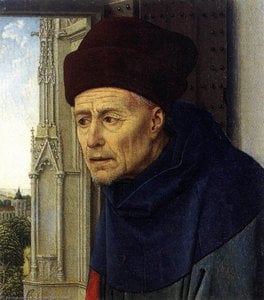
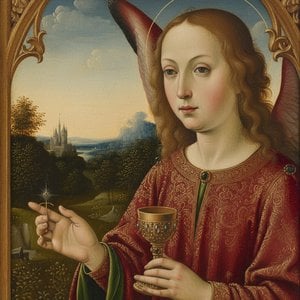
Vroege Leven, Familie en Opleiding
Geboren rond 1390, trad Jan Van Eyck een wereld binnen waarin de penseel een familiestuk was. Hij was geen eenzaam talent dat uit het niets tevoorschijn kwam, maar een zoon van een geslacht van schilders. Hij groeide op samen met zijn broers, Hubert en Lambert, in een huishouden waar de geheimen van pigment en bereiding waarschijnlijk aan de gemeenschappelijke tafel werden gedeeld. Deze familiale band betekende dat zijn vroege begrip van kleur en vorm werd gevormd door de collectieve kennis van de naam Van Eyck.
Nog voordat hij de aandacht van hertogen of diplomaten zou trekken, ondergingen Jan Van Eyck en zijn broers een rigoureuze training die extreme geduld vereiste. Ze werden opgeleid als miniaturisten en verluchters, werkend op de delicate oppervlakken van manuscripten. Deze vroege discipline vereiste een vaste hand en een oog voor het kleinste detail. Het was in deze minuscule, kostbare ruimtes dat hij voor het eerst leerde om licht en schaduw te manipuleren, een vaardigheid die later zijn benadering van veel grotere doeken zou definiëren.
De familieateliers waren een plek van gedeelde arbeid en gedeelde ambitie, maar de paden van de broers raakten uiteindelijk gescheiden door de wreedheid van het lot. Terwijl Jan zijn ambacht bleef verfijnen, overleed zijn broer Hubert in 1426. Dit verlies liet Jan achter om het zware gewicht van de artistieke erfenis van de familie verder te dragen, inclusief de voltooiing van belangrijke religieuze werken die de broers samen waren begonnen. Hij ging verder, niet louter als een ambachtsman, maar als een man die de essentie van zijn medium had beheerst door jarenlange, minutieuze studies op kleine schaal.
Mecenassen, het Atelier en de Opdrachten
Het leven van Jan Van Eyck werd gevormd door de hooggespannen bewegingen aan het Bourgondische hof. Hij werkte niet louter in de stilte van een atelier; hij bewoog zich door de hallen van de macht, in dienst van Filips de Goede, de hertog van Bourgondië. Deze positie bracht hem in de innerlijke kring van de meest invloedrijke figuren van zijn tijd. Voordat hij zijn langdurige ambt aan het hof vervulde, vond hij werk in Den Haag, waar hij diende onder Jan van Beieren, de heerser van Holland. Zijn aanwezigheid was voelbaar in de bruisende centra van Brugge en Lille, waar zijn reputatie zowel de vromen als de machtigen naar zich toe trok.
Zijn plichten reikten vaak veel verder dan het canvas. De hertog vertrouwde op hem als diplomaat en stuurde hem op officiële missies die zowel discretie als intellect vereisten. In 1428 reisde hij naar Portugal om Isabella van Portugal te schilderen, een taak die hem dwong te navigeren door de complexiteit van buitenlandse hoven. Deze reizen en politieke verantwoordelijkheden boden de stabiliteit en de middelen die nodig waren voor zijn technische experimenten. Hij was een man van de wereld, die zich even op zijn gemak voelde in het gezelschap van koningen als in de verstilling van een kapel.
De vraag naar zijn ongeëvenaarde vaardigheid kwam uit alle lagen van de samenleving. Hij ontving talrijke religieuze opdrachten en schiep werken die de diepe geloofsgevoelens van die tijd weerspiegelden. Tegelijkertijd zochten de opkomende klasse van kooplieden en de gevestigde adel zijn hand. Hij schilderde de gezichten van Bourgondische hovelingen, lokale edelen, geestelijken en welgestelde kooplieden, waarmee hij de gelijkenis vastlegde van degenen die de economie en de geest van de vijftiende eeuw vormgaven.
Techniek en Stijl
De manier waarop hij met licht omging, was een stille revolutie. Terwijl anderen worstelden met de vlakke, matte afwerking van eitempera, vond hij een nieuwe manier om kleur te laten ademen. Hij meesterde het medium olieverf door het op te bouwen uit dunne, transparante glazuren van pigment, die hij laag over laag aanbracht. Deze methode stelde hem in staat om de werkelijke beweging van het licht te vangen wanneer het een oppervlak raakt. Hij schilderde niet louter een kleur; hij schilderde de manier waarop het licht in die kleur leeft. Door middel van subtiele schaduwwerking en lumineuze tonen bereikte hij een diepte die de texturen van de fysieke wereld tastbaar maakte. Men kon bijna het gewicht voelen van een zware fluwelen mantel of de koude hardheid van een gepolijst metalen vat door zijn penseelvoering.
Zijn oog was getraind om de kleinste details van het bestaan waar te nemen. Hij bezat een rusteloze nieuwsgierigheid naar het minuscule, waarbij hij de specifieke manier vastlegde waarop het licht een enkele haarlok vangt of de subtiele textuur van de menselijke huid. Deze obsessie met detail strekte zich uit tot de ruimte die zijn figuren bewoonden. Hij maakte gebruik van atmosferisch perspectief om een gevoel van weidse ruimte te creëren, waarbij hij liet zien hoe verre landschappen vervagen tot een blauwe nevel naarmate ze zich richting de horizon terugtrekken. Dit gaf zijn composities een verfijnd gevoel van diepte dat de toeschouwer trok in een geloofwaardige, driedimensionale realiteit.
Hij was ook een man die erkend wilde worden door zijn eigen hand. In een tijdperk waarin veel schilders anonieme ambachtslieden bleven, bevestigde hij zijn identiteit door zijn werken te signeren met de naam "JOHANNES DE EYCK." Hij vergezelde deze handtekening vaak met zijn persoonlijke motto, "Als ich kan," wat vertaald kan worden als "Zo goed als ik kan." Het was een gedurfde claim van zijn technische vaardigheid, direct gegraveerd in de realiteit van zijn creaties.
Hoogtepunten en Meesterwerken
De enorme omvang van zijn ambitie is wellicht het meest zichtbaar in het Gentse Altaarstuk, een monumentaal twaalf-paneel polyptiek dat hij in 1432 voltooide. Dit werk, dat de Aanbidding van het Lam centraal stelt, vereiste een diepgaande beheersing van complexe religieuze symboliek en uiterst realistische figuren. Het was een titanenwerk dat demonstreerde hoe hij uitgestrekte, ingewikkelde scènes kon regisseren, terwijl hij tegelijkertijd een gevoel van spirituele zwaarte behield. Zijn vermogen om de wereld met dergelijke helderheid weer te geven, beperkte zich echter niet tot het goddelijke; hij paste diezelfde intense observatie toe op het aardse, private leven van de mens.
In 1434 schilderde hij het Arnolfini Portret, een werk dat met een verbluffende helderheid een huiselijke scène vastlegt, inclusief handtekening en datum. Binnen de lijst staat een hond symbool voor trouw en markeren weggegooide schoenen heilige grond, terwijl een spiegel op de achtergrond een verborgen laag van de realiteit reflecteert. Deze precisie strekte zich ook uit tot zijn persoonlijke studies, zoals het olieverfschilderij uit 1433 dat bekend staat als het Portret van een Man, of wellicht een zelfportret. In dit werk is zijn persoonlijke motto, "Als ich kan", prominent op de lijst gegraveerd, een ingetogen maar krachtige bevestiging van zijn eigen vakmanschap. Hij bleef deze intieme observaties verfijnen tot in zijn latere jaren, met werken zoals de Madonna met Kind met Kanselier van der Paele in 1436 en de Maagd van Kanselier Rolin. Zelfs tegen het einde van zijn leven, rond 1440, richtte hij zijn blik op het goddelijke in zijn Portret van Christus.
- Het Gentse Altaarstuk (1432)
- Portret van een Man (1433)
- Het Arnolfini Portret (1434)
- Madonna met Kind met Kanselier van der Paele (1436)
- Portret van Christus (ca. 1440)
Nalatenschap en Invloed
De technische genialiteit die Jan Van Eyck aan zijn ambacht toevoegde, heeft een onuitwisbare stempel gedrukt op de kunstgeschiedenis. Hij wordt erkend als de grondlegger van een schilderstijl die wordt gekenmerkt door minutieus realistische weergaven van oppervlaktestructuren en de manier waarop natuurlijk licht op de wereld valt. Door het gebruik van olievieslagen te perfectioneren, bood hij schilders een revolutionaire methode om de specifieke schittering van juwelen of de zachte textuur van de menselijke huid vast te leggen. Zijn technieken bepaalden hoe generaties kunstenaars naar licht en textuur zouden kijken, waarbij hij het medium wegvoerde van de vlakke, matte oppervlakken uit het verleden naar een lumineuze, driedimensionale realiteit.
Deze beheersing van de formele compositie en technische vaardigheid leverde hem een reputatie op als een ware innovator van de Vlaamse Primitieven. Zijn invloed bleef niet beperkt tot de noordelijke uithoeken van Europa; zijn werk diende als een model voor generaties schilders, zowel ten noorden als ten zuiden van de Alpen. Zelfs toen kunststijlen verschoven, bleven de standaarden die hij stelde voor precisie en observatie een ijkpunt voor hen die de tastbare wereld met absolute helderheid wilden weergeven.


 Voorvertoning
 Verstuur
 Delen
Delen
 Details bekijken
 Gids
Gids

 Download
 Vergelijkbare items
 Röntgenonderzoek
 Diavoorstelling
 Vraag & antwoord
 Statistieken

 Lees meer
 Schakel over naar print





































 De optie voor glas is alleen beschikbaar bij een formaat kleiner dan 110 cm.