Voorvertoning Bekijk in AR Schakel over naar print Schakel over naar digitale afbeelding Verstuur
Details bekijken Toevoegen aan favorieten Download Vergelijkbare items Röntgenonderzoek Diavoorstelling Statistieken

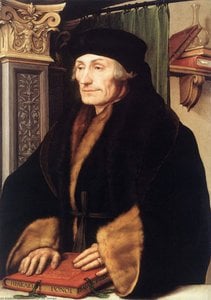
Portrait van Erasmus van Rotterdam

Hans Holbein der Jüngere schuf ein Meisterwerk über Erasmus von Rotterdam: Ein beeindruckendes Porträt des Humanisten und Reformators im Stil der nördlichen Renaissance mit außergewöhnlicher Detailtreue.

Hans Holbein der Jüngere (1497-1543): Een Renaissance meester van realistisch portretkunst, beroemd om koningen zoals Hendrik VIII en gedetailleerde kunstwerken die een tijdperk definiëren.

Handgemaakte olieverfreproductie

Met de hand geschilderd in olieverf op canvas in uw gewenste maat en lijst, op bestelling gemaakt door onze kunstenaars. ( Schakel over naar print Schakel over naar digitale afbeelding)

P118B $10
P118H $10
P118W $10
P438Z $10
P508JH $12
P508YH $12
P805H $10
P805Z $10
P919BZ $10
P919G $10
P919XJ $10
P959ZH $10
P968JZ $12
W106C $8
W218G $10
W218JH $8
W218Y $10
W307PJ $10
W316G $10
W316PJ $8
W316Y $10
W398PJ $8
W4111J $10
W500HY $15
W500JH $15
W692G $12
W849H $8
W940BG $15
W953PJ $8

Standaardformaat
op maat gemaakt
CM
INCH

Kies uit onze vooraf ingestelde maten die overeenkomen met de originele verhoudingen van het kunstwerk.

breedte
hoogte

U kunt uw eigen afmetingen invoeren om in een specifieke lijst of ruimte te passen. Als de door u gekozen maat niet overeenkomt met de verhoudingen van het originele beeld, zullen we het kunstwerk bijsnijden of het schilderij uitbreiden met extra handgeschilderde elementen. Een digitale mockup wordt ter goedkeuring naar u verzonden voordat de productie begint.
Houd er rekening mee dat de preview op het scherm niet de werkelijke uitsnede of uitbreiding weergeeft. Alleen de mockup toont de uiteindelijke compositie nauwkeurig.
Hoewel aangepaste afmetingen mogelijk zijn, raden we aan een maat uit de vooraf gedefinieerde lijst te selecteren om de originele verhoudingen te behouden.

Voorbeelden van aanpassingen: Vervang het gezicht met een eigen foto; Voeg een huisdier toe (bijv. vervang de kat door een hond); Verwerk een verborgen boodschap in de achtergrond; Wijzig het landschap of andere elementen in de achtergrond.
Na de bestelling zal het team van WahooArt.com per e-mail contact opnemen met de klant voor instructies en een mockup-voorbeeld sturen.

Wereldwijde levering () binnen 3 tot 4 weken in plaats van de standaard 5 weken. (17 september). Zonder concessies aan de kwaliteit.

why_choose_icon
Gratis wereldwijde expressverzending
why_choose_icon
Hoogwaardig linnen canvas
why_choose_icon
Volledige verzendverzekering
why_choose_icon
Garantie op terugbetaling van invoerrechten
why_choose_icon
Garantie op exacte kleurweergave
why_choose_icon
Retourbeleid van 100 dagen (alleen bij defecten)
why_choose_icon
100% Geld-terug-garantie
why_choose_icon
Korting bij meerdere afnames

Totaalprijs

$ 272

reproduction

Portrait van Erasmus van Rotterdam

Druktechniek

Afmetingen reproductie

-

Eindtotaal

$ 272

Snelle feiten

  • Dimensions: 37 x 30 cm
  • Year: 1523
  • Location: Kunstmuseum Basel, Switzerland
  • Notable elements: Green wall background
  • Influences: Renaissance
  • Subject or theme: Humanist scholar
  • Artist: Hans Holbein the Younger

Portrait of Erasmus of Rotterdam - A Northern Renaissance Masterpiece

Hans Holbein the Younger’s “Portrait of Erasmus of Rotterdam,” painted in 1523, is more than just a likeness; it's a profound distillation of the intellectual fervor and humanist ideals that defined the burgeoning Northern Renaissance. This intimate portrait, currently residing within the Kunstmuseum Basel, offers a rare glimpse into the mind of Desiderius Erasmus Roterodamus, a towering figure in 16th-century thought — a Catholic priest, theologian, scholar, and champion of religious reform. Measuring just 37 x 30 cm, its compact size belies the monumental impact of its subject and the masterful execution of Holbein’s brush.

The painting immediately draws the eye to Erasmus himself, depicted in a moment of intense concentration as he meticulously writes upon a parchment sheet. His features — the thoughtful furrow of his brow, the subtle curve of his lips, the intelligent gleam in his eyes — are rendered with an astonishing level of realism, a hallmark of Holbein’s skill. The artist doesn't simply depict; he captures the very essence of Erasmus’s intellectual energy, conveying both his scholarly pursuits and the quiet dignity of a man deeply engaged with ideas. The inclusion of a ring on his finger subtly hints at his status as a respected figure within the humanist circles of his time.

The Northern Renaissance — A World of Detail and Symbolism

“Portrait of Erasmus of Rotterdam” is firmly rooted in the Northern Renaissance art movement, a style distinguished by its meticulous attention to detail, vibrant realism, and innovative use of oil paints on paper mounted on pine. Unlike the more idealized forms prevalent in Italian Renaissance painting, the Northern style embraced a greater sense of immediacy and observation. Holbein’s technique exemplifies this perfectly — every wrinkle, every strand of hair, every texture of the parchment is rendered with painstaking precision. The background, a simple yet effective green wall, provides a harmonious backdrop that complements the portrait's color scheme without distracting from the central subject.

Beyond mere representation, the painting is laden with symbolism. Erasmus’s act of writing represents his lifelong dedication to scholarship and intellectual discourse. The open book on the shelf — a deliberate inclusion by Holbein — alludes to Erasmus’s vast knowledge base and his commitment to classical learning. The empty wine flask suggests a contemplative pause, a moment for reflection amidst the demands of scholarly life. These subtle details elevate the portrait beyond a simple likeness, transforming it into a visual meditation on the nature of intellect and the pursuit of wisdom.

Holbein’s Legacy — A Master of Portraiture

Hans Holbein the Younger was a pivotal figure in 16th-century art, renowned for his unparalleled ability to capture the likeness and personality of his subjects. His workshop produced a diverse range of works, from religious scenes and satirical prints to elaborate court portraits. “Portrait of Erasmus of Rotterdam” stands as one of his most celebrated achievements, showcasing his mastery of portraiture and his deep understanding of human psychology. The painting’s influence extended far beyond Basel; copies proliferated throughout Europe, spreading Holbein's reputation and solidifying his place among the greatest artists of the era.

Considered alongside works like “Erasmus (detail),” “Head of a Male Saint,” and “Adam and Eve,” this portrait reveals a consistent artistic vision — a commitment to realism, an appreciation for detail, and a keen awareness of the symbolic potential of visual imagery. For those seeking to own a piece of art history, WahooArt offers meticulously crafted oil painting reproductions of “Portrait of Erasmus of Rotterdam,” allowing you to experience the beauty and intellectual depth of this iconic masterpiece firsthand.

Exploring Further — A Rich Artistic Tapestry

To delve deeper into the world of Hans Holbein the Younger, we encourage you to explore “The Workshop of Hans Holbein the Younger” on WahooArt.com, where you can discover a comprehensive collection of his works. Furthermore, Wikipedia’s entry on Hans Holbein the Younger provides invaluable biographical information and historical context. And for those interested in the broader artistic landscape of the time, a visit to the Kunstmuseum Basel is highly recommended — where this remarkable portrait continues to captivate viewers centuries after its creation.


Biografie van de kunstenaar

A Life Etched in Detail: The World of Hans Holbein the Younger

Born around 1497 in Augsburg, Germany, Hans Holbein the Younger emerged as a defining figure of the Northern Renaissance—a master portraitist whose work continues to resonate with breathtaking realism and psychological depth. His upbringing within an artistically gifted family laid the foundation for his exceptional talent; his father, Hans Holbein the Elder, was a respected painter and printmaker who instilled in young Hans a meticulous approach to observation and technique. This early training wasn’t merely about mastering brushstrokes or mixing pigments—it was about learning to *see*, to capture not just likeness but the very essence of a subject. Holbein's initial artistic explorations occurred within his father’s workshop, where he honed his skills before embarking on a journey that would lead him through Switzerland and ultimately to the heart of the English court.

From Basel to the Tudor Court: A Rising Star

After completing his apprenticeship, Holbein traveled extensively throughout Switzerland, establishing himself as an independent artist with a growing reputation. He spent several formative years in Basel, creating not only striking portraits but also religious works and intricate woodcut designs—most notably the haunting series depicting the *Dance of Death*. These early pieces reveal a burgeoning mastery of composition and a developing fascination with capturing the complexities of human emotion. His father’s influence was paramount; Holbein inherited his meticulous attention to detail and unwavering dedication to artistic excellence. The Basel workshop fostered an environment where observation reigned supreme—a crucial element in Holbein's subsequent artistic endeavors. He skillfully blended German artistic traditions with influences from Italy, absorbing techniques that would elevate his work to unparalleled heights. It was in 1526 that fate intervened, drawing Holbein towards England, an event that would irrevocably alter his artistic trajectory. He arrived bearing a letter of introduction from Erasmus, the renowned humanist scholar, which opened doors to the influential circles of English society. His talent quickly captivated prominent figures like Sir Thomas More, who became both a patron and a subject for several compelling portraits. This connection proved pivotal, leading to Holbein’s appointment as a court painter to King Henry VIII in 1536—a position he held, with some interruptions, until his untimely death in 1543. The patronage of More provided invaluable insight into the intellectual climate of the time and fueled Holbein's artistic ambition.

The Art of Perception: Style and Masterpieces

Holbein’s artistic style is characterized by an extraordinary commitment to realism, achieved through painstaking attention to detail in rendering textures, fabrics, and the subtle nuances of facial features. He didn’t simply *paint* portraits; he meticulously constructed them, layer upon layer, capturing not just physical appearances but also the personality and inner life of his sitters. His innovative compositions further enhanced the impact of his work, often employing symbolic objects or backgrounds to convey deeper meaning. The Ambassadors (1533) stands as a testament to this approach—a complex and symbolically rich double portrait showcasing both Holbein’s technical brilliance and intellectual depth. The anamorphic skull subtly embedded within the painting serves as a stark *memento mori*, reminding viewers of the inevitability of death. He meticulously studied anatomy, mastering techniques that allowed him to depict human figures with unprecedented accuracy—a hallmark of his distinctive style. His numerous portraits of Henry VIII established a lasting image of Tudor power, while his depiction of Erasmus of Rotterdam captures the scholar’s profound intellectual gravitas. Other notable works include the stunning *Portrait of Nikolaus Kratzer* (1528), a masterpiece of realism and scientific detail—a reflection of Holbein's fascination with observation and experimentation.
  • His depictions of Henry VIII became iconic representations of royal power.
  • His portraiture provides a window into the lives of prominent humanists like Erasmus and More.
  • His innovative use of symbolism adds layers of meaning to his work, inviting viewers to contemplate deeper themes.
Holbein’s legacy is profound; His meticulous attention to detail revolutionized portrait painting—setting a new standard for realism and psychological insight. He remains one of the most admired and studied painters of the Renaissance—a master whose work continues to inspire and enthrall. He didn't merely record appearances—he captured moments in time, preserving them for posterity. His artistic journey was shaped by influences from Albrecht Dürer and Italian Renaissance artists, demonstrating his adaptability and intellectual curiosity.
Hans Holbein de Jongere

Hans Holbein de Jongere

1497 - 1543 , Duitsland

Belangrijkste feiten

  • Artistic Movement Or Style: Noordelijke Renaissance
  • Artists Or Movements Influenced By This Artist: ['Latere portretschilders']
  • Artists Who Influenced This Artist: ['Albrecht Dürer']
  • Date Of Birth: c. 1497
  • Date Of Death: October or November 1543
  • Full Name: Hans Holbein der Jüngere
  • Nationality: Duits en Zwitserland
  • Notable Artworks:
    • De Ambassadeurs
    • Portret van Hendrik VIII
    • Portret van Erasmus
  • Place Of Birth: Augsburg, Duitsland
Ontdek kunstwerken georganiseerd op thema, stijl en kenmerk.