

Het beroemdste schilderij van Peter Edwards is Professor Peter Mathias (b.1928), Master of Downing College (1987–1995) (1990), in het Paintings Owned by Colleges, Cambridge. Met Principal Struther Arnott (b.1934) (1994) en Sir Christopher Zeeman (b.1925), Principal (1988–1995) (1993) wordt de trilogie van de drie werken die iedereen herkent voltooid. Onze catalogus bevat 33 werken van Peter Edwards; de 33 hieronder zijn de werken die de wereld het meest bekijkt, elk met het jaartal, het museum waar het zich bevindt en de reden waarom het belangrijk is.
Gerangschikt op basis van onze populariteitsscore, die de zoekopdrachten, bezoeken en bestellingen voor elk werk combineert. Bijgewerkt in november 2026.


The painting Kazuo Ishiguro by Peter Douglas Edwards is a remarkable piece of art that showcases the artist's skill in capturing the essence of his subject. Created in…


The Peter Douglas Edwards painting, Bobby Charlton, is a captivating portrait that showcases the artist's skill and attention to detail. Created in 1991, this oil on canvas piece…
De vier onderwerpen die het meest voorkomen in deze meesterwerken, met van elk het mooiste voorbeeld.
De 8 musea met de meeste schilderijen op deze pagina.
| Museum | Stad | Werken van Peter Edwards | Schilderijen uit deze lijst |
|---|---|---|---|
 Llyfrgell Genedlaethol Cymru / The National Library of Wales |
Aberystwyth | 4 | Young Woman on the Bridge at Llangollen, John Jones, Griff Rhys Jones (b.1953) |
 Aberystwyth University School of Art Museum And Galleries |
Aberystwyth | 2 | Study for a Portrait of Derec Llwyd Morgan (b.1943), Derec Llwyd Morgan (b.1943), Vice Chancellor (1994–2004) |
 Paintings Owned by Colleges |
Cambridge | 1 | Professor Peter Mathias (b.1928), Master of Downing College (1987–1995) |
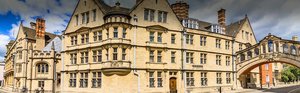 Collegiate Church of Hertford |
Oxford | 1 | Sir Christopher Zeeman (b.1925), Principal (1988–1995) |
 Shrewsbury Shirehall |
Shropshire | 1 | John Robert Stratford Dugdale (1923–1994), Lord Lieutenant of Shropshire (1975–1994) |
 st George's Hospital |
London | 1 | Sir William Asscher, MD, FRCP |
 Birkbeck |
London | 1 | Baroness Blackstone, Master (1987–1997) |
 University of Birmingham |
Birmingham | 1 | Roger Burman (b.1940), Pro Chancellor (1994–2001) |


Professor Peter Mathias (b.1928), Master of Downing College (1987–1995) (1990), Paintings Owned by Colleges, Cambridge. Daarna volgen Principal Struther Arnott (b.1934) (1994) en Sir Christopher Zeeman (b.1925), Principal (1988–1995) (1993).
35 jaar oud: Professor Peter Mathias (b.1928), Master of Downing College (1987–1995) dateert uit 1990 en Peter Edwards werd geboren in 1955.
Professor Peter Mathias (b.1928), Master of Downing College (1987–1995), Principal Struther Arnott (b.1934), Sir Christopher Zeeman (b.1925), Principal (1988–1995), Young Woman on the Bridge at Llangollen, John Elfed Jones (b.1933), President of University of Wales Lampeter, St David's University College (1992–1998), Ruth Lambert, Neville the Cockler, Connah's Quay, Hughie Higgins and His Buoy, Fisherman en Somhairle MacGill Eain (1911–1996) (Sorley Maclean). De bovenstaande ranglijst vermeldt het jaar en het museum van elk werk.
Onze catalogus bevat 33 werken van Peter Edwards, gedateerd van 1989 tot 2009.
De meeste bevinden zich in Llyfrgell Genedlaethol Cymru / The National Library of Wales (Aberystwyth), Aberystwyth University School of Art Museum And Galleries (Aberystwyth) en Paintings Owned by Colleges (Cambridge). De bovenstaande tabel somt de musea één voor één op.
In 1990s: 16 van de 33 werken op deze pagina dateren uit die periode, waaronder Professor Peter Mathias (b.1928), Master of Downing College (1987–1995).
De oudste op deze pagina is John Robert Stratford Dugdale (1923–1994), Lord Lieutenant of Shropshire (1975–1994) (1989), de nieuwste Sir Peter Middleton (b.1934), Chancellor of the University of Sheffield (since 1999) (2009).
Portrait (5), Elderly man (2) en British art (2), van de 33 werken op deze pagina.
Contemporary realism, zoals de schilderijen op deze pagina laten zien.
Young Woman on the Bridge at Llangollen, John Jones en Griff Rhys Jones (b.1953) behoren tot de 4 werken op deze pagina die in het Llyfrgell Genedlaethol Cymru / The National Library of Wales, Aberystwyth worden bewaard.
In the realm of contemporary British portraiture, few artists possess the ability to bridge the gap between mere physical likeness and profound psychological depth as masterfully as Peter Douglas Edwards. Born on November 20, 1955, Edwards has spent his career refining a visual language that speaks to the very essence of his subjects. His journey into the heart of human expression began with formal studies at Shrewsbury School and Cheltenham Art College, where he laid the technical foundations that would later support his more experimental and emotive explorations. To look upon an Edwards portrait is not simply to see a face, but to encounter a narrative—a carefully constructed moment of intimacy captured through vibrant color palettes and a signature use of textured, impasto brushstrokes.
The early trajectory of his career was marked by immediate and significant recognition within the prestigious circles of the British art establishment. His debut in the Royal Academy Summer Exhibition in 1980 served as a herald for his talent, particularly when his self-portrait caught the eye of the esteemed collector Sir Brinsley Ford. This early validation paved the way for a series of commissions that would define his legacy. Perhaps most notably, Edwards became an artist deeply entwined with the literary landscape of his era. His 1986 portrait of The Liverpool Poets, acquired by the National Portrait Gallery, demonstrated his unique capacity to translate the rhythmic spirit and cultural weight of poetry into the static medium of oil on canvas.
Edwards’ relationship with the National Portrait Gallery remains one of the most fruitful collaborations in modern portraiture. Working alongside Robin Gibson, the gallery's Chief Curator of the 20th Century Collection, Edwards embarked on an ambitious artistic odyssey. This partnership culminated in the landmark 1990 exhibition, “Contemporary Poets,” a monumental undertaking featuring seventeen large-scale canvases that depicted twenty influential poets alongside their own verses. Through this project, Edwards did more than paint individuals; he synthesized artistic vision with literary understanding, creating a multidisciplinary experience that celebrated the symbiotic relationship between the written and the visual word.
Beyond the world of letters, Edwards has been entrusted with the task of immortalizing some of the most iconic figures of British culture. His 1991 portrait of football legend Sir Bobby Charlton, unveiled by Bobby Moore to commemorate the 25th anniversary of England's World Cup victory, stands as a testament to his ability to capture national icons with both nuance and sensitivity. This talent for portraying greatness extends to diverse fields, from the cinematic and literary heights of Kazuo Ishiguro to the athletic prowess of Ryan Giggs. Each subject is treated not as a celebrity, but as a human being, often rendered with a subdued palette or a focused light that invites the viewer into a state of quiet contemplation.
The technical evolution of Peter Douglas Edwards is characterized by a sophisticated command over light, shadow, and texture. While many of his works utilize bold, energetic brushwork to create dimension, he is equally capable of profound subtlety. In his portrait of Kazuo Ishiguro, for instance, the artist employs a more restrained approach, using soft transitions and a focused composition to mirror the introspective nature of the Nobel laureate. This versatility allows him to navigate between the impasto textures found in works like 'Hughie Higgins, Boatyard Owner'—where rich blues and browns create a tactile, weathered atmosphere—and the more delicate, psychological studies that define his most celebrated gallery pieces.
The pinnacle of his critical acclaim arrived in 1994, when he was honored with the prestigious BP Portrait Award for his work Portrait of an Artist's Model. This achievement not only solidified his standing among his peers but also opened doors to further high-profile commissions that would shape the landscape of modern British figurative art. Today, the works of Peter Douglas Edwards reside in some of the world's most significant institutions, including:
Through a lifetime of dedicated observation, Edwards has proven that the portrait is never merely a record of appearance, but a profound exploration of identity, memory, and the enduring human spirit.
