


x

 Fleeting Light & Modern Life: Exploring the Impressionist Movement
Explore the revolutionary world of Impressionism! Discover its history, key artists like Monet & Renoir, techniques, and lasting impact on modern art. Expert insights for collectors & enthusiasts.
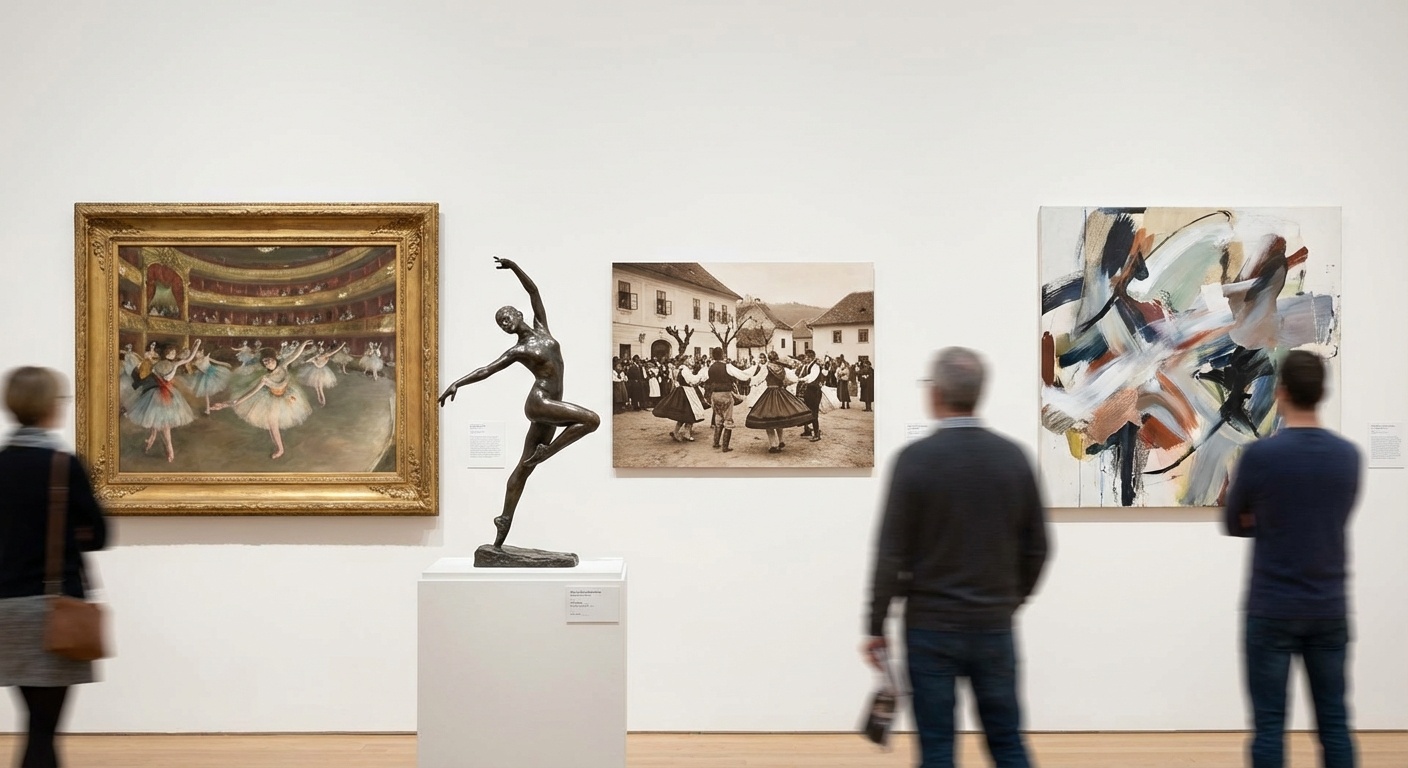
For millennia, dance has served as a fundamental form of human expression – a primal language spoken through rhythm, gesture, and the sheer poetry of motion. It’s a celebration of life, a conduit for storytelling, and a deeply ingrained cultural practice found across every corner of the globe. Unsurprisingly, then, it's been an enduring source of fascination for artists throughout history. From ancient cave paintings depicting ritualistic movements to the sophisticated canvases of the Impressionists, the human desire to capture dance’s ephemeral beauty has fueled countless masterpieces. This exploration delves into that rich artistic legacy, tracing how painters and sculptors have sought not merely to *represent* dance, but to embody its spirit, energy, and profound emotional resonance.
Perhaps no artist is more intimately associated with the depiction of dance than Edgar Degas. He didn’t simply paint ballerinas; he immersed himself in their world, spending countless hours sketching rehearsals, backstage scenes, and performances at the Paris Opera. His work transcends mere documentation, offering a remarkably intimate glimpse into the dedication, discipline, and often grueling realities behind the ethereal grace we see on stage. Degas wasn't interested in idealized beauty but rather in capturing fleeting moments – the adjustment of a slipper, the concentrated focus of a dancer’s gaze, the subtle shift of weight before a leap. “The Pink Dancers, Before the Ballet”, for example, reveals not polished performers, but young women preparing, stretching, and engaging in quiet conversation, their vulnerability as striking as their potential.
His innovative techniques were crucial to this effect. Degas frequently employed pastel, a medium that allowed him to capture the soft light and delicate textures of the ballet studio with exceptional nuance. He also experimented with unconventional compositions – cropping figures, using asymmetrical arrangements, and embracing negative space – mirroring the dynamism of modern life. “Dancers”, with its vibrant colors and graceful lines, exemplifies his mastery of capturing movement in a static image. The article “Edgar Degas: Capturing Modern Life – A Study of Movement, Observation, and the Parisian Belle Époque” further illuminates this aspect of his work, highlighting how he used dance as a lens through which to explore the broader social and cultural landscape of 19th-century Paris.
 Oskar Schlemmer
Explore Oskar Schlemmer (1888-1943), a pivotal Bauhaus artist known for his geometric depictions of the human form, innovative stage design & 'Triadic Ballet'. Discover paintings, sculptures & choreography that bridged art, technology & performance.
As artistic conventions shifted in the early 20th century, so too did the representation of dance. Artists began to move beyond literal depictions, seeking instead to capture the *essence* of movement through abstraction. Wassily Kandinsky, a pioneer of abstract art, explored the relationship between color, form, and rhythm, often drawing inspiration from musical compositions and – crucially – dance. His paintings don’t depict dancers themselves but evoke the energy and emotional power of dance through dynamic arrangements of shapes and colors. Similarly, Oskar Schlemmer, associated with the Bauhaus school, revolutionized stage design with his “Triadic Ballet”. This groundbreaking work featured performers in geometric costumes, transforming them into living sculptures that explored the human form’s relationship to space and technology.
Schlemmer's approach wasn’t about replicating natural movement but rather creating a new visual language of dance – one that bridged art, performance, and industrial design. His work challenged traditional notions of beauty and grace, prompting viewers to reconsider the very definition of what constitutes dance. The article “The Allure of Intricacy: Detail as Subject, Style & Narrative Force in Art History” provides a fascinating context for understanding this shift towards abstraction, demonstrating how specificity – or its deliberate absence – can shape narrative and value.
 The Allure of Intricacy: Detail as Subject, Style & Narrative Force in Art History
Explore the captivating history of detail in art, from Realism's tangible world to Degas' ballet scenes. Discover how specificity shapes narrative & value. Expert insights for discerning collectors.
While abstraction offered one path forward, many artists continued to explore the power of detailed representation. However, even within this tradition, the focus shifted from idealized beauty to a more nuanced portrayal of the dancer’s experience. Degas, again, serves as a prime example. His meticulous observations weren't merely about capturing physical likeness but also about revealing the psychological and emotional states of his subjects. The subtle gestures, the weariness in their eyes, the quiet moments of reflection – these details imbue his paintings with a profound sense of humanity.
This attention to detail wasn’t simply aesthetic; it was integral to storytelling. By focusing on specific moments and individual experiences, artists could convey complex narratives about ambition, sacrifice, and the pursuit of perfection. The article “Fleeting Light & Modern Life: Exploring the Impressionist Movement” highlights how Impressionists like Degas were captivated by the ephemeral nature of modern life, seeking to capture fleeting impressions before they disappeared – a quality perfectly suited to depicting the transient beauty of dance.
The artistic representation of dance isn’t limited to Western traditions. Throughout history, cultures around the world have celebrated dance through art in diverse and compelling ways. From ancient Egyptian tomb paintings depicting ritualistic movements to vibrant murals celebrating traditional dances in Mexico – as seen in Diego Rivera's “Dance of Tehuantepec” – dance has been a central element of cultural identity and storytelling. Japanese *ukiyo-e* prints often featured depictions of dancers, capturing the elegance and serenity of court performances.
Each culture’s artistic approach reflects its unique values and beliefs. Indian miniature paintings, for example, frequently depict religious dances – such as the Raslila – that embody divine love and spiritual connection. These works aren't merely representations of dance but rather visual embodiments of complex theological concepts. The article “A Journey Through Time and Movement: The Evolution of Dance Depictions in Art” provides a broader perspective on this global history, tracing the evolution of dance across different cultures and time periods.
Today, artists continue to draw inspiration from dance, pushing boundaries and exploring new forms of expression. From contemporary painters who abstract movement through bold colors and dynamic compositions to performance artists who blur the lines between art and choreography, the legacy of Degas, Schlemmer, and countless others lives on. The enduring appeal of dance lies in its ability to transcend language and cultural barriers, communicating emotions and ideas through the universal language of motion.
Whether captured on canvas, sculpted in bronze, or performed live on stage, dance remains a powerful source of inspiration for artists around the world. At WahooArt.com, we celebrate this rich artistic legacy by offering high-quality reproductions of iconic dance paintings and sculptures, allowing you to bring the beauty and energy of this timeless art form into your own home. Explore our collection today and discover the captivating world of dance in art – a testament to the enduring power of human expression.

Explore the captivating world of Impressionism! Discover its history, key artists, techniques & enduring legacy with WahooArt. Find museum-quality reproductions and expert art consultation.

Explore the rich history & masterful techniques of academic portraiture. Discover iconic artists, learn about collecting, and commission a bespoke oil painting reproduction with WahooArt.

Explore the captivating world of Realism! Discover key artists like Courbet & Millet, masterpieces, and the social commentary behind this influential art movement. Expert insights for collectors & enthusiasts.

Explore the captivating world of 19th-century painting! Discover Realism & Impressionism's revolutionary techniques, key artists like Manet and Monet, and their lasting impact. A comprehensive guide for art enthusiasts.


Sekite naujausias meno naujienas, išskirtinius pasiūlymus ir dekoravimo idėjas.
Pasakokite mums apie savo projektą, o mūsų meno ekspertai parengs jums 3 asmeniškus meno pasiūlymus.
Leiskite mums parinkti 3 variantus būtent jums – nemokamai!
 The Pink Dancers, Before the Ballet

