A Serene Voyage: Exploring Picasso’s ‘Marine’
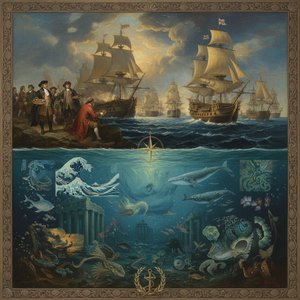
This captivating painting invites viewers into a world of tranquil blues and subtly shifting forms, a hallmark of Pablo Picasso's artistic exploration. *Marine*, created in 1938, depicts a seascape populated by twelve discernible boats – some near an implied shore, others drifting towards the horizon – gently rocking on the water’s surface. The composition is deceptively simple, yet brimming with enigmatic energy and contemplative depth.
Artistic Style & Technique: A Departure from Representation
While created during a period of significant engagement with Surrealism, *Marine* doesn't rigidly adhere to its conventions. Instead, Picasso employs abstraction and simplification, prioritizing color and mood over meticulous detail. The forms are suggested rather than defined, allowing the eye to wander and interpret. His brushwork is fluid and expressive, creating a sense of movement mirroring the ebb and flow of the sea.
Masterful tonal variations within the blue palette – from deep indigo to lighter cerulean – generate depth and capture the play of light on water, demonstrating Picasso’s technical prowess. The influence of artists like Max Weber, who brought European Modernism to America, can be seen in the painting's exploration of form and color.
Historical Context: A Year of Contrasts
1938 was a pivotal year for Picasso, dominated by the creation of *Guernica*, his powerful anti-war statement. *Marine* offers a striking counterpoint to this turbulent work; a moment of respite and contemplation amidst global conflict. It’s not merely an escape, however. The seascape builds upon Picasso's earlier marine themes – such as “Maya en tenue de marin” (1937) – revealing a sustained interest in the symbolic potential of the sea. Interestingly, research suggests a possible subtle influence from nautical charts created by James Horsburgh, hinting at Picasso’s awareness of precise maritime representation even as he deliberately moved *away* from it.
Symbolism & Interpretation: The Sea Within
The boats themselves are rich with potential meaning. They could represent individual journeys, the vulnerability of human endeavors against nature's vastness, or simply a celebration of seafaring life.
The absence of figures within the boats is particularly compelling – are they occupied? Are they adrift? The sea has long been a potent symbol in art and literature, embodying opportunity, danger, consciousness, and the unconscious. In Picasso’s hands, it becomes a space for introspection, inviting viewers to project their own emotions and experiences onto the scene. Themes of isolation and our relationship with the natural world subtly emerge. Consider also his later work *Ulysses and sirens*, which further explores themes of maritime mythology and human vulnerability.
Emotional Impact & Interior Design
*Marine* evokes a sense of calm melancholy, a quiet beauty tinged with underlying unease. Its predominantly blue palette offers remarkable versatility for interior design. It would complement modern spaces with minimalist aesthetics, adding depth and sophistication. The painting’s cool tones also make it an excellent choice for bedrooms or studies, fostering a serene and contemplative atmosphere.
A high-quality reproduction of this piece will serve as a captivating focal point, sparking conversation and inspiring reflection in any room.
Further Exploration
- To learn more about Picasso’s life and work, visit the Musée National Picasso in Paris.
- Explore related marine themes within Picasso's oeuvre by researching “Maya en tenue de marin” and "Ulysses and sirens".



 Užsisakyti kopiją
 Pasidalinti
 Dalintis
 Išsamiau

 Atsisiųsti
 Panašūs eksponatai
 Rentgenogramą
 Automatinė diorama
 Skaityti daugiau






































 Stiklo variantas prieinamas tik pasirinkus dydį iki 110 cm