



Origins and History of The Palace Museum
The Palace Museum, also known as the Beijing Palace Museum, occupies the Forbidden City at the core of Beijing, China. This large national museum complex inherited the imperial royal palaces from the Ming and Qing dynasties. The construction of the Forbidden City began in 1406 under the Ming emperor Zhu Di and was completed in 1420. For 505 years, these grounds witnessed the enthronement of 14 Ming and 10 Qing emperors.
The transition from an imperial residence to a public institution occurred in the early twentieth century. Following the eviction of the last Emperor of China, the Xuantong Emperor (Puyi), in 1924, the site began its new purpose. The Palace Museum was established on Double Ten Day, October 10, 1925, and opened to the public that same year.
The Architecture of the Forbidden City
Located in the heart of Beijing, China, this complex represents the supreme model in the development of ancient Chinese palaces. The spatial arrangement follows a strict traditional characteristic, organized around a central axis. A symmetrical design dictates the placement of structures, creating a clear distinction between the outer court at the front and the inner court at the rear. This layout reflects the ritual and court culture of the Ming and Qing dynasties.
The northern section of the complex was designated for the imperial family's living quarters. Within this private realm, the Palace of Heavenly Purity functioned as the Emperor's residence. Nearby, the Palace of Earthly Tranquility was the designated residence for the Empress. These structures exist within a vast architectural hierarchy that defines the ceremonial and political center of the former imperial government.
The site is a World Heritage site and a Major Historical and Cultural Site Protected at the National Level. Its physical presence remains a significant example of ancient urban planning and palace construction. The arrangement of buildings and the precision of the central axis provide a sense of order that has persisted through centuries of history.
Major Collections and Artworks
The collections within these walls are rooted in the Qing imperial collection. The sheer scale of the holdings is immense, with a present total collection of 1,862,690 objects. Among these, 1,684,490 items are designated as nationally protected "valuable cultural relics." This vast accumulation includes a ceramics and porcelain collection of 340,000 pieces, representing centuries of technical precision and aesthetic evolution.
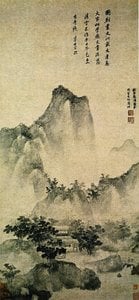
The presence of the brush and ink is felt in the nearly 50,000 paintings held here. Many of these works date from before the Yuan dynasty (1271–1368), providing a direct connection to an era long past. To stand before these originals is to encounter the physical traces of history, where the weight of the past is held in the pigment and the paper.
- Painting of the Dowager Empress Cixi, 1908 - Hubert Vos
- The Night Revels of Han Xizai, 960 - Gu Hongzhong
- A Fat and a Thin Horse - Ren Renfa
- White Rose, 1203 - Ma Yuan
- The Night Excursion of Zhong Kui, 1450 - Dai Jin
Visiting the Imperial Palace Complex
The scale of the site is immense, spanning 720,000 square metres across 180 acres. Since 2015, a daily visitor limit of 80,000 has been maintained to protect the integrity of the grounds. The presence of the public is significant; the site has seen an average of 15 million visitors annually since 2012, with attendance exceeding 17 million in 2018. Such numbers reflect the enduring pull of the imperial grounds.
Within the complex, the Imperial Garden offers a different pace. It is a landscaped space containing ancient trees and pavilions. These quiet corners provide a sense of the scale and the deliberate design of the palace layout. The arrangement of the buildings and the greenery creates a specific atmosphere that persists despite the millions who pass through the gates each year.