Museums on APS: Pennsylvania House of Representatives Archives
Nationality: United States of America
A Life Immersed in the Rural American Landscape
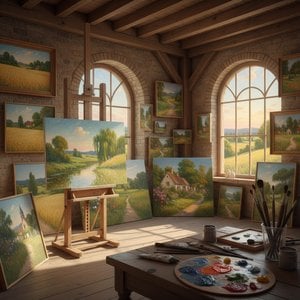
William H. deweese, born in Mississippi in 1950, is an artist whose work resonates deeply with a sense of place – specifically, the poignant beauty and quiet dignity of rural life in the American South. While his name may be recognized by some for a controversial chapter in Pennsylvania politics, it’s through his paintings that deweese truly defines himself. He captures scenes not of grand historical events or bustling cityscapes, but of everyday moments imbued with a gentle power: a prize-winning sheep at a county fair, weathered barns standing sentinel against the horizon, and the subtle nuances of wildlife in their natural habitats. His art is storytelling, rendered in oil and canvas, offering glimpses into a world often overlooked yet profoundly affecting.
Early Life and Artistic Development
Growing up in Mississippi undoubtedly shaped deweese’s artistic vision. The state's rich agricultural heritage, its complex history, and the enduring spirit of its people are all palpable influences in his work. While details regarding his formal art training remain scarce, it is clear that deweese developed a keen observational eye and a talent for capturing light and atmosphere. His paintings aren’t about meticulous realism; rather, they convey an *emotional truth* through carefully chosen colors and compositions. He doesn't simply paint what he sees, but how it feels to be present in these spaces. The influence of regional artists—those who focused on depicting the American scene with authenticity and empathy—likely played a role in his development.
Themes and Techniques
Deweeses’s oeuvre centers around several recurring themes: rural life, wildlife, and the landscapes of the South. His depictions of farm animals are particularly compelling, often portraying them not as commodities but as individuals possessing their own quiet dignity. The “Greene County Fair Sheep Winner” exemplifies this approach—the animal is presented with a sense of pride and character, reflecting the importance of agricultural traditions within the community. His wildlife paintings similarly avoid sensationalism, instead focusing on capturing animals in moments of peaceful existence.
Technically, deweese’s work demonstrates a mastery of oil painting techniques. He employs a rich palette, often utilizing warm earth tones to evoke a sense of nostalgia and connection to the land. His brushwork is loose and expressive, creating textures that add depth and dimension to his canvases. There's a deliberate quality to each stroke, suggesting a deep understanding of color theory and composition.
Beyond the Canvas: A Complex Narrative
The story of William H. deweese takes an unexpected turn when considering his parallel career in politics. Serving as the 135th Speaker of the Pennsylvania House of Representatives from 1993 to 1994, he became embroiled in legal controversies involving conflict of interest and criminal conspiracy charges in 2009. While these events undoubtedly cast a shadow over his public life, they do not diminish the artistic merit of his work. In fact, some might argue that his experiences—the pressures of political life, the scrutiny of public opinion—added another layer of complexity to his understanding of human nature and the world around him. He was convicted on five felony charges in 2012 and sentenced to state prison, a stark contrast to the peaceful scenes he so lovingly depicted in his art.
Legacy and Continued Impact
Despite the controversies that marked his political career, William H. deweese remains a significant figure in American regional art. His paintings offer a valuable glimpse into a way of life that is rapidly disappearing—a world of small farms, close-knit communities, and a deep connection to the land. His work serves as a reminder of the beauty and dignity found in everyday moments, and his compelling storytelling continues to resonate with audiences today. While he may be known by some for his political past, it is through his art that deweese’s true legacy will endure—a testament to the power of observation, empathy, and the enduring spirit of the American South. His paintings are not merely representations of a place; they are invitations to connect with a deeper sense of belonging and appreciation for the natural world.
WahooArt.com 편집팀 작성
예술 상식 퀴즈
각 질문의 정답은 하나뿐입니다.
질문 1:
What is William H. deweese known for?
질문 2:
Where was William H. deweese born?
질문 3:
What role did he hold in Pennsylvania House of Representatives?
질문 4:
Which military unit was William H. deweese a member of during the Civil War?
질문 5:
What type of art style is William H. deweese primarily associated with?
Explore the profound beauty of village scene art. From Impressionist light to pastoral realism, discover how timeless landscapes capture nostalgia through expert artistry and historical depth. Perfect for collectors seeking evocative, museum-quality landscape inspirations.
Discover the profound tranquility of rural art through an expert exploration of Impressionist landscapes. From pastoral scenes to textured oil masterpieces, learn how timeless nature-inspired artworks bring enduring elegance and serenity to sophisticated collectors.