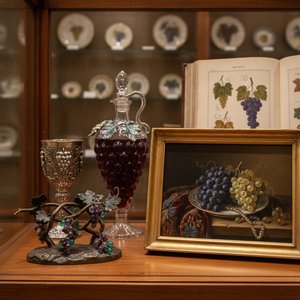
Ulisse Aldrovandi: A Pioneer of Natural History
- Born: Bologna, Italy (1522)
- Died: 1605
Early Life and Education
Ulisse Aldrovandi was born in Bologna to Teseo Aldrovandi, a lawyer and secretary to the Senate of Bologna. His early life was marked by the loss of his father when he was only seven years old. Initially, his mother intended for him to pursue a career in law. However, Aldrovandi demonstrated an aptitude for various subjects, including mathematics, Latin, law, and philosophy. He initially studied at the University of Bologna before continuing his education at the University of Padua in 1545. He obtained degrees in medicine and philosophy in 1553.
Career and Contributions to Natural History
Aldrovandi's career was significantly shaped by a period of imprisonment for heresy in 1549, stemming from his association with Anabaptist beliefs. This experience led him to develop a deep interest in botany, zoology, and geology. He began organizing expeditions throughout Italy to collect and catalog plants and animals. In 1561, he became the first professor of natural sciences at Bologna University, establishing a dedicated lecture series on natural philosophy. A key achievement was the founding of Bologna's botanical garden in 1568, one of Europe’s earliest such institutions.
- Botanical Garden: Established in Bologna, fostering research and education in botany.
- Cabinet of Curiosities: He amassed a vast collection of approximately 7000 specimens, known as his "theatre" illuminating natural history.
- Herbarium: Compiled one of the most spectacular herbariums containing about 4760 dried plant specimens.
Major Works and Artistic Collaborations
Aldrovandi's work was characterized by detailed observations and extensive illustrations. He collaborated with prominent artists such as Jacopo Ligozzi, Giovanni Neri, and Cornelio Schwindt to create accurate depictions of the specimens in his collection. While he published relatively few works during his lifetime, his legacy rests on the vast body of research and collections he left behind.
- Historia Animalium: A monumental encyclopedia of natural history, with volumes on birds (1599-1603) and insects (1602) published in his lifetime.
- Monstrorum Historia: An account of monstrous creatures, published posthumously in 1642.
Legacy and Historical Significance
Ulisse Aldrovandi is widely regarded as a foundational figure in the development of natural history studies. Carl Linnaeus and Comte de Buffon recognized him as the "father" of this field. His meticulous observations, extensive collections, and collaborative approach to illustration significantly advanced scientific understanding of the natural world. His work bridged the gap between medieval bestiaries and modern zoology, emphasizing empirical observation and classification. He is also credited with pioneering the study of neurofibromatosis, although earlier depictions of the condition have been noted in Andrea Mantegna's works.
Q&A
Ulisse Aldrovandi의 출생 도시와 국가는 어디인가요?
Ulisse Aldrovandi은(는) Italy Bologna에서 태어났습니다.
Ulisse Aldrovandi의 출생지와 출생 연도는 어떻게 되나요?
Ulisse Aldrovandi은(는) 1522년 Bologna에서 태어났습니다.
Ulisse Aldrovandi의 다른 이름이나 별칭에는 무엇이 있나요?
Ulisse Aldrovandi은(는) Aldrovandus, Aldroandi라는 이름으로도 활동하고 있습니다.