테오도르 제리코, 1791 – 1824

The 100 Most Famous Paintings by 테오도르 제리코

The painting that made 테오도르 제리코 famous is 메두사 좌초의 거대한 그림 (1818); it hangs in the 루브르 박물관, 파리. Nymph and Satyr (Jupiter and Antiope) (1820) and The Oath of Brutus after the Death of Lucretia (1815) follow it in the hearts of collectors and museum visitors. Of the 183 works by 테오도르 제리코 in our catalogue, these 100 are the most admired, each presented with its date, its museum and what sets it apart.

각 작품의 검색, 방문 및 주문 수를 결합한 인기 점수를 기준으로 순위를 매깁니다. 10월 2026 업데이트됨. Every masterpiece on this page can be ordered as a museum-quality, hand-painted oil reproduction or a fine art print, at the size you choose.

테오도르 제리코의 초상화
테오도르 제리코 · 1791 – 1824
생몰 연도
1791 – 1824, 루앙
사조
낭만주의
카탈로그 작품 목록
183
가장 유명한
메두사 좌초의 거대한 그림 (1818)
최다 소장처
루브르 박물관

테오도르 제리코: the ten masterpieces

메두사 좌초의 거대한 그림 (1818) 의 테오도르 제리코
1

메두사 좌초의 거대한 그림

1818 · 캔버스에 유채 · 루브르 박물관, 파리

장 루이 앙드레 테오도르 제리코의 이 기념비적인 걸작은 단순한 해상 재난의 묘사를 넘어, 인간의 절망과 정치적 스캔들, 그리고 자연의 숭고한 힘을 본능적으로 탐구하는 작품입니다. 1819년에 완성된 이 거대한 캔버스(491 x 716 cm)는 1816년 프랑스 호위함 메두스호의 침몰 이후 벌어진 참혹한 뒷이야기를 영원히 기록하고 있습니다. 이는 무능함과 부패로 인해 발생하여 당시 프랑스 사회에 커다란 충격을 안겨주었던 비극이었습니다.

Nymph and Satyr (Jupiter and Antiope) (1820) 의 테오도르 제리코
2

Nymph and Satyr (Jupiter and Antiope)

1820 · Acrylic On Canvas · Musée des Beaux-Arts et de la Céramique, 루앙

The Allure of the Divine Encounter: Géricault’s *Nymph and Satyr* Jean-Louis André Théodore Géricault's *Nymph and Satyr*, painted in 1819, isn’t merely a depiction of a mythological scene; it’s a profound exploration of desire, transgression, and the inherent tension between innocence and primal instinct. Born amidst the tumultuous backdrop of post-revolutionary France, Géricault, already recognized for his dramatic intensity, sought to capture not just a narrative but an emotional truth—a…

Lions in a Mountainous Landscape (1818) 의 테오도르 제리코
4

Lions in a Mountainous Landscape

1818 · Acrylic On Canvas · 메트로폴리탄 미술관, 뉴욕

This vigorous painting of six lions in a remote, spectrally illuminated lair—possibly intended to evoke the Atlas Mountains of Morocco—is an extraordinary example of Gericault’s spontaneous handling of paint. Rather than applying finishing touches to make a polished cabinet picture, the artist left the painting in a state known as an esquisse, or sketch, a work prized by fellow artists for its strength of directly capturing a subject or effect.…

The Kiss (1822) 의 테오도르 제리코
5

The Kiss

1822 · Acrylic On Canvas · 테시엔-본헤르메스 미술관, 마드리드

Théodore Géricault's "The Kiss," painted in 1816, isn’t merely a depiction of lovers entwined; it’s a visceral embodiment of the burgeoning Romantic movement’s fascination with raw emotion, dramatic intensity, and the sublime. This arresting work, housed within the Thyssen-Bornemisza Museum in Madrid, transcends simple representation to become a profound meditation on passion, vulnerability, and the very essence of human connection. Géricault, already a figure known for his unflinching portrayals of…

Wounded Soldiers Retrating from Russia (1814) 의 테오도르 제리코
6

Wounded Soldiers Retrating from Russia

1814 · Acrylic On Canvas · Musée des Beaux-Arts de Rouen, 루앙

A Symphony of Suffering: Géricault’s “Wounded Soldiers Retrating from Russia” Jean-Louis André Théodore Géricault's "Wounded Soldiers Retrating from Russia" is not merely a painting; it’s a visceral embodiment of the horrors and human cost of war, rendered with an unprecedented level of realism and emotional intensity for its time. Completed in 1814, this monumental canvas—measuring a commanding 250 x 206 cm—captures a pivotal moment during Napoleon's disastrous invasion of Russia,…

Study of Feet and Hands (1818) 의 테오도르 제리코
7

Study of Feet and Hands

1818 · Oil On Canvas · Musée Fabre, 몽펠리에

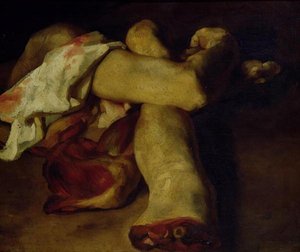
Jean-Louis André Théodore Géricault's "Study of Feet and Hands," painted in 1818, isn’t a grand statement of Romantic drama like his monumental “The Raft of the Medusa.” Instead, it offers a profoundly intimate glimpse into the artist’s meticulous process and a poignant meditation on the human form. This unassuming oil painting—measuring a modest 52 x 64 cm—is far more than just a preparatory sketch; it's a concentrated distillation of Géricault’s…

The Raft of the Medusa (detail) (1818) 의 테오도르 제리코
8

The Raft of the Medusa (detail)

1818 · Oil On Canvas · 루브르 박물관, 파리

Jean-Louis André Théodore Géricault's "The Raft of the Medusa," a monumental detail from his 1818 painting, isn’t merely a depiction of shipwreck; it’s a visceral plunge into the depths of human suffering and political indictment. The scene, rendered with a dramatic intensity characteristic of Romanticism, captures the harrowing aftermath of the French frigate *Medusa*'s wreck off the coast of Mauritania in 1816. This disaster, largely attributed to the incompetence and…

The Wreck (1821) 의 테오도르 제리코
10

The Wreck

1821 · Oil On Canvas · 루브르 박물관, 파리

Théodore Géricault's "The Wreck," painted in 1821, isn’t merely a seascape; it’s a visceral confrontation with the sublime—a raw depiction of humanity’s vulnerability against the overwhelming force of nature. Born amidst the turbulent currents of post-revolutionary France, Géricault, a figure both lauded and controversial within the burgeoning Romantic movement, channeled his own anxieties and the era's fascination with dramatic events into this monumental canvas. The painting immediately commands attention not…

More 테오도르 제리코 masterpieces, 11 to 100

The Horse Race (1816) 의 테오도르 제리코
#11

The Horse Race

1816 · 테시엔-본헤르메스 미술관

Jean-Louis André Théodore Géricault's "The Horse Race," painted in 1816, isn’t merely a depiction of a sporting event; it’s a visceral embodiment of Romanticism’s core tenets – passion,…

Bring it home →
Swiss Guard and Wounded Veteran (1819) 의 테오도르 제리코
#12

Swiss Guard and Wounded Veteran

1819 · 루브르 박물관

Jean-Louis André Théodore Géricault's "Swiss Guard and Wounded Veteran," painted in 1819, is not merely a historical depiction; it’s a profound meditation on duty, sacrifice, and the lingering…

Order a reproduction →
Mazeppa (1823) 의 테오도르 제리코
#13

Mazeppa

1823 · Château de Chantilly

Théodore Géricault's "Mazeppa," painted in 1823, isn’t merely a depiction of a dramatic legend; it’s a visceral embodiment of Romantic turmoil—a raw exploration of suffering, resilience, and the…

Bring it home →
Two Horses (1809) 의 테오도르 제리코
#14

Two Horses

1809 · 필립스 컬렉션

Jean-Louis André Théodore Géricault's "Two Horses," painted in 1808-1809, isn’t merely a depiction of two magnificent animals; it’s a visceral exploration of movement, power, and the fleeting nature…

Bring it home →
A Turk (Mustapha) (1820) 의 테오도르 제리코
#15

A Turk (Mustapha)

1820 · 루브르 박물관

Jean-Louis André Théodore Géricault's "A Turk (Mustapha)," painted in 1820, is not merely a portrait; it’s a carefully constructed tableau of exoticism, melancholy, and the burgeoning Romantic sensibility…

Order a reproduction →
A Carabinier with his Horse (1814) 의 테오도르 제리코
#16

A Carabinier with his Horse

1814 · Musée des Beaux-Arts de Rouen

In the quiet intensity of Jean-Louis André Théodore Géricault’s 1814 masterpiece, "A Carabinier with His Horse," we encounter more than a mere military portrait; we witness a profound…

Order a reproduction →
기수 없는 말 경주 (세부 도상) (1817) 의 테오도르 제리코
#17

기수 없는 말 경주 (세부 도상)

1817 · 루브르 박물관

시간 속에 박제된 찰나: 제리코의 “기수 없는 경마” 장 루이 앙드레 테오도르 제리코의 "기수 없는 경마(세부)"는 단순한 스포츠 경기의 묘사를 넘어, 인간의 드라마와 야망, 그리고 삶 자체의 위태로움을…

Bring it home →
Boxers (1818) 의 테오도르 제리코
#18

Boxers

1818 · Château de Chantilly

A Tempestuous Vision: Géricault’s “Boxers” Jean-Louis André Théodore Géricault's "Boxers," completed in 1818, isn’t merely a depiction of a boxing match; it’s a visceral embodiment of Romanticism’s fascination…

Order a reproduction →
The Epsom Derby (1821) 의 테오도르 제리코
#20

The Epsom Derby

1821 · 루브르 박물관

Jean-Louis André Théodore Géricault's "The Epsom Derby," painted in 1821, isn’t merely a depiction of horse racing; it’s a visceral embodiment of Romanticism’s fascination with drama, movement, and…

Bring it home →
Three Lovers (1817) 의 테오도르 제리코
#22

Three Lovers

1817 · J. 폴 게티 미술관

Théodore Géricault captured a private, feverish moment in Three Lovers. This small oil sketch, created about 1817–1820, offers a rare glimpse into the artist's more intimate preoccupations. It…

Order a reproduction →
Lion devouring a horse 의 테오도르 제리코
#26

Lion devouring a horse

Château de Chantilly

Théodore Géricault's "Lion Devouring a Horse," painted in 1819, isn’t merely a depiction of predatory action; it’s a visceral exploration of power, mortality, and the primal instincts that…

Bring it home →
Untitled (ARJCHM) 의 테오도르 제리코
#28

Untitled (ARJCHM)

루브르 박물관

In the annals of art history, few works command the room with such visceral intensity as Théodore Géricault’s The Raft of the Medusa. This monumental oil on canvas…

Bring it home →
Portrait of a Young Man (1818) 의 테오도르 제리코
#32

Portrait of a Young Man

1818 · 미니애폴리스 미술관

A young man emerges from a deep, indistinct darkness, his presence felt through the sudden, sharp clarity of light hitting his features. He sits in a quiet, intimate…

Order a reproduction →
A study for a nude. (1801) 의 테오도르 제리코
#33

A study for a nude.

1801 · 바르샤바 국립 박물관

A study for a nude. emerges from the shadows as a powerful presence by Théodore Géricault. Created about 1801, this oil on canvas captures a singular moment of…

Bring it home →
Study of a Model (1818) 의 테오도르 제리코
#34

Study of a Model

1818 · J. 폴 게티 미술관

This oil on canvas portrait study presents a close-up, three-quarter view of a Black man's head and shoulders. The subject is positioned slightly off-center, looking toward the viewer…

Commission a hand-painted copy →
The Martyrdom of Saint Peter (1814) 의 테오도르 제리코
#35

The Martyrdom of Saint Peter

1814 · 쿤스트무제움 바젤

The Martyrdom of Saint Peter is an oil on canvas by Théodore Géricault. Created about 1814, the work captures a moment of profound tension. The physical presence of…

Bring it home →
The Wreck (1824) 의 테오도르 제리코
#36

The Wreck

1824 · 루브르 박물관

In the annals of French Romanticism, few works command the visceral attention of Théodore Géricault’s The Wreck as profoundly as this haunting seascape. Painted in 1824, a year…

Commission a hand-painted copy →
Mater dolorosa, Copy after Ribera (1811) 의 테오도르 제리코
#38

Mater dolorosa, Copy after Ribera

1811 · 쿤스트무제움 바젤

Mater dolorosa, Copy after Ribera is a religious oil painting by the French artist Théodore Géricault. Created about 1811–1815, the work reflects the artist's engagement with the traditions…

Bring it home →
Lion in Repose 의 테오도르 제리코
#39

Lion in Repose

Walters Art Museum

Jean-Louis André Théodore Géricault’s “Lion in Repose,” painted circa 1820-1823, isn’t merely a depiction of an animal; it’s a profound meditation on power, vulnerability, and the very nature…

Order a reproduction →
Portrait of a Negro (1800) 의 테오도르 제리코
#71

Portrait of a Negro

1800 · Palácio Nacional da Ajuda

Dating from 1800, Jean-Louis André Théodore Géricault’s “Portrait of a Negro” is more than just a depiction of an individual; it’s a poignant statement born from the turbulent…

Bring it home →
Portrait d'homme (1825) 의 테오도르 제리코
#73

Portrait d'homme

1825 · Musée Fabre

Portrait d'homme is an oil on canvas work attributed to the French Romantic painter Théodore Géricault. While historically categorized under various titles, including a mistaken identification as a…

Commission a hand-painted copy →
Horses of the Auvergne (1822) 의 테오도르 제리코
#76

Horses of the Auvergne

1822 · University of Michigan Museum of Art

In the quiet, monochromatic depths of Théodore Géricault’s 1822 lithograph, Horses of the Auvergne, we are transported to a rugged, mist-shrouded corner of France. This evocative work serves…

Commission a hand-painted copy →
A Prancing Grey Horse (1812) 의 테오도르 제리코
#77

A Prancing Grey Horse

1812 · Burrell Collection

A single light grey horse occupies the center of this oil painting, captured in a rearing pose. The animal's body is angled vertically, its muscular flanks and neck…

Bring it home →
Sheet of Figure Studies (1818) 의 테오도르 제리코
#78

Sheet of Figure Studies

1818 · Courtauld Gallery

To gaze upon Jean-Louis André Théodore Géricault’s "Sheet of Figure Studies" is not merely to look at painted forms; it is to witness the very act of human…

Bring it home →
Portrait of an Artist in His Studio (1820) 의 테오도르 제리코
#79

Portrait of an Artist in His Studio

1820 · 루브르 박물관

Jean-Louis André Théodore Géricault's “Portrait of an Artist in His Studio,” completed in 1820, is more than a simple depiction of a young man seated before his easel;…

Bring it home →
The Plaster Kiln (1823) 의 테오도르 제리코
#82

The Plaster Kiln

1823 · 루브르 박물관

In the quiet, brooding landscapes of nineteenth-century France, few works capture the raw, unvarnished essence of pastoral life as poignantly as Théodore Géricault’s “The Plaster Kiln.” Completed in…

Order a reproduction →

테오도르 제리코's paintings by period

The subjects 테오도르 제리코 painted most

The four subjects that return most often among these masterpieces, with the finest example of each.

Where to see 테오도르 제리코's paintings

이 페이지에 있는 작품을 가장 많이 소장하고 있는 8개의 미술관

소장 미술관 도시 테오도르 제리코의 작품 이 목록의 작품들
루브르 박물관, 파리루브르 박물관 파리 20 메두사 좌초의 거대한 그림, The Raft of the Medusa (detail), Leda and the Swan
Château de Chantilly, 샹티이Château de Chantilly 샹티이 6 Mazeppa, Boxers, Lion devouring a horse
J. 폴 게티 미술관, 로스앤젤레스J. 폴 게티 미술관 로스앤젤레스 3 Three Lovers, Study of a Model, The Race of the Riderless Horses
바르샤바 국립 박물관, 바르샤바바르샤바 국립 박물관 바르샤바 3 Equestrian portrait of Wincenty Krasiński., A study for a nude., Study of a nude man
Burrell Collection, 글래스고Burrell Collection 글래스고 8 The Trumpeter of the Lancers of the Guard, A Prancing Grey Horse
Musée Fabre, 몽펠리에Musée Fabre 몽펠리에 4 Study of Feet and Hands, Portrait d'homme
Petit Palais, 파리Petit Palais 파리 3 The Scotsman, Italian Landscape with Tomb
테시엔-본헤르메스 미술관, 마드리드테시엔-본헤르메스 미술관 마드리드 2 The Kiss, The Horse Race

테오도르 제리코, decade by decade: the defining painting of each

  1. 1800s
    Two Horses (1809) 의 테오도르 제리코
    Rank 14 / 100

    Two Horses

    연령대 9 – 18 · 필립스 컬렉션

    Jean-Louis André Théodore Géricault's "Two Horses," painted in 1808-1809, isn’t merely a depiction of two magnificent animals; it’s a visceral exploration of movement, power, and the fleeting nature…

  2. 1810s
    메두사 좌초의 거대한 그림 (1818) 의 테오도르 제리코
    No. 1 of 100

    메두사 좌초의 거대한 그림

    연령대 19 – 28 · 루브르 박물관

    장 루이 앙드레 테오도르 제리코의 이 기념비적인 걸작은 단순한 해상 재난의 묘사를 넘어, 인간의 절망과 정치적 스캔들, 그리고 자연의 숭고한 힘을 본능적으로 탐구하는 작품입니다. 1819년에 완성된 이 거대한…

  3. 1820s
    Nymph and Satyr (Jupiter and Antiope) (1820) 의 테오도르 제리코
    #2 of 100

    Nymph and Satyr (Jupiter and Antiope)

    연령대 29 – 33 · Musée des Beaux-Arts et de la Céramique

    The Allure of the Divine Encounter: Géricault’s *Nymph and Satyr* Jean-Louis André Théodore Géricault's *Nymph and Satyr*, painted in 1819, isn’t merely a depiction of a mythological scene;…

테오도르 제리코's masterpieces: questions and answers

Which painting is 테오도르 제리코 best known for?Show the answer

메두사 좌초의 거대한 그림 (1818), 루브르 박물관, 파리. Next come Nymph and Satyr (Jupiter and Antiope) (1820) and The Oath of Brutus after the Death of Lucretia (1815).

How old was 테오도르 제리코 when painting 메두사 좌초의 거대한 그림?Show the answer

27 years old: 메두사 좌초의 거대한 그림 dates from 1818 and 테오도르 제리코 was born in 1791.

What are 테오도르 제리코's ten greatest paintings?Show the answer

메두사 좌초의 거대한 그림, Nymph and Satyr (Jupiter and Antiope), The Oath of Brutus after the Death of Lucretia, Lions in a Mountainous Landscape, The Kiss, Wounded Soldiers Retrating from Russia, Study of Feet and Hands, The Raft of the Medusa (detail), Leda and the Swan 및 The Wreck. The ranking above gives the year and the museum of each.

How many works did 테오도르 제리코 paint?Show the answer

Our catalogue lists 183 works by 테오도르 제리코, dated from 1800 to 1824.

In which museums can I see 테오도르 제리코's masterpieces?Show the answer

Most of them are in 루브르 박물관 (파리), Château de Chantilly (샹티이) 및 J. 폴 게티 미술관 (로스앤젤레스). The table above lists the museums one by one.

When did 테오도르 제리코 paint the masterpieces?Show the answer

In 1810s: 67 of the 100 works on this page date from then, among them 메두사 좌초의 거대한 그림.

What are the first and last famous paintings of 테오도르 제리코?Show the answer

The earliest on this page is Portrait of a Negro (1800), the latest The Wreck (1824).

What were 테오도르 제리코's favourite subjects?Show the answer

Man (12), Portrait (9) 및 Horse (8), among the 100 works on this page.

Which technique did 테오도르 제리코 favour?Show the answer

Oil On Canvas: 25 of the 100 works on this page.

What art movement is 테오도르 제리코 part of?Show the answer

낭만주의, as the paintings on this page show.

Which masterpieces by 테오도르 제리코 hang at the 루브르 박물관?Show the answer

메두사 좌초의 거대한 그림, The Raft of the Medusa (detail) 및 Leda and the Swan are among the 14 works on this page held by the 루브르 박물관, 파리.

Can I own a reproduction of a 테오도르 제리코 masterpiece?Show the answer

Yes. Every painting on this page can be ordered as a museum-quality, hand-painted oil reproduction or a fine art print, in the size you choose, from the painting's own page.

The life of 테오도르 제리코

낭만주의의 불꽃으로 빚어낸 삶

프랑스 낭만주의의 태동하는 정신을 상징하는 이름, 장 루이 앙드레 테오도르 제리코는 극적인 변화의 문턱에 놓인 세상 속에서 태어났습니다. 1791년 프랑스 루안에서 태어난 그의 유년기는 혁명의 메아리와 나폴레옹적 야망의 물결 속에서 펼쳐졌습니다. 담배 사업을 포함한 가문의 법률 및 사업적 성취 덕분에 그는 안락한 삶을 물려받았으나, 제리코의 운명은 법이나 상업이 아닌 예술적 표현의 영역에 머물러 있었습니다. 영국 스포츠 예술의 거장 칼 베르네 밑에서 받은 초기 교육은 그에게 해부학적 구조와 움직임에 대한 예리한 눈을 심어주었으며, 이는 특히 그의 말 묘사에서 두드러지게 나타납저었습니다. 그러나 이후 피에르 나르시스 게랭과의 연구를 통해 고전적 구도의 기초를 다질 수 있었고, 제리코의 불안정한 예술적 영혼은 곧 루브르 박물관의 신성한 전당 안에서 독자적인 지식을 탐구하도록 이끌었습니다.

아카데미가 된 루브르: 거장들과의 대화

1810년부터 1815년까지, 루브르는 제리코에게 진정한 아카데미였습니다. 그는 루벤스, 티치아노, 벨라스케스, 렘브란트와 같은 옛 거장들의 작품에 몰입했습니다. 단순히 그들의 기법을 모방하는 것에 그치지 않고, 그들의 예술적 철학과 깊은 대화를 나누었습니다. 이 시기는 극적인 키아로스쿠로(명암법), 역동적인 구도, 그리고 동시대 작가들과 차별화되는 강렬한 감수성을 특징으로 하는 그만의 독창적인 스타일을 형성하는 데 결정적인 역할을 했습니다. 그는 단순히 재현하는 것이 아니라 거장들의 정수를 흡수하며 빛과 그림자, 그리고 인체에 대한 그들의 접근 방호법을 내면화했습니다. 이러한 자기 주도적 교육은 곧 당시 지배적이었던 신고전주의적 관습에 도전할 독특한 예술적 목소리를 키워냈습니다. 돌격하는 chasseur(1812)와 같은 초기 작품들은 이미 이러한 태동하는 감수성을 암시하며, 루벤스의 에너지 넘치는 캔버스를 연상시키는 대담한 실행력과 움직임에 대한 매료를 보여주었습니다. 그는 또한 기마 주제를 지속적으로 탐구하며 말의 힘과 우아함을 묘사하는 기술을 연마했는데, 이는 그의 경력 전반에 걸쳐 반복되는 모티프로 남게 되었습니다.

메두사의 뗏목: 인간의 고통을 향한 기념비

제리코라는 이름은 메두사의 뗏목(1818-1819)과 불가분하게 연결되어 있습니다. 이 기념비적인 캔버스는 단순한 역사적 묘사를 넘어 인간의 과오와 사회적 불의에 대한 통렬한 고발이 됩니다. 1816년 프랑스 프리깃선 메두스호의 난파 사건, 즉 부주의와 무능함으로 인해 승객들이 겪어야 했던 상상할 수 없는 고통이라는 비극적인 실화에서 영감을 받은 이 작품은 절망과 희망, 그리고 비탄을 본능적으로 그려냅니다. 제리코는 정확성을 기하기 위해 생존자들을 인터뷰하고, 병원에서 시신을 연구하며, 심지어 뗏목의 축소 모델까지 제작하는 치밀한 조사를 수행했습니다. 그 결과 탄생한 작품은 단순한 비극의 묘사가 아니라, 관람객을 인간 고통의 가공되지 않은 현실과 마주하게 하는 몰입형 경험입니다. 절망과 죽음을 상징하는 구조와 희망 및 구조의 가능성을 구현하는 구조라는 두 개의 피라미드 형태를 중심으로 구축된 구도는 캔버스 전체에 역동적인 긴장감을 불어넣습니다. 1819년 살롱 전시 당시 메두사의 뗏목은 논란의 중심이 되어 정치적 논쟁을 불러일으켰고, 대담하고 파격적인 예술가로서 제리코의 명성을 공고히 했습니다. 이 작품의 영향력은 예술계를 넘어 상상할 수 없는 고난 앞에서도 굴하지 않는 인간의 회복력과 정부의 무능함을 상무하는 상징이 되었습니다.

비극을 넘어: 군사적 주제와 예술적 유산

메두사의 뗏목이 그의 가장 찬란한 업적으로 남아 있지만, 제리코의 예술적 성취는 이 단 하나의 걸작에 국한되지 않습니다. 그는 부상당한 퀴라시에 기병(1814)과 엡솜 더비(1821) 같은 작품에서 볼 수 있듯이 군사적 주제로 끊임없이 회귀하며 드라마와 표현력 있는 힘에 대한 매료를 보여주었습니다. 이러한 회화들은 극한 상황 속에서의 인간 감정에 대한 지속적인 탐구를 드러내며, 종종 갈등이 초래하는 신체적, 심리적 대가를 조명합니다. 또한 그는 초상화와 석판화로 영역을 넓히며 예술적 레퍼토리를 더욱 확장했습니다. 안타깝게도 제리코의 삶은 승마 사고와 만성적인 결핵 감염으로 인한 고통 끝에 1824년, 32세라는 젊은 나이에 비극적으로 마감되었습니다. 그의 조기 사망은 예술계에서 경이로운 재능을 잃게 했으나, 후대 예술가들, 특히 외젠 들라크루아에게 미친 영향은 심오했습니다. 그는 어려운 진실에 맞서 싸우고 자신의 작품에 강력한 정서적 울림을 불어넣고자 했던 낭만주의의 선구자로 기억됩니다. 파리 페르 라셰즈 묘지의 그의 묘비에는 붓을 손에 든 청동상이 메두사의 넙적한 부조 위에서 휴식을 취하고 있습니다. 이는 인간 조건의 복잡성과 모순을 포착하기 위해 평생을 바친 예술가에게 바치는 가장 적절한 헌사입니다.

주요 특징 및 영향

  • 낭만주의: 제리코는 신고전주의적 이상에서 벗어나 정서적 강렬함과 극적인 표현을 추구한 초기 프랑스 낭만주의 화가 중 한 명으로 간주됩니다.
  • 극적인 구도: 그의 회화는 역동적인 구도로 유명하며, 종종 대각선 라인과 대비되는 빛과 그림자를 사용하여 움직임과 긴장감을 창조합니다.
  • 사실주의와 연구: 제리코는 사실주의에 헌신하여, 작품의 정확성과 정서적 충격을 보장하기 위해 시신 연구와 생존자 인터뷰를 포함한 광범위한 조사를 수행했습니다.
  • 거장들의 영향: 그는 루벤스, 티치아노, 벨라스케스와 같은 바로크 거장들로부터 영감을 얻어 극적인 조명과 표현력 있는 붓터치를 위한 기법을 채택했습니다.
  • 인간의 고통에 대한 집중: 그의 예술은 종종 비극, 절망, 그리고 인간 경험의 어두운 측면을 묘사하며, 이는 강렬한 감정에 대한 낭만주의적 매료를 반영합니다.

테오도르 제리코의 작품 183점 전체 보기 →