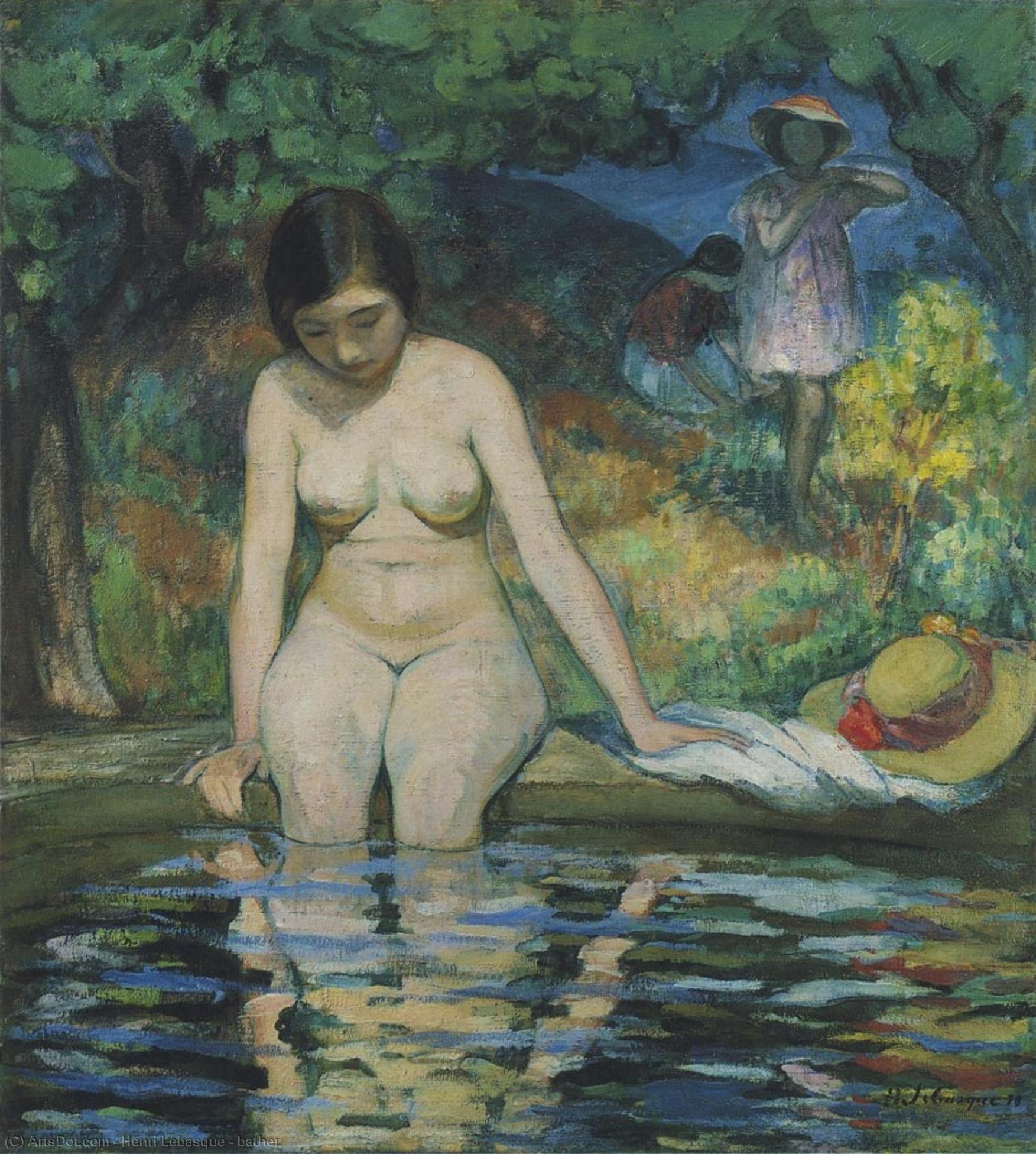
헨리 레바스케: 약력
A Painter of Joy and Light: The Life and Art of Henri Lebasque
Henri Lebasque, a name perhaps less immediately recognized than some of his Post-Impressionist contemporaries, nevertheless occupies a significant place in the artistic landscape of early 20th-century France. Born in Champigné, Maine-et-Loire, in 1865, Lebasque’s journey toward becoming a celebrated painter was one marked by diligent study, evolving influences, and an unwavering commitment to capturing beauty in everyday life. His early education at the École régionale des beaux-arts d'Angers provided a foundational grounding, but it was his move to Paris in 1886 that truly ignited his artistic development. There, under the tutelage of Léon Bonnat and through assisting Ferdinand Humbert with decorative murals at the Panthéon, he honed his technical skills while immersing himself in the vibrant Parisian art scene. This period proved crucial, bringing him into contact with pivotal figures like Camille Pissarro and Auguste Renoir, whose emphasis on light and color would profoundly shape his aesthetic sensibilities.
Embracing Intimacy: Influences and Artistic Development
Lebasque’s artistic trajectory wasn't solely defined by the established masters; it was equally influenced by a younger generation of artists pushing the boundaries of painting. His association with Les Nabis, particularly Édouard Vuillard and Pierre Bonnard, proved transformative. These Intimist painters prioritized domestic scenes and intimate moments, fostering in Lebasque a similar inclination toward capturing the quiet poetry of everyday existence. The Nabis’ emphasis on flattened forms, decorative patterns, and subtle color harmonies resonated deeply with his own artistic inclinations. Simultaneously, exposure to the theories of Georges Seurat and Paul Signac introduced him to the principles of Chromoluminarism – the scientific application of complementary colors to create luminous effects. This knowledge became a cornerstone of his technique, allowing him to imbue his canvases with an extraordinary vibrancy and sense of light. He wasn’t merely replicating what he saw; he was interpreting it through a lens of color and emotion, creating scenes that felt both familiar and dreamlike.
Lebasque's artistic vision centered around portraying the beauty found in ordinary life—a deliberate departure from the grand narratives favored by earlier movements. His fascination with domestic interiors and portraits of families stemmed from a desire to capture genuine human connection and tenderness. Influenced heavily by Impressionists like Renoir and Pissarro, Lebasque adopted their technique of layering thin washes of color to achieve luminous effects – a method he perfected through meticulous observation and experimentation. He meticulously studied the interplay of light and shadow, striving to convey not just what was visible but also what lay beneath the surface—the emotions and sensations experienced by his subjects.
A Palette of Serenity: Themes and Techniques
The hallmark of Lebasque's work lies in its serene atmosphere and harmonious palette. He found inspiration in the simple pleasures of life – family portraits, leisurely moments in gardens, landscapes bathed in sunlight. His paintings are not grand historical narratives or dramatic allegories; instead, they offer glimpses into intimate domesticity and the beauty of the natural world. Madame Lebasque and Her Daughters exemplifies his ability to capture a tender moment with remarkable grace and sensitivity. The figures are rendered with soft brushstrokes and bathed in warm light, creating an atmosphere of peaceful contentment. He skillfully employed complementary color pairings – blues and oranges, reds and greens – to create visual excitement while maintaining an overall sense of harmony. Works like Rest on the Banks of the Yaudet demonstrate his mastery of landscape painting, capturing the tranquility of nature with a delicate touch.
Lebasque’s dedication to detail—particularly in rendering fabrics and textures—further distinguished him from many of his contemporaries. He painstakingly recreated surfaces using subtle gradations of color and brushstrokes, creating an illusion of depth that enhanced the realism of his compositions. This meticulous approach reflects Lebasque's belief that art should strive for accuracy while simultaneously conveying emotion – a balance he achieved with exceptional skill.
Legacy and Recognition: A Lasting Impression
Throughout his career, Lebasque enjoyed considerable success, participating in prestigious exhibitions such as the Salon d’Automne – which he helped found alongside Henri Matisse – and the Salon des Indépendants. He even received commissions for decorative projects, including work at the Champs-Élysées theatre and on transatlantic liners. His paintings are now held in numerous prominent museum collections, including the Musée d’Orsay in Paris, the Petit Palais in Geneva, and museums in Lille and Nantes, attesting to his enduring artistic significance. While perhaps not as widely celebrated as some of his more avant-garde contemporaries, Henri Lebasque's contribution to Post-Impressionism is undeniable. He offered a unique vision – one that prioritized beauty, harmony, and the quiet joys of everyday life. His paintings continue to resonate with viewers today, offering a welcome respite from the complexities of the modern world and reminding us of the enduring power of art to uplift and inspire.
헨리 레바스케의 작품 539점 전체 보기 →