

Saint Louis Forgiving Pierre de Bretagne (1817)은(는) Georges Rouget의 가장 유명한 작품으로, Quimper의 Musée des Beaux-Arts de Quimper에 소장되어 있습니다. Sketch for the church Saint Gervais "Ecce Homo" (1819)와 Jean-Nicolas Houchard (1835)는 세계적으로 가장 잘 알려진 다음 두 작품입니다. 우리 카탈로그에 수록된 Georges Rouget의 작품 39점 중, 컬렉터와 미술관 관람객들이 가장 많이 찾는 39점을 선정하여 제작 연도, 소장 미술관 및 작품에 담긴 이야기와 함께 소개합니다.
각 작품의 검색, 방문 및 주문 수를 결합한 인기 점수를 기준으로 순위를 매깁니다. 10월 2026 업데이트됨. 이 페이지의 모든 명작은 원하시는 크기로 박물관 품질의 수작업 유화 복제화 또는 파인 아트 프린트로 주문하실 수 있습니다.


A middle-aged man sits in a moment of profound stillness, his gaze drifting toward the upper right as if caught by a sudden, unspoken thought. He is draped in the heavy, dark navy blue of a jacket that absorbs the light, contrasting sharply against the crisp, creamy white of his cravat. The light strikes the left side of his face with a deliberate intensity, sculpting the sharp lines of his…


The canvas before you presents not merely a likeness, but an embodiment of the 19th century’s fascination with portraiture – a meticulously rendered study in dignity and quiet authority. Painted by Georges Rouget between 1803 and 1857, this depiction of Jean Pierre Thenot is more than just a representation; it's a window into a specific moment in French history, imbued with the formal elegance and restrained emotion characteristic of his…


Georges Rouget's "Mesdemoiselles Mollien," painted in 1811, is more than just a portrait; it’s a window into the refined world of early 19th-century French society and a testament…
복제화 주문하기 →
프랑스 루제의 장 프랑소와 샤셀로프 라바트 초상화 분석 프랑스 루제의 장 프랑소와 샤셀로프 라바트 초상화는 프랑스 혁명과 나폴레옹 시대의 예술적 정취를 담은 작품으로, 루제 화가의 뛰어난 기법과 역사적…
손그림 복제화 주문 제작하기 →
This striking portrait depicts Emmanuel de Grouchy, Colonel du 2e Dragon in 1792. Painted by Georges Rouget, a neoclassical French painter known for his historical scenes and association…
복제화 주문하기 →이 걸작들 사이에서 가장 자주 등장하는 네 가지 주제와 각 주제를 가장 잘 나타내는 대표작들.
이 페이지에 있는 작품을 가장 많이 소장하고 있는 8개의 미술관
| 소장 미술관 | 도시 | Georges Rouget의 작품 | 이 목록의 작품들 |
|---|---|---|---|
 Opera House |
Versailles | 6 | Achille Alexandre Alphonse, Viscount de Cailleux (1788-1876), Director of the Musées royaux, ALEXANDRE FRANCOIS MARIE, VICOMTE DE BEAUHARNAIS, GENERAL EN CHEF DE L'ARMEE DU RHIN (1760 1794), VICTOR GUY BARON DUPERRE, MATELOT EN 1792 (1775 1846) |
 루브르 박물관 |
파리 | 2 | JEAN PIERRE THENOT (1803 1857), MESDEMOISELLES MOLLIEN |
 Musée des Beaux-Arts de Quimper |
Quimper | 1 | Saint Louis Forgiving Pierre de Bretagne |
 Petit Palais |
파리 | 1 | Sketch for the church Saint Gervais "Ecce Homo" |
 Musée de l'Armée |
파리 | 1 | Jean-Nicolas Houchard |
 바이에른 주립 회화 컬렉션 |
뮌헨 | 1 | Jacques-Louis David |
 Musée Fesch |
엑스앙프로방스 | 1 | The King of Rome in the Tuileries Garden |
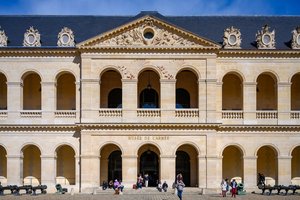 Ministère de la Défense Nationale |
파리 | 1 | 프랑스 장군 프랑소와 샤셀루프 루바트 |


Saint Louis Forgiving Pierre de Bretagne (1817), Musée des Beaux-Arts de Quimper, Quimper. 다음은 Sketch for the church Saint Gervais "Ecce Homo" (1819)와(과) Jean-Nicolas Houchard (1835)입니다.
34세: Saint Louis Forgiving Pierre de Bretagne은(는) 1817년 작품이며, Georges Rouget은(는) 1783년에 태어났습니다.
Saint Louis Forgiving Pierre de Bretagne, Sketch for the church Saint Gervais "Ecce Homo", Jean-Nicolas Houchard, Jacques-Louis David, Achille Alexandre Alphonse, Viscount de Cailleux (1788-1876), Director of the Musées royaux, The King of Rome in the Tuileries Garden, JEAN PIERRE THENOT (1803 1857), DEBARQUEMENT DE SAINT LOUIS EN EGYPTE.4 JUIN 1249, ALEXANDRE FRANCOIS MARIE, VICOMTE DE BEAUHARNAIS, GENERAL EN CHEF DE L'ARMEE DU RHIN (1760 1794) 및 FRANCOIS CHRISTOPHE KELLERMAN, GENERAL EN CHEF DE L'ARMEE DE LA MOSELLE EN 1792 (1735 1820). 위 순위는 각 작품의 제작 연도와 소장 박물관을 나타냅니다.
Georges Rouget의 작품 39점을 1817년부터 1850년 사이의 연대로 분류하여 목록에 담았습니다.
대부분의 작품은 Opera House (Versailles), 루브르 박물관 (파리) 및 Musée des Beaux-Arts de Quimper (Quimper)에 소장되어 있습니다. 위 표에 각 박물관 목록이 나열되어 있습니다.
1810s 기간 동안: 이 페이지의 총 39점의 작품 중 2점이 해당 시기의 작품이며, 그중 Saint Louis Forgiving Pierre de Bretagne점이 포함되어 있습니다.
이 페이지의 가장 오래된 작품은 Saint Louis Forgiving Pierre de Bretagne (1817), 가장 최근 작품은 The King of Rome in the Tuileries Garden (1850)입니다.
이 페이지의 총 39점의 작품 중 Portrait (4), Dignified (3) 및 Formal (2)
Oil On Canvas: 이 페이지의 총 39점 중 3점
이 페이지의 작품들이 보여주듯, Neoclassicism
Achille Alexandre Alphonse, Viscount de Cailleux (1788-1876), Director of the Musées royaux, ALEXANDRE FRANCOIS MARIE, VICOMTE DE BEAUHARNAIS, GENERAL EN CHEF DE L'ARMEE DU RHIN (1760 1794) 및 VICTOR GUY BARON DUPERRE, MATELOT EN 1792 (1775 1846)은(는) Opera House, Versailles이(가) 소장한 이 페이지의 작품 6점 중 일부입니다.
네, 이 페이지에 있는 모든 작품은 해당 작품의 상세 페이지에서 원하시는 크기로 박물관 품질의 수작업 유화 복제본 또는 파인 아트 프린트로 주문하실 수 있습니다.

