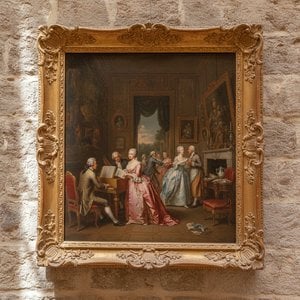
The Soul of the Italian Countryside: The Life and Art of Pietro Pajetta
In the tapestry of nineteenth-century Italian art, few threads are as tender or as evocative as those woven by Pietro Pajetta. Born on March 22, 1845, in the serene landscape of Serravalle, Pajetta was destined for a life steeped in color and form. The son of the painter Paolo Pajetta and brother to the talented Mariano Pajetta, his very existence was cradled by the brushstrokes of his kin. Yet, his path to artistic mastery was not a simple one; it was interrupted by the tumultuous winds of history. At only fifteen years old, the outbreak of the War of Italian Independence in 1860 pulled him from his contemplative dreams of joining a religious order and thrust him into the rigors of military service. It was during these formative years in Alessandria that his keen eye for detail began to sharpen, transforming a young soldier's observation into an artist's profound perception.
The trajectory of Pajetta’s life shifted dramatically through the grace of unexpected patronage. General Enrico Cialdini, a commander who had witnessed the young man's potential, became the catalyst for his formal education, securing him a place at the prestigious Academy in Bologna. Within those hallowed halls, Pajetta moved beyond mere observation to master the complex language of oil painting, composition, and light. His development was marked by an exuberance of feeling, a quality that would become the hallmark of his oeuvre. While his technical foundation was rooted in academic tradition, his heart remained tethered to the rustic and the real, leading him to create works that breathed with the vitality of the Italian landscape and the quiet dignity of its people.
A Mastery of Genre and Emotion
Pajetta’s artistic legacy is defined by his unparalleled ability to elevate the mundane into the monumental. He was a master of genre painting, a style that finds profound narrative in everyday scenes. His canvases often serve as windows into a bygone era, capturing the intimate domesticity of rural life and the rugged beauty of pastoral existence. Whether depicting the heavy stillness of a stable or the lively bustle of a village market, Pajetta infused his subjects with a palpable emotional depth. His works, such as Genius and Poverty and The Joys of the Family, do not merely record a moment; they invite the viewer to feel the weight of hardship and the warmth of human connection.
Beyond the human figure, Pajetta possessed a remarkable sensitivity toward the animal kingdom and the natural world. His paintings of livestock and landscapes are characterized by a vibrant color palette and a meticulous attention to texture, making the breath of a beast or the rustle of grass feel almost tangible. This connection to nature was not merely decorative but deeply symbolic, reflecting a lifelong engagement with themes of life, labor, and the enduring spirit of the Italian countryside. His ability to balance realism with an emotive, almost poetic, atmosphere allowed him to transcend simple documentation, turning his paintings into timeless meditations on existence.
Accolades and Lasting Influence
Throughout his prolific career, Pajetta’s talent earned him significant recognition across the European art circuit. His journey through various exhibitions was marked by a series of prestigious honors that validated his unique vision:
- Gold Medal at the Regional Exhibition of Alessandria: A testament to his early mastery and local impact.
- Bronze Medal in Treviso (1872): Highlighting his growing reputation within the Italian provinces.
- Silver Medal in Rovigo (1877): Further cementing his status as a significant figure in late 19th-century art.
- Silver Medal at the Crystal Palace Exhibition in London (1884): An international recognition that brought his rustic Italian scenes to a global audience.
- Gold Medal in Milan (1893) for the work Ammalato?: Demonstrating his continued evolution and command over complex emotional narratives.
Though his economic circumstances were often precarious, Pajetta’s artistic influence remained steadfast. His works found homes in some of Italy's most esteemed institutions, including the Galleria Nazionale d'Arte Moderna in Rome and the Palazzo Da Zara in Padua. Today, as we look back upon the life of Pietro Pajetta, we see more than just a painter of scenes; we see an artist who captured the very heartbeat of his era. His ability to find the extraordinary within the ordinary continues to inspire, reminding us that true beauty often resides in the simplest, most unadorned moments of our shared human experience.