The Shadow of the Monogram
In the bustling studios of Rome during the late seventeenth century, a painter once moved through the shadows of more famous masters, leaving behind only a cryptic monogram. For many years, the name Pietro Navarra remained a mystery, known to collectors and scholars only by the initials PN. He was a man of quiet industry, a painter who found his purpose in the delicate arrangement of nature's bounty. His presence in the Eternal City was marked by a steady hand and a devotion to the still life, a genre that allowed him to capture the fleeting textures of the earth without the need for grand religious spectacle.
His life was shaped by the heavy influence of the German master Franz Werner von Taemme, whose presence in Rome provided a template for Navarra's own development. It was through this connection that he learned to translate the physical world onto canvas with a specific, disciplined grace. He did not seek the limelight of the great fresco painters but instead found a stable place within the households of the Roman elite. By serving as a family painter for the noble Rosipollosi family, he secured a livelihood that allowed him to refine his craft amidst the quiet luxury of aristocratic life.
The Language of Fruit and Form
Navarra’s brushwork reveals a man deeply attentive to the weight and surface of his subjects. His compositions often relied on a dynamic arrangement of shapes, where the curve of a peach or the cluster of a grape dictated the movement of the entire scene. He worked with a certain strength in his strokes, avoiding mere imitation in favor of a robust, tactile reality. His ability to render the subtle play of light across different textures became his signature, a skill that allowed his works to endure even when his name was forgotten.
The evolution of his style can be traced through several key elements of his surviving output:
- The use of broad, confident brushstrokes that lend a sense of immediacy to his compositions.
- A focus on the interplay between light and shadow to define the volume of fruit and flora.
- The influence of Giovanni Paolo Spadino, visible in the formal treatment and structural balance of his arrangements.
A Legacy Reclaimed
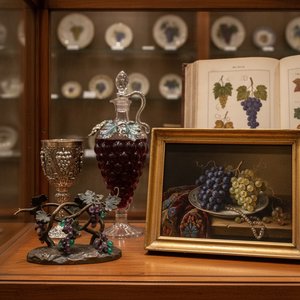
Though he passed away in 1714, the true recognition of his hand came much later, through the diligent work of those who sought to untangle the identities of the anonymous masters. His works have traveled far from the Roman studios where they were born, finding their way into significant collections such as the Museum Mayer van den Bergh in Antwerp. These pieces, such as his 1689 still life of fruit, provide a window into the aesthetic preferences of a bygone era, where the simple beauty of a harvest was enough to command a place in a grand collection.
Today, his paintings remain as physical evidence of a life spent observing the world. Whether it is a small canvas of peaches, grapes, and figs or a larger arrangement of flora, his work carries the mark of a painter who understood the quiet dignity of the inanimate. He remains a vital link in the history of Italian still life, a man who transitioned from a mere follower of German styles to a distinct voice in the Roman art scene.