Paul Jenkins: A Pioneer of Flowing Color and Conceptual Abstraction
Paul Jenkins (July 12, 1923 – June 9, 2012) stands as a singular figure in the landscape of American abstract expressionism. Born in Kansas City, Missouri, his artistic journey began with formal training at the Art Students League of New York under Yasuo Kuniyoshi, fostering an early appreciation for Japanese aesthetics and influencing his distinctive visual language. This formative period laid the groundwork for Jenkins’ groundbreaking exploration into lyrical abstraction – a movement characterized by its deliberate avoidance of representational imagery in favor of emotive color and textural interplay.
Jenkins' artistic breakthrough arrived in 1953 with a transformative trip to Europe, specifically Sicily where he spent three months immersed in the vibrant culture and artistic traditions of Taormina. This experience broadened his horizons and solidified his commitment to experimentation, propelling him towards Paris, France, where he established a studio and cultivated collaborations that would define his career. From 1955 onward, Jenkins navigated the dynamic creative environment of both New York City and Parisian intellectual circles, consistently pushing boundaries and redefining artistic conventions.
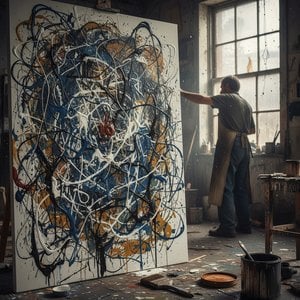
His signature technique – “phenomena” painting – revolutionized abstract art. Jenkins began incorporating Goethe’s color theories into his process, meticulously layering pigments in streams of varying thicknesses to achieve a mesmerizing effect. These pours weren't merely random gestures; they were carefully considered actions designed to generate unpredictable patterns and textures—a deliberate embrace of chance within the framework of artistic intention. The prefix “phenomena” served as a conceptual anchor, prompting Jenkins to select keywords or phrases that resonated with him personally, transforming titles into statements about observation and discovery.
A pivotal moment in Jenkins’ career arrived in 1964 when he accepted an invitation from jiro yoshihara to participate in Gutai, Osaka – a Japanese collective dedicated to exploring the expressive potential of spontaneous action and materiality. This collaboration exposed Jenkins to radically different artistic approaches, enriching his oeuvre with influences from Eastern art traditions and furthering his commitment to pushing the boundaries of visual language. The resulting paintings exemplify the Gutai ethos: bold gestures, unfiltered pigment, and an unwavering focus on capturing the immediacy of experience.
Jenkins’ legacy extends far beyond his individual artworks. He championed a method of abstraction that prioritized feeling over form—a deliberate rejection of traditional artistic standards. His pioneering use of flowing pigments and conceptual titles profoundly impacted subsequent generations of artists, establishing him as a pivotal voice in the evolution of abstract expressionism. Today, Paul Jenkins' paintings continue to captivate audiences with their luminous color palettes, dynamic textures, and evocative symbolism – enduring testaments to his unwavering dedication to artistic innovation and his profound engagement with the philosophical underpinnings of art itself.