A Vision of Sacred Spaces: The Life and Art of Mikhail Markianovich Germachev
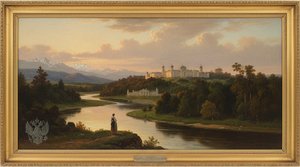
Mikhail Markianovich Germachev is an artist whose work resonates with a profound sense of place, particularly the spiritual heart of Russia. Though biographical details remain somewhat elusive – a characteristic often found in artists who prioritized creation over self-promotion – his paintings speak volumes about his dedication to capturing the majesty of cathedral architecture and the subtle beauty of the Russian landscape. Germachev’s art isn't merely representation; it is an evocation of atmosphere, history, and faith. He stands as a compelling figure bridging the traditions of 19th-century realism with the artistic currents of the Soviet era.
Early Life and Artistic Formation
Born in Russia (the exact date remains undocumented), Germachev emerged during a period of significant social and artistic change. While specific details regarding his formal training are scarce, it’s evident that he possessed a deep understanding of classical painting techniques. His early works suggest an apprenticeship steeped in the traditions of Russian realism, focusing on meticulous detail and accurate depiction of light and shadow. This foundation allowed him to later develop a uniquely personal style—one that moved beyond simple imitation towards a more emotionally charged interpretation of his subjects. The influence of earlier masters like Ilya Repin and Vasily Vereshchagin, known for their powerful depictions of Russian life and historical scenes, is subtly present in Germachev’s early compositions, particularly in his attention to narrative detail and the rendering of human figures within expansive landscapes.
The Cathedral as a Central Motif
Germachev's artistic identity became inextricably linked with his stunning portrayals of cathedrals. He wasn’t simply documenting architectural structures; he was exploring the spiritual weight they carried, the centuries of history embedded in their stones and soaring domes. His paintings of Christ the Saviour Cathedral in Moscow are particularly noteworthy. These works aren't just visual records—they are imbued with a sense of reverence, capturing the cathedral’s grandeur and its symbolic importance to the Russian people. He masterfully used light to highlight architectural details, creating an ethereal quality that draws the viewer into the sacred space. The play of sunlight streaming through stained-glass windows, illuminating ornate interiors, is a recurring theme in his work, suggesting not just physical illumination but also divine grace.
Navigating Artistic Expression During the Soviet Era
The artistic landscape of Russia underwent dramatic shifts during Germachev’s active period. The rise of socialist realism presented both challenges and opportunities for artists. While overtly religious themes were often discouraged, Germachev managed to continue painting cathedrals, subtly embedding his spiritual vision within a broader context of national heritage and architectural beauty. His ability to focus on the artistic and historical significance of these structures—rather than explicit religious narratives—allowed him to navigate the complexities of the Soviet art world. This period saw a shift in his style towards a more atmospheric approach, emphasizing mood and emotional resonance over strict realism. He became known for capturing the quiet dignity of these spaces, offering a contemplative counterpoint to the often-didactic nature of officially sanctioned art.
Legacy and Enduring Appeal
Though not widely celebrated during his lifetime, Mikhail Markianovich Germachev’s work has gained increasing recognition in recent years. His paintings offer a unique window into the soul of Russia—a land steeped in history, faith, and artistic tradition. He stands as a testament to the power of art to transcend political boundaries and express universal human emotions. Today, his evocative cathedral scenes and captivating landscapes continue to inspire awe and contemplation. His legacy lies not only in his technical skill but also in his ability to imbue his paintings with a profound sense of spirituality and place.
- Style: Russian Realism, Atmospheric Impressionism
- Key Subjects: Cathedral Architecture (particularly Christ the Saviour), Russian Landscapes
- Notable Works: Paintings of Christ the Saviour Cathedral in Moscow.
- Historical Context: Bridging 19th-century traditions with Soviet era art.