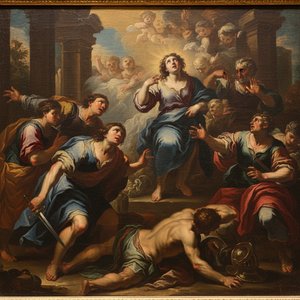
Jean-Baptiste Pater: A Master of Parisian Fête Galante
Jean-Baptiste Pater, a name perhaps less familiar than those of Watteau or Rigaud, nevertheless stands as a significant figure in the development of French Rococo painting. Born in Valenciennes in 1695 and tragically dying in Paris at the young age of 40, Pater’s life was cut short but his artistic legacy endures through a captivating body of work centered around the *fête galante*. His paintings offer glimpses into an idealized world of aristocratic leisure, pastoral beauty, and subtle sensuality – a hallmark of the era. Pater's journey to Parisian prominence began with a somewhat contentious apprenticeship under the renowned Jean Watteau, his childhood friend and fellow Valenciennes native. Legend has it that Watteau dismissed him from his studio due to professional jealousy, though the exact circumstances remain shrouded in speculation. Regardless, this early divergence set Pater on his own path, one marked by both imitation and innovation.
Early Influences and Training
Pater’s artistic education was deeply shaped by the vibrant art scene of Paris during the 18th century. Following his departure from Watteau's studio, he sought guidance from some of the most influential masters of the time – Rigaud, Largillière, and crucially, Rosalba Carriera. Carriera’s visit to Paris in 1720-21 proved particularly transformative. She introduced pastel painting to Europe, a medium that immediately captivated artists with its delicate textures and luminous colors. Pater quickly embraced this new technique, incorporating it into his work and contributing to its growing popularity across the continent. His time in Paris also exposed him to the broader artistic trends of the day, including the influence of Italianate styles prevalent at the court. He studied diligently, absorbing the techniques and aesthetics of these masters, yet he never simply replicated their style; instead, he skillfully adapted them to his own unique vision.
The Style of Pater: Fête Galante and Beyond
Pater’s signature style is undeniably rooted in the *fête galante*, a genre that flourished during the Rococo period. These paintings typically depict idyllic scenes of aristocratic leisure, often set in pastoral landscapes or at the edges of civilization. Figures are engaged in graceful activities – dancing, playing music, hunting, or simply enjoying the beauty of nature. Pater’s *fêtes galantes* are characterized by their elegant compositions, delicate color palettes, and a pervasive sense of charm and sophistication. However, unlike Watteau, who often imbued his scenes with a melancholic undertone, Pater's works possess a lighter, more playful quality. He demonstrated greater originality in portraying military life and groups of bathers, offering a degree of freedom and sensuality that was less common in the genre. His depictions of figures enjoying themselves in natural settings were particularly notable for their subtle eroticism, hinting at hidden desires beneath the surface of polite society.
Key Works and Historical Significance
Among Pater’s most celebrated works are *The Shepherdess*, *The Bathers*, and several portraits commissioned by prominent figures of the French court. His painting *Bacchus and Ceres in the Clouds* (1751), executed for Huis Boschbeek, a grand country estate near Heemstede, is considered one of his masterpieces. This large-scale ceiling decoration exemplifies his mastery of trompe-l'œil, creating an illusion of depth and space that seamlessly blends with the architectural setting. Pater’s work reflects the tastes of the aristocracy, capturing their desire for beauty, pleasure, and escape from the constraints of courtly life. His influence extended beyond individual paintings; he helped establish a standard for decorative painting within Parisian interiors, earning him the title "witje" – a term now synonymous with his distinctive style of marble imitation.
Legacy and Lasting Influence
Despite his tragically short career, Jean-Baptiste Pater left an indelible mark on French art. He was a key figure in popularizing pastel painting and refining the *fête galante* genre. His work served as a model for subsequent generations of artists, including Gustaf Lundberg, who greatly admired Carriera’s influence on Pater's style. Today, Pater’s paintings are treasured for their exquisite beauty, technical skill, and evocative portrayal of an idealized world. They offer a fascinating glimpse into the social and cultural values of 18th-century France, revealing a society that valued elegance, leisure, and the pursuit of pleasure. His legacy continues to be celebrated through reproductions like those offered by WahooArt.com, ensuring that Pater’s captivating vision endures for art lovers worldwide.