Juan Reixach: A Valencian Master of Medieval Mysticism
Juan Reixach, a name perhaps less familiar than some of his contemporaries, stands as a pivotal figure in the vibrant artistic landscape of 15th-century Valencia. His work, deeply rooted in Spanish tradition yet subtly infused with Northern European influences – particularly those of Flanders – offers a compelling glimpse into a period of intense religious fervor and burgeoning artistic innovation. Reixach’s legacy isn't defined by grand, sprawling commissions but rather by the profound emotional resonance and intricate symbolism woven into his smaller-scale altarpieces and devotional panels, works that continue to captivate viewers with their haunting beauty and evocative storytelling.
Born around 1431 in Valencia, Reixach’s early life remains shrouded in relative obscurity. He apprenticed under the esteemed Jacomart, the court painter of King Alfonso V of Aragon, a connection that undoubtedly shaped his artistic development. However, Reixach quickly established himself as an independent artist, demonstrating a distinctive style that blended the meticulous detail characteristic of Flemish painting with the expressive dynamism of Spanish Gothic art. His career spanned roughly five decades, during which he produced a remarkable body of work, primarily focused on religious subjects – scenes from the lives of saints, depictions of the Virgin Mary, and representations of Christ – all rendered with an extraordinary level of technical skill and emotional depth.
The Language of Symbolism
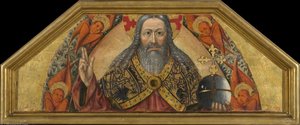
Reixach’s art is profoundly symbolic, reflecting the dominant theological currents of his time. His paintings are not merely illustrations of biblical narratives; they are carefully constructed allegories designed to convey complex spiritual truths. Recurring motifs – such as halos, jewels, and specific gestures – carry layered meanings understood by a largely illiterate audience. The Virgin Mary, frequently depicted with a serene expression and a gentle hand extended in blessing, embodies maternal compassion and divine grace. Saints, similarly, are portrayed not as distant figures of legend but as relatable individuals grappling with faith, suffering, and virtue.
A particularly striking element of Reixach’s work is his masterful use of color. He favored rich, jewel-toned pigments – deep blues, vibrant reds, and shimmering golds – to create a sense of opulence and spiritual intensity. The interplay of light and shadow further enhances the dramatic effect, drawing the viewer's eye to key figures and emphasizing their emotional states. His attention to detail is remarkable; from the intricate folds of clothing to the delicate rendering of facial features, every element contributes to the overall narrative and symbolic weight of the composition.
Key Works and Influences
Several works stand out as particularly significant examples of Reixach’s artistic prowess. The “Adoration of the Magi” (1468), a monumental altarpiece housed in Barcelona's Museu Nacional d'Art de Catalunya, exemplifies his ability to synthesize diverse influences into a cohesive and compelling whole. It seamlessly blends elements of Spanish Gothic tradition with Northern European realism, creating a scene that is both visually stunning and spiritually profound. The “St. Ursula” (1468), also in the same museum, showcases Reixach’s meticulous attention to detail and his mastery of perspective. The "Imposition of the Chasuble on St. Ildephonsus" from the altarpiece of *St. Anne* in the Collegiate Basilica of Xàtiva (Valencia) is another notable example.
Reixach’s artistic development was undoubtedly influenced by his association with Jacomart, but he also drew inspiration from other European masters, including Gerard David and Rogier van der Weyden. The influence of Flemish painting can be seen in his use of perspective, his attention to detail, and his preference for depicting figures in three-quarter views. However, Reixach’s work retains a distinctly Spanish character – a sense of emotional intensity and spiritual depth that is uniquely his own.
Legacy and Historical Significance
Despite the relative obscurity surrounding his life, Juan Reixach remains a significant figure in the history of Valencian art. His paintings offer a valuable window into the religious beliefs and artistic sensibilities of 15th-century Spain. His work reflects the growing importance of devotional imagery during this period, as well as the increasing sophistication of painting techniques. Reixach’s legacy is not one of grand monuments or public commissions but rather of intimate, deeply felt works that continue to resonate with viewers today. His paintings are a testament to the power of art to communicate complex spiritual truths and to evoke profound emotional responses.
Further research into Reixach's life and work continues to shed light on this enigmatic artist, solidifying his place as a key figure in the rich tapestry of Spanish medieval painting. His paintings serve as a poignant reminder that true artistic greatness often resides not in scale or fame but in the depth of emotion and spiritual insight conveyed through a single image.