요르겐 로에: 덴마크 풍속화와 초상화의 거장
요르겐 로에(1808-1888)는 19세기 덴마크 예술의 역동적인 태피스트리 속에서 매우 중요한 위치를 차지하는 인물로, 특히 일상의 삶을 포착한 서정적인 풍속화와 탁월한 초상화로 널리 알려져 있습니다. 덴마크 링스테에서 페데르 요르겐센 로에와 엘렌 한스다테르 사이에서 태어난 그의 유년 시절은 농업과 증류업에 종사하며 지역 의원으로 활동했던 아버지의 영향 아래 농촌의 전통 속에 깊이 뿌리내리고 있었습니다. 이러한 덴마크 사회의 실질적인 삶에 대한 경험은 그의 예술적 시야에 깊은 영향을 미쳤으며, 인간 관계의 미묘한 뉘앙스와 자연 세계의 아름다움을 놀라울 정도로 세밀하게 포착해내는 능력의 밑거름이 되었습니다.
요르겐 로에의 예술적 여정은 교사 J.J. 피른의 가르침 아래 소박하게 시작되었으나, 이는 평생을 이어갈 드로잉과 회화에 대한 열정에 불을 지피는 계기가 되었습니다. 그의 재능을 알아본 부모님은 1822년 그가 코펜하겐의 왕립 덴마크 미술 아카데미에서 수학할 수 있도록 지원하였고, 그곳에서 콘스탄틴 한센의 아버지인 한스 한센과 같은 존경받는 예술가들로부터 정식 교육을 받았습니다. 특히 이후 만난 크리스토퍼 빌헬름 에케르베르그는 그의 구도와 색채, 인체 묘사 방식에 결정적인 영향을 미친 스승이었습니다. 이 시기는 그의 예술적 성장뿐만 아니라 에케르베르그의 아들을 포함한 동료 학생들과의 깊은 우정을 쌓는 시기이기도 했으며, 이는 덴마크 회화의 "황금기"를 정의하는 역동적인 창조적 환경을 형성하는 데 기여했습니다.
초기 경력에서 요르겐 로에는 라파엘로와 같은 거장들의 작품을 모사하며 확립된 기법들을 성실하게 학습하는 데 집중했습니다. 그러나 그는 단순히 재현하는 것에 그치지 않고, 모사한 작품에 생동감과 관찰의 시선을 불어넣는 능력으로 빠르게 두각을 나타냈습니다. 샤를로텐보르 봄 전시회에서 선보인 그의 초기 작품들은 성장하는 자신감과 함께, 훗날 그의 예술적 특징이 될 사실주의와 감수성의 조화로운 결합을 보여주었습니다. 1830년대에는 이탈리아에서 머물며 그 지역의 풍경과 예술적 전통에 몰입함으로써 기술을 더욱 연마하고 예술적 주제를 확장해 나갔습니다.
그의 경력에서 중요한 전환점은 한스 한센과의 교류였습니다. 한스의 작업실을 자주 드나들며 얻은 멘토링은 그에게 초상화라는 장르에서 귀중한 경험을 선사했으며, 이 장르는 결국 그의 가장 찬란한 업적 중 하나가 되었습니다. 에케르베르그의 영향력과 한스로부터 배운 실질적인 기술이 결합되면서, 요르겐 로에는 세밀한 묘사, 대기 원근법, 그리고 대상의 본질을 정확하면서도 공감 어린 시선으로 포착하는 독보적인 스타일을 구축할 수 있었습니다.
주제와 스타일: 풍속화와 초상화
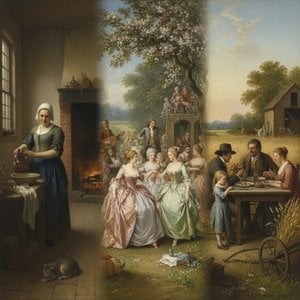
요르겐 로에의 예술적 결과물은 매우 다양한 주제를 아우르지만, 특히 매혹적인 풍속화로 정평이 나 있습니다. 밭을 일구는 농부, 바다에서 돌아오는 어부, 혹은 화로 주위에 모여 있는 가족들의 모습 등 일상의 장면들은 덴마크 농촌의 리듬과 관습을 친밀하게 들여다볼 수 있는 창을 제공합니다. 그의 구도는 종종 고요한 품격과 절제된 아름다움을 담고 있으며, 이는 시골 생활의 소박한 즐거움에 대한 깊은 찬미를 반영합니다.
풍속화와 더불어 요르겐 로에는 초상화가로서도 탁월한 역량을 발휘했습니다. 그의 초상화는 단순히 외형적인 닮은꼴을 재현하는 것을 넘어, 고귀한 신사의 모습부터 소박한 마을 주민에 이르기까지 대상의 성격과 인격까지 포착해냅니다. 그는 미묘한 몸짓과 표정을 통해 감정을 전달하는 놀라운 능력을 지니고 있었으며, 시각적으로 강렬하면서도 심리적인 통찰력을 제공하는 이미지를 창조했습니다. 그의 형제인 발데마르 흐야르바르 쾨브케의 초상화는 요르겐 로에의 기술적 숙련도와 가족의 모습을 포착해내는 탁월한 재능을 보여주는 대표적인 예입니다.
주요 작품과 유산
요르겐 로에의 예술적 유산은 덴마크 국립 미술관과 호르센스 미술관을 포함하여 덴마크 전역의 저명한 박물관 컬렉션에 확고히 자리 잡고 있습니다. 그의 회화는 19세기 덴마크 사회의 문화, 전통, 가치관을 엿볼 수 있는 소중한 창 역할을 합니다. 1839년 작
“빌라 보르헤스의 장면(Scene from Villa Borghese)”은 건축적 세밀함과 낭만적 사실주의의 정수를 보여주며,
“대성당을 배경으로 한 로스킬레의 거리(A Street in Roskilde with the Cathedral in the Background)”는 덴마크 풍경의 대기감 넘치는 아름다움을 포착하는 그의 능력을 증명합니다.
덴마크 예술에 대한 요르겐 로에의 공헌은 부정할 수 없는 사실입니다. 그는 사실주의, 감수성, 그리고 국가적 자부심이라는 이상을 구현하며 덴마크 회화 황금기의 핵심 인물로 활약했습니다. 그의 작품들은 오늘날까지도 뛰어난 기술적 숙련도와 정서적 깊이, 그리고 변치 않는 매력으로 찬사를 받으며, 덴마크에서 가장 사랑받는 예술가 중 한 명으로서 그의 자리를 확고히 하고 있습니다.
더 알아보기
요르겐 로에의 삶과 작품에 대한 더 자세한 정보는 다음 자료를 참조하십시오: