A Pioneer Forged in Classical Ideals
Inigo Jones, a name synonymous with the birth of classical architecture in England, stands as a monumental figure bridging the artistic sensibilities of the Renaissance and the burgeoning aesthetic landscape of the 17th century. Born in London in 1573, his origins remain somewhat shrouded in mystery—a Welsh lineage is suggested but never definitively confirmed by contemporary records. What *is* certain is that Jones’s path diverged from traditional architectural training; he wasn't apprenticed through a guild or established workshop. Early indications point to a background as a joiner, yet it was an innate artistic talent recognized by a discerning patron—perhaps the Earl of Pembroke or Rutland—that propelled him toward his destiny. Around 1603, this benefactor facilitated a transformative journey to Italy, a pilgrimage that would irrevocably shape Jones’s vision and establish the foundation for his groundbreaking work. This initial foray into Italian art and architecture was followed by a period serving King Christian IV in Denmark, contributing designs to Rosenborg and Frederiksborg Palaces—experiences crucial in honing his skills before returning to England with a burgeoning architectural philosophy.
From Stagecraft to Stone: The Evolution of an Artistic Vision
Jones initially gained prominence not through buildings, but through the ephemeral world of theatrical design. He revolutionized English stagecraft as a designer of masques—lavish, elaborate spectacles combining poetry, music, dance, and visual artistry—commissioned primarily by Queen Anne of Denmark. His innovations were radical: movable scenery, the introduction of the proscenium arch, and an overall commitment to spectacle that elevated these performances beyond mere entertainment. This period fostered a collaborative yet often contentious relationship with playwright Ben Jonson. While they worked together on numerous productions, their partnership was marked by a fundamental disagreement regarding the primacy of design versus literature in theatrical experience—Jonson favoring the power of words, Jones championing the impact of visual grandeur. Over 450 surviving drawings attest to Jones’s artistic development during this time, revealing an evolution from initial hesitancy in Renaissance draughtsmanship to a sophisticated “Italianate manner,” influenced by masters like Alfonso and Giulio Parigi. A second journey to Italy around 1606, guided by the ambassador Henry Wotton, proved pivotal, deepening his understanding of classical principles and solidifying his commitment to Palladian architecture—particularly Andrea Palladio’s *I quattro libri dell'architettura*, a volume Jones owned and meticulously annotated with references to Wotton. He also drew inspiration from the ancient Roman writer Vitruvius, prioritizing the authority of antiquity over contemporary Italian trends.
Architectural Manifestations: Defining a New Aesthetic
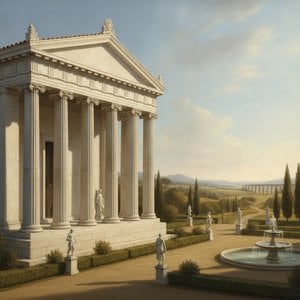
The culmination of Jones’s studies and evolving vision manifested in his architectural achievements, forever altering the landscape of English design. The Queen's House, Greenwich—begun for James I and completed under Charles I for Henrietta Maria—is widely considered his earliest surviving masterpiece and a landmark achievement. It stands as the first truly classical building in England, embodying Palladian principles of symmetry, proportion, and harmony. The elegant simplicity of its design, with its emphasis on geometric forms and refined detailing, was a stark departure from prevailing English styles. Equally significant is the Banqueting House, Whitehall—a magnificent example of Baroque architecture distinguished by its imposing scale and, most notably, the breathtaking ceiling painted by Peter Paul Rubens. Jones’s influence extended beyond individual structures to urban planning; he designed the layout for Covent Garden Square, which served as a model for subsequent developments in London's West End, establishing a new standard for elegant and organized public spaces. His appointment as Surveyor of the King’s Works in 1613, followed by Surveyor-General in 1615, cemented his position and allowed him to realize numerous ambitious projects under the patronage of both James I and Charles I.
A Lasting Legacy: The Father of English Classical Architecture
Inigo Jones’s historical significance lies not merely in the buildings he created but in the paradigm shift he instigated. He broke decisively with traditional English building styles, establishing a new aesthetic grounded in Roman antiquity and Renaissance ideals. His designs weren't simply imitations; they were thoughtful interpretations of classical principles adapted to an English context. He introduced a level of sophistication and refinement previously unseen in British architecture, influencing generations of architects who followed in his footsteps. His work represents the conscious adoption of a new visual language—one that emphasized order, reason, and harmony. While his architectural output wasn’t vast, its impact was profound. He laid the groundwork for a distinctly English classical tradition, shaping not only the physical landscape but also the cultural sensibilities of an era. Jones is rightfully regarded as the father of English classical architecture—a visionary who transformed the built environment and left an enduring legacy that continues to inspire awe and admiration today.