Hendrick ten Oever (1639 – 1716): A Master of Dutch Genre Painting
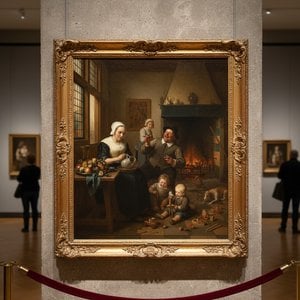
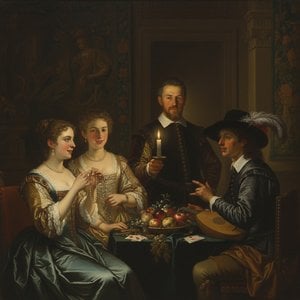
Hendrick ten Oever (1639 – 1716) stands as a significant figure within the Dutch Golden Age, celebrated primarily for his captivating genre paintings—scenes depicting everyday life with remarkable detail and psychological insight. Born in Zwolle, Netherlands, to David ten Oever and Marijke Molkenbuer, he embarked on an artistic journey shaped by formative influences from Eva van Marle, establishing himself as a prominent member of the Pieter de Hooch school.
Early Life and Artistic Training
Ten Oever’s formal education began in Zwolle under Eva van Marle, a renowned portraitist whose stylistic approach profoundly impacted his early works. This mentorship instilled a meticulous observation of human behavior and an ability to convey emotion through subtle gestures and expressions—characteristics that would define his oeuvre. Subsequently, he relocated to Amsterdam in 1659, furthering his artistic development by studying alongside his cousin Cornelis de Bie and fellow artists Johan Heinrich Roos and Theodor Roos.
Style and Technique
Ten Oever’s distinctive style aligns closely with the Pieter de Hooch school, characterized by atmospheric landscapes infused with diffused light and a masterful depiction of domestic interiors. He skillfully employed chiaroscuro—the dramatic interplay between light and shadow—to create depth and realism within his canvases. His brushwork is precise yet expressive, capturing fleeting moments of human interaction and conveying nuanced emotions.
Notable Works and Achievements
Among Ten Oever’s most celebrated paintings are “Portrait of Barend Hakvoort” (1680), a portrait imbued with dignified composure, and “Still life with Hunting Implements and Two European Rollers” (1670), showcasing his meticulous attention to detail and compositional balance. Furthermore, “View of the Herengracht in Amsterdam” exemplifies his ability to capture the vibrancy of urban life during the Baroque period. His landscapes, particularly those depicting rural scenes bathed in soft light, demonstrate a profound understanding of naturalistic observation.
Legacy and Influence
Hendrick ten Oever’s contribution to Dutch art history is undeniable. He solidified the genre painting tradition, elevating it to new heights of artistic sophistication. His works continue to inspire admiration for their psychological realism and aesthetic beauty—testaments to his enduring legacy as a master of visual storytelling within the context of the Dutch Golden Age.