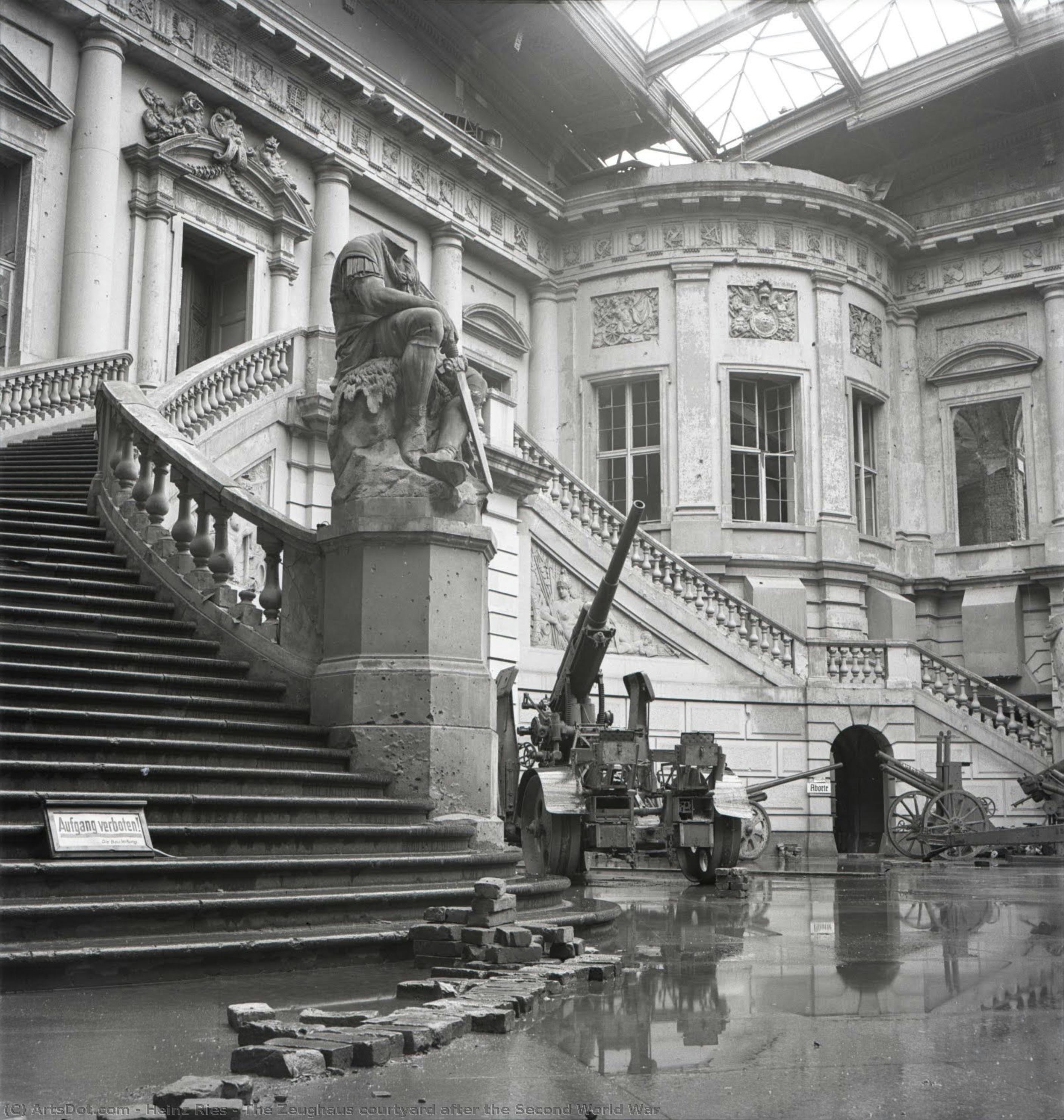
Heinz Ries: A Photographer's Witness to Transformation
Heinz Ries (September 22, 1917 – May 24, 2004) was a German photographer whose work powerfully documented the aftermath of World War II and captured iconic moments like the Berlin Airlift. Born in Berlin during the tumultuous years leading up to Hitler’s rise, Ries possessed an innate sensitivity to political upheaval and, as a Jew facing persecution, emigrated to the United States in 1937—a decision that profoundly shaped his life's trajectory. His photographic vision would become synonymous with portraying the resilience of humanity amidst devastation.- Early Life & Education: Ries’s formative years were marked by intellectual curiosity and a burgeoning interest in visual storytelling. He pursued formal artistic training, honing his skills in composition and technique—elements that would later define his distinctive style.
- Emigration & The War Years: Facing escalating antisemitism in Nazi Germany, Ries bravely sought refuge abroad. His arrival in New York City coincided with the outbreak of World War II, where he enlisted in the U.S. Army and served valiantly in the Asian Theater, demonstrating a wry humor about his unexpected assignment—a testament to his linguistic abilities honed during his German upbringing.
- Berlin Aftermath & Documentary Photography: Returning to Berlin in 1945 amidst the ruins of Nazi Germany, Ries immediately recognized the irreversible changes wrought by the war. He embarked on a mission to chronicle the city’s scarred landscape and the struggles of its inhabitants—a commitment that yielded unforgettable images capturing the despair and determination of the era.
The Berlin Airlift: An Emblematic Image
Ries's most celebrated photograph – depicting an incoming airplane over Tempelhof Airport during the Berlin Airlift – stands as a cornerstone of twentieth-century visual culture. This monumental undertaking saw Allied nations transporting vital supplies to West Berlin, besieged by Soviet forces after the war’s conclusion. Ries skillfully captured the drama unfolding above the airfield, conveying not only the logistical challenge but also the palpable emotion of hope amidst adversity. The resulting image was subsequently reproduced as a U.S. postage stamp commemorative—a symbolic acknowledgment of its enduring significance.- Composition & Technique: Ries’s masterful use of perspective and lighting created an arresting tableau, emphasizing the scale of the aircraft against the backdrop of the bombed-out Reichstag building.
- Symbolism: The photograph transcends mere documentation; it embodies the spirit of defiance and solidarity—a visual representation of the determination to resist oppression and maintain human dignity.
Collaborations & Artistic Influences
Ries’s artistic journey intersected with luminaries of the art world, fostering collaborations that enriched his oeuvre. He worked alongside Pablo Picasso and Pablo Casals—artists whose groundbreaking innovations challenged conventions and explored profound themes—further expanding his understanding of creative expression. His engagement with Spanish General Francisco Franco reflected the complexities of navigating political landscapes during a pivotal period in European history.- Picasso & Surrealism: Ries’s exposure to Picasso's surrealist vision broadened his artistic horizons, encouraging him to embrace experimentation and explore subconscious imagery.
- Casals & Musical Expression: Collaborations with Casals instilled in Ries a deep appreciation for musical nuance—a sensibility that informed his photographic approach.
Legacy & Recognition
Heinz Ries received Germany’s Officer Cross of the Order of Merit—the highest honor bestowed upon citizens from other nations—recognizing his unwavering commitment to humanitarian values and his contribution to preserving historical memory. His photographs continue to resonate with audiences worldwide, serving as poignant reminders of a transformative era and embodying the enduring power of visual storytelling. Ries's work remains an invaluable testament to human resilience and artistic integrity.Further Exploration
For more information about Heinz Ries’s life and work, visit: Senator John Heinz History Center. Explore his photographic archive at Heinz Ries Images.Q&A
Beatrice Riese의 작품을 색상별로 찾아볼 수 있나요?
컬러 인덱스 페이지에서는 Beatrice Riese의 작품들을 색상별로 모아 보실 수 있습니다.
Beatrice Riese 작가의 국적은 어디인가요?
Beatrice Riese은(는) Netherlands 출신입니다.
Beatrice Riese의 연도별 활동 기록이 있나요?
Beatrice Riese의 연대기는 작가의 활동 시기별로 분류된 작품들을 연대순으로 보여주는 스크롤 방식의 타임라인입니다.