Heinrich Semke: A Sculptor of Shadows and Light in Lisbon
Heinrich Semke (1899-1995) stands as a compelling, if somewhat enigmatic, figure in 20th-century Portuguese art. Born in Hamburg, Germany, his life unfolded across Europe before finding its most profound expression in the sun-drenched landscapes and evolving artistic currents of Lisbon. He wasn’t merely an artist; he was a sculptor, painter, ceramicist, and poet – a polymath whose diverse talents coalesced into a uniquely introspective and subtly powerful body of work. Semke's legacy lies not in grand pronouncements or revolutionary movements, but rather in the quiet intensity of his forms and the evocative atmosphere he imbued within them.
Early life and formative years were marked by political upheaval and artistic exploration. Following his studies in art, Semke’s path led him to Portugal in 1932, a nation undergoing significant social and cultural transformation. He quickly became involved in shaping the nascent modern movement, collaborating with influential architects like Joaquim Ferreira and Miguel Jacarandêra on projects that would define the aesthetic of the era. This period was also punctuated by personal challenges; his involvement in the 1923 Hamburg uprising resulted in a five-year prison sentence, an experience that undoubtedly shaped his later artistic sensibilities. The turmoil of his youth seems to have instilled within him a deep appreciation for the transient nature of existence and a desire to capture it through art.
Sculptural Innovation and Portraiture
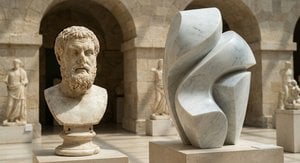
Semke’s artistic style is characterized by a remarkable degree of formal simplification, a deliberate reduction of form to its essential elements. This approach is particularly evident in his portraiture, where he eschews detailed representation in favor of capturing the essence of his subjects – often friends and acquaintances like Ruth Osenberg, wife of Paul Osenberg, with whom he maintained a close bond during his time in Lisbon. His portraits aren’t celebrations of beauty; they are studies in stillness, conveying a sense of contained emotion through carefully sculpted planes and subtly defined features. The terracotta medium itself – chosen for its earthy tones and the inherent qualities of pit-firing – contributes significantly to this effect, lending a tactile quality that invites contemplation. Early works like “Portrait of R. O.” demonstrate his commitment to renewing sculptural practice by drawing inspiration from late 19th-century traditions while forging a distinctly modern approach.
Ceramics and Architectural Contributions
Semke’s artistic output extended beyond sculpture, encompassing ceramics and significant architectural commissions. His 1947 exhibition at the Sni Gallery in Lisbon showcased his mastery of ceramic form, utilizing red clay and pit-firing techniques to create pieces that were both sculptural and functional. Beyond these exhibitions, Semke's influence can be seen in the design of various public spaces – from monuments commemorating fallen soldiers to the serene gardens of the Gulbenkian Foundation. His work for the Ritz Hotel in Lisbon, particularly the intricate detailing and subtle interplay of light and shadow, exemplifies his ability to infuse everyday objects with a sense of artistic dignity.
A Portuguese Voice: Influences and Legacy
Semke’s artistic journey was deeply intertwined with the evolving cultural landscape of Portugal. While he initially drew inspiration from international references, particularly those of the late 19th century, his work gradually developed a distinctly Portuguese character, reflecting the country's unique history, traditions, and spirit. His collaboration with prominent architects during the first half of the 20th century cemented his position as a key figure in shaping the architectural identity of Lisbon. The period following World War II saw him continue to refine his style, exploring themes of memory, loss, and the passage of time. His work is now housed in museums across Portugal, including the Museu do Chiado in Lisbon, ensuring that his contributions to Portuguese art are recognized and appreciated for generations to come.
Beyond the Surface: Semke’s Enduring Significance
Heinrich Semke's impact extends beyond the purely aesthetic; he is considered one of Portugal’s most demanding perfectionists within the architectural field, active between 1941 and 1981. His work serves as a poignant reminder that true artistry lies not in grand gestures or overt displays of skill, but rather in the quiet contemplation of form, light, and shadow – qualities that define Semke’s enduring legacy as a sculptor who captured the essence of his time and place.