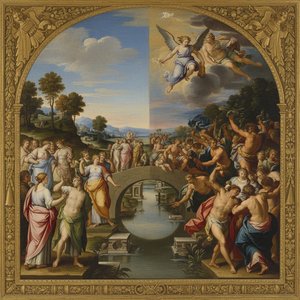
Giacomo Cavedone (1577–1660): The Venetian Soul of Bolognese Baroque
Giacomo Cavedone, born in Sassuolo near Modena in 1577, stands as a pivotal figure within the Bolognese Baroque school—a movement characterized by its dramatic contrasts of light and shadow, opulent ornamentation, and profound spiritual contemplation. His artistic journey unfolded against the backdrop of a turbulent era, marked by religious fervor and intellectual upheaval, yet Cavedone’s distinctive style cemented his place among the most celebrated painters of his time. Unlike many of his contemporaries who gravitated towards Rome's papal patronage, Cavedone remained firmly rooted in Bologna, fostering a unique blend of Venetian artistic sensibilities with Bolognese tradition—a fusion that profoundly shaped his oeuvre and ensured its enduring legacy.- Early Life & Training: Born into a family of artists, Cavedone’s formative years were spent honing his craft under the tutelage of Bernardino Baldi and Annibale Carracci – masters who epitomized the Carracci style—a style defined by meticulous anatomical accuracy combined with expressive dynamism. This rigorous training instilled in him an unwavering commitment to classical ideals and a masterful command of technique, elements that would permeate throughout his artistic career.
- Roman Apprenticeship & Influences: Recognizing the importance of exposure to Rome’s artistic milieu, Cavedone embarked on a crucial pilgrimage in 1609, immersing himself in Guido Reni's studio—a formative experience that solidified his understanding of Mannerist aesthetics and foreshadowed the stylistic innovations he would later champion. The influence of Caravaggio’s dramatic chiaroscuro technique is palpable in several of his early works, demonstrating Cavedone’s willingness to embrace groundbreaking approaches to artistic representation.
- Venetian Period & Artistic Flourishing: From 1612 to 1613, Cavedone resided in Venice—a city renowned for its vibrant artistic culture and patronage—where he collaborated closely with Ludovico Carracci during the latter’s final years. This association fostered a dialogue between Bolognese and Venetian styles, resulting in paintings imbued with Venetian luminosity and color palettes that mirrored the splendor of Titian's masterpieces.
- The Accademia degli Incamminati & Artistic Leadership: Following Ludovico Carracci’s death in 1619, Cavedone ascended to the role of *Caposindaco* of the Accademia degli Incamminati—a prestigious institution dedicated to artistic scholarship and innovation. This position afforded him considerable influence within Bolognese intellectual circles and propelled him to spearhead ambitious projects aimed at elevating Bolognese art and culture.
- Major Works & Legacy: Cavedone’s artistic output encompasses a remarkable range of genres, including altarpieces, frescoes, portraits, and mythological scenes—all characterized by their masterful execution and profound emotional depth. His magnum opus—the large altar painting in the Pinacoteca Nazionale di Bologna depicting *The Virgin and Child with Saints Petronio and Alo*—stands as an exemplar of Bolognese Baroque artistry, demonstrating Cavedone’s unparalleled ability to convey spiritual grandeur through luminous color palettes and dynamic compositions. Furthermore, his influence extended beyond his own lifetime, shaping the artistic sensibilities of subsequent generations of Bolognese painters and securing his enduring place in art history.