George Paul Chalmers: Capturing the Spirit of Angus
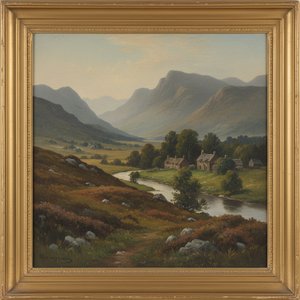
George Paul Chalmers (1833 – 20 February 1878) emerged as a prominent Scottish painter during the Victorian era, establishing himself as a masterful interpreter of landscapes and portraits alike. Often referred to as “The Angus Rembrandt,” Chalmers gained renown for his ability to convey profound emotion through meticulously rendered depictions of the Scottish Highlands—particularly Montrose and its surrounding environs—and for producing strikingly realistic portraits that captured the essence of their subjects.
Early Life and Artistic Training
Born in Montrose, Scotland, Chalmers’s upbringing instilled within him a deep connection to the rugged beauty of Angus. His father, a captain of a coastal vessel, fostered an appreciation for seafaring adventure alongside artistic pursuits. Recognizing his talent early on, Chalmers commenced his formal artistic education at the Trustees Academy in Edinburgh under Robert Scott Lauder, where he honed his skills and developed a distinctive style characterized by dramatic lighting and careful observation. Lauder’s influence championed academic realism—a technique that would become central to Chalmers's oeuvre.
A Landscape Visionary: The Highlands Revisited
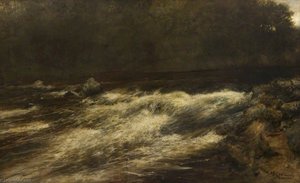
Chalmers’s artistic legacy rests primarily upon his breathtaking landscapes of Angus and beyond. He possessed an unparalleled sensitivity to capturing the atmospheric conditions prevalent in Scotland, skillfully employing chiaroscuro – the interplay of light and shadow – to imbue his canvases with palpable emotion. His paintings aren't merely representations of scenery; they are immersive experiences that transport viewers into the heart of the Highlands. Consider “Mrs May Torrie,” a portrait commissioned by Mrs Torrie herself—a testament to Chalmers’s ability to convey dignity and grace through meticulous detail and compositional balance. The painting exemplifies Victorian art’s commitment to portraying subjects with psychological depth.
Portraiture: Revealing Character Through Form
Beyond landscapes, Chalmers excelled as a portrait painter, collaborating extensively with fellow artists like Jozef Israëls and Hugh Cameron. His portraits were distinguished by their unflinching realism—a hallmark of the academic tradition—and his ability to capture not only physical likeness but also inner character. Collaborations with William McTaggart and John Pettie further solidified Chalmers’s reputation as a respected figure within the Scottish artistic community. Notably, he undertook a portrait commission from Jozef Israëls, “the most respected Dutch artist of the second half of the nineteenth century,” demonstrating his ambition to engage with international artistic trends.
Influence and Legacy
Chalmers's work profoundly impacted the visual culture of Victorian Scotland. His dedication to academic realism—a reaction against Romanticism’s emphasis on imagination—established him as a pivotal voice in shaping artistic sensibilities during his time. Although Chalmers tragically died young at the age of 45, leaving behind an unfinished body of work, his paintings continue to inspire admiration for their technical brilliance and emotive power. He remains remembered as “The Angus Rembrandt,” a title that encapsulates not only his birthplace but also the enduring spirit of his art—a testament to the transformative potential of observation and skillful execution.