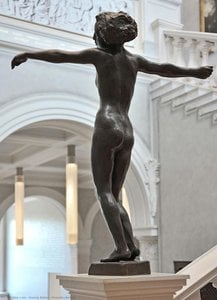
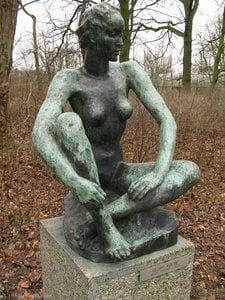
Georg Kolbe: Sculptor of Modern Classical Elegance
Georg Kolbe (1877 – 1947) stands as a pivotal figure in German sculpture of the early twentieth century, embodying a distinctive blend of classical form and modernist sensibility. Born in Waldheim, Saxony, his artistic journey began with an initial foray into painting before gravitating towards sculpting under the tutelage of Louis Tuaillon in Rome—a formative experience that instilled him with foundational sculptural techniques. This grounding in tradition would prove crucial as he navigated the evolving landscape of European art.- Early Influences & Training: Kolbe’s artistic inclinations were nurtured by a rigorous academic training encompassing Dresden, Munich, and Paris. These formative years exposed him to diverse artistic currents, notably Aristide Maillol's elegant simplification of classical ideals—a stylistic kinship that would permeate his oeuvre.
- The Berliner Secession & Artistic Breakthrough: Joining the Berliner Secession in 1905 marked a significant turning point. However, Kolbe’s restless spirit led him to depart from this group in 1913 and embrace the Freie Secession, fostering an environment conducive to experimentation and innovation.
- Collaboration & Artistic Evolution: Kolbe’s partnership with Lilly Reich and Mies van der Rohe for the Barcelona Pavilion showcased his versatility, placing “Morgen” (“Morning”)—a serene sculpture featuring a basin of water—within an architectural context that heightened its aesthetic impact.
- Political Engagement & The Degenerate Art Debate: As president of the Deutscher Künstlerbund, Kolbe championed artists deemed "degenerate" by the Nazi regime. This stance reflects his unwavering belief in artistic freedom and underscores his moral convictions during a turbulent period.
- Legacy & Recognition: Kolbe's participation in Großdeutsche Kunstausstellung from 1937 to 1944 solidified his position as a leading sculptor of the era. His “Verkündigung” (“Proclamation”), commissioned for the German pavilion at Barcelona, became a focal point of artistic discourse and exemplifies his bold stylistic choices.
질의응답
Georg Kolbe의 연도별 활동 기록이 있나요?
Georg Kolbe의 예술적 여정은 연대기 페이지에서 시기별로 펼쳐집니다. 이곳에서는 작가의 활동 시기를 장(chapter)으로 나누어 작품들을 연대순 타임라인 형태로 한눈에 확인할 수 있습니다.
Georg Kolbe의 작품 중 몇 점을 둘러보실 수 있나요?
모든 작품 보기 페이지에서 Georg Kolbe의 작품 작품 9점점을 만나보실 수 있습니다.
Georg Kolbe 작가의 작품을 감상할 수 있는 가상 박물관에 방문할 수 있나요?
가상 방문이 가능합니다: Georg Kolbe의 3D 뮤지엄 페이지에서 작가의 작품들을 3D 갤러리를 통해 만나보실 수 있습니다.