

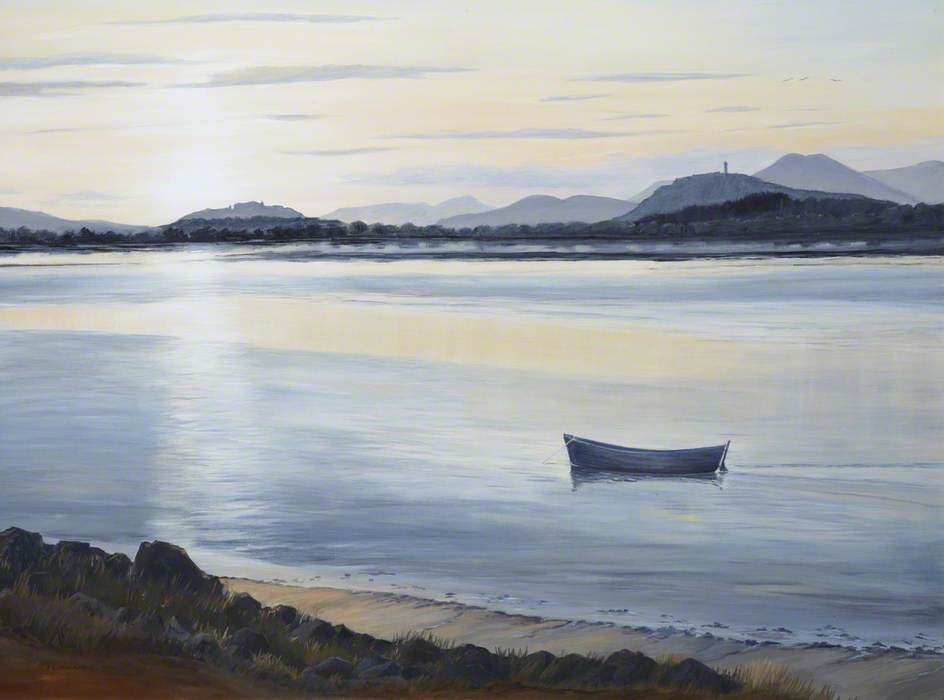
Dunfermline Abbey, North Park (1992)은(는) Frieda E Marshall의 가장 유명한 작품으로, Kincardinshire의 Scottish Police College에 소장되어 있습니다. Stirling from River Forth와 Dumbarton Rock는 세계적으로 가장 잘 알려진 다음 두 작품입니다. 우리 카탈로그에 수록된 Frieda E Marshall의 작품 6점 중, 컬렉터와 미술관 관람객들이 가장 많이 찾는 6점을 선정하여 제작 연도, 소장 미술관 및 작품에 담긴 이야기와 함께 소개합니다.
각 작품의 검색, 방문 및 주문 수를 결합한 인기 점수를 기준으로 순위를 매깁니다. 11월 2026 업데이트됨.



이 페이지에 있는 작품을 가장 많이 소장하고 있는 1개의 미술관
| 소장 미술관 | 도시 | Frieda E Marshall의 작품 | 이 목록의 작품들 |
|---|---|---|---|
 Scottish Police College |
Kincardinshire | 6 | Dunfermline Abbey, North Park, Stirling from River Forth, Dumbarton Rock |
이 페이지에 있는 모든 Frieda E Marshall의 명작은 1992년에 제작되었습니다. 유명한 순서대로 소개합니다.

Dunfermline Abbey, North Park (1992), Scottish Police College, Kincardinshire. 다음은 Stirling from River Forth와(과) Dumbarton Rock입니다.
Frieda E Marshall의 작품 6점이 카탈로그에 등록되어 있습니다.
대부분의 작품은 Scottish Police College (Kincardinshire)에 소장되어 있습니다. 위 표에 각 박물관 목록이 나열되어 있습니다.
Dunfermline Abbey, North Park, Stirling from River Forth 및 Dumbarton Rock은(는) Scottish Police College, Kincardinshire이(가) 소장한 이 페이지의 작품 6점 중 일부입니다.
Frieda E Marshall, a name synonymous with the atmospheric beauty of the British Isles, invites viewers into a world where history and nature converge through a delicate lens. Born circa 1950, Marshall has dedicated her artistic journey to capturing the soul of Scotland, particularly its rugged Highlands and storied landmarks. Her early fascination with the landscape was rooted in the majestic presence of sites such as Tulliallan Castle and Inverness Castle, locations that would eventually evolve from mere subjects into recurring motifs within her profound oeuvre. Through her work, the passage of time feels suspended, allowing the viewer to witness the enduring grandeur of a land shaped by both geological force and human heritage.
The mastery of Marshall’s technique lies in her ability to bridge the gap between meticulous realism and emotional resonance. Utilizing a command over both watercolor and oil paints, she employs subtle tonal variations to breathe life into her canvases. Her approach is never one of grand, sweeping gestures that overwhelm the eye; instead, she favors carefully observed perspectives that honor the quiet essence of her subjects. This method allows for a deep immersion into the textures of the Scottish terrain, where the soft light of dawn or the deepening shadows of dusk can be felt as much as they are seen. Her work is characterized by:
To understand the depth of Marshall’s aesthetic, one must look toward the traditions of mid-20th-century British landscape painting. Her artistic sensibilities were profoundly shaped by the legacies of masters such as Constable and Albert Pinkham Ryder. From Constable, she inherited a reverence for capturing the fleeting qualities of light and atmosphere, ensuring that her landscapes are never static but rather pulsing with environmental change. From the more emotive influences like Ryder, she draws a capacity to imbue even the most realistic depictions with a sense of palpable emotion and mystery.
This lineage is evident in her treatment of iconic structures like Dumbarton Rock and Linlithgow Palace. She does not merely document these architectural marvels; she seeks to convey their historical weight. By layering textures and manipulating light, Marshall transforms stone and mortar into vessels of memory, inviting the observer to contemplate the centuries of history embedded within the Scottish landscape. Her work serves as a bridge between the classical tradition of landscape observation and a more modern, emotive interpretation of place.
Over several decades of steady artistic development, Marshall has produced a prolific body of work that celebrates the enduring charm of Scotland. Her paintings, such as the serene Dunfermline Abbey, North Park, demonstrate an unwavering commitment to portraying the peace found within nature's quiet corners. Each piece acts as a window into a world where the historical and the natural are inextricably linked, creating a sense of continuity that resonates with collectors and art enthusiasts alike.
The significance of her contribution to contemporary landscape art lies in her ability to ground the viewer in the physical reality of the world while simultaneously lifting them into a state of contemplation. Through her meticulous attention to detail and her devotion to the subtle shifts of color and light, Frieda E Marshall has created a visual language that honors the past while remaining vibrantly present. Her landscapes remain more than just depictions of scenery; they are immersive experiences of heritage, beauty, and the timeless spirit of the Scottish wilds.