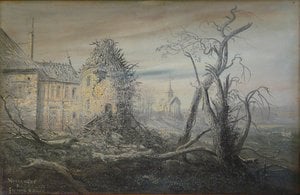
Fernand Combes, 1856 – 1943

Fernand Combes의 가장 유명한 작품 11선

Fernand Combes을(를) 유명하게 만든 작품은 Vieux Paris, Quartier St Victor, La Rue Des Boulangers (1910)입니다. Paris, Carrefour Près Saint Germain Des Prés, des rues de l'Abbaye, Cardinal Lemoine, de Bourbon le Château, et de l'Echaudé St Germain (1910)와 Paris, Port des Orfèvres, l'hiver, avec la Seine gelée (1910)가 컬렉터와 미술관 관람객들의 마음을 그 뒤로 잇고 있습니다. Fernand Combes의 작품 11점 중 가장 많은 사랑을 받은 11점을 소개합니다. 각 작품은 제작 연도, 소장 미술관 및 작품의 특징과 함께 제공됩니다.

각 작품의 검색, 방문 및 주문 수를 결합한 인기 점수를 기준으로 순위를 매깁니다. 11월 2026 업데이트됨. 이 페이지의 모든 명작은 원하시는 크기로 박물관 품질의 수작업 유화 복제화 또는 파인 아트 프린트로 주문하실 수 있습니다.

Fernand Combes의 초상화
Fernand Combes · 1856 – 1943
생몰 연도
1856 – 1943, Les Herbiers
사조
Impressionism
카탈로그 작품 목록
11
가장 유명한
Vieux Paris, Quartier St Victor, La Rue Des Boulangers (1910)

Fernand Combes: 10대 명작

Fernand Combes의 명작 더 보기, 11~11

Fernand Combes의 연도별 대표작

1910년부터 1925년까지, 16년 동안 펼쳐진 Fernand Combes의 예술 세계를 가장 뛰어난 회화 작품들과 함께 연도별로 만나보세요.

  1. 1910
  2. 1910
  3. 1910
  4. 1910
  5. 1913
  6. 1914
  7. 1919
  8. 1919
  9. 1925

Fernand Combes의 걸작: 질의응답

Fernand Combes의 대표작은 무엇인가요?정답 보기

Vieux Paris, Quartier St Victor, La Rue Des Boulangers (1910). 다음은 Paris, Carrefour Près Saint Germain Des Prés, des rues de l'Abbaye, Cardinal Lemoine, de Bourbon le Château, et de l'Echaudé St Germain (1910)와(과) Paris, Port des Orfèvres, l'hiver, avec la Seine gelée (1910)입니다.

Fernand Combes이(가) Vieux Paris, Quartier St Victor, La Rue Des Boulangers을(를) 그릴 당시의 나이는 몇 살이었나요?정답 보기

54세: Vieux Paris, Quartier St Victor, La Rue Des Boulangers은(는) 1910년 작품이며, Fernand Combes은(는) 1856년에 태어났습니다.

Fernand Combes의 가장 위대한 명작 10선은 무엇인가요?정답 보기

Vieux Paris, Quartier St Victor, La Rue Des Boulangers, Paris, Carrefour Près Saint Germain Des Prés, des rues de l'Abbaye, Cardinal Lemoine, de Bourbon le Château, et de l'Echaudé St Germain, Paris, Port des Orfèvres, l'hiver, avec la Seine gelée, Paris, Quartier St Paul, Rue Du Figuier, Scène Biblique (Moïse), Paysanne Sablaise, Honfleur, La Rue Gambetta, Mondement, Pérouges, Rue Des Princes 및 "Si Imprenabilis Pérouges Des Pérouges" Pérouges, Porte d'en Haut. 위 순위는 각 작품의 제작 연도와 소장 박물관을 나타냅니다.

Fernand Combes 작가는 몇 점의 작품을 그렸나요?정답 보기

Fernand Combes의 작품 11점을 1910년부터 1925년 사이의 연대로 분류하여 목록에 담았습니다.

Fernand Combes이(가) 걸작을 그린 시기는 언제인가요?정답 보기

1910 기간 동안: 이 페이지의 총 11점의 작품 중 4점이 해당 시기의 작품이며, 그중 Vieux Paris, Quartier St Victor, La Rue Des Boulangers점이 포함되어 있습니다.

Fernand Combes의 대표작 중 첫 번째와 마지막 작품은 무엇인가요?정답 보기

이 페이지의 가장 오래된 작품은 Vieux Paris, Quartier St Victor, La Rue Des Boulangers (1910), 가장 최근 작품은 Sospel, Le Pont Vigie (1925)입니다.

Fernand Combes은(는) 어떤 미술 사조에 속해 있나요?정답 보기

이 페이지의 작품들이 보여주듯, Impressionism

Fernand Combes의 명작 복제본을 소장할 수 있나요?정답 보기

네, 이 페이지에 있는 모든 작품은 해당 작품의 상세 페이지에서 원하시는 크기로 박물관 품질의 수작업 유화 복제본 또는 파인 아트 프린트로 주문하실 수 있습니다.

Fernand Combes의 생애

Early Life and Artistic Beginnings

Fernand Combes, born François Georges Fernand Combès in Les Herbiers, France, on August 4th, 1856, emerged from a rural landscape that would subtly yet profoundly shape his artistic vision. While initially pursuing studies at the École des Beaux-Arts in Paris, the rigid academic traditions of the time proved somewhat stifling for the burgeoning artist. Combes wasn’t drawn to grand historical narratives or mythological allegories; instead, he found himself captivated by the ephemeral beauty of everyday life and the shifting moods of nature. This inclination steered him away from direct competition within the Salon system and towards the nascent Impressionist movement, though his connection remained nuanced rather than a full embrace of its tenets. He sought to capture reality not through strict adherence to optical truth, but through an emotional resonance with the scenes before him.

The Parisian Years and Developing Style

Combes’s artistic journey truly blossomed during his time in Paris. The city itself became a primary subject, particularly its intimate corners and bustling street life. Unlike some of his contemporaries who focused on the glamorous boulevards, Combes often depicted quieter moments – winter scenes along the Seine, like Paris, Port des Orfèvres, l'hiver, avec la Seine gelée (1910), revealing a sensitivity to atmospheric conditions and the subtle play of light. These works demonstrate an Impressionistic leaning, characterized by loose brushwork and a focus on capturing fleeting impressions. However, Combes’s palette often retained a more traditional earthiness than the brighter hues favored by Monet or Renoir. He also explored scenes of provincial life, as seen in Honfleur, La Rue Gambetta (1913), showcasing his skill with monochrome drawings and an ability to convey realism and nostalgia.

Beyond Landscapes: Religious Themes and Diverse Subjects

While celebrated for his landscapes and Parisian streetscapes, Combes’s oeuvre extended beyond these familiar subjects. He engaged with religious themes, creating works like Scène Biblique (Moïse), revealing a depth of contemplation and narrative skill. This exploration suggests a broader intellectual curiosity and a willingness to tackle diverse artistic challenges. His versatility is further evidenced by his work in etching, engraving, and drawing, demonstrating a mastery of various techniques and a commitment to exploring different modes of visual expression. Combes wasn’t confined to a single style or subject matter; he possessed an adaptable talent that allowed him to navigate the complexities of the art world with quiet confidence.

Legacy and Historical Significance

Fernand Combes passed away in 1943, leaving behind a body of work that, while not as widely recognized as some of his Impressionist peers, offers a valuable insight into the artistic currents of late 19th and early 20th century France. He occupies an interesting position – a painter influenced by Impressionism but not wholly defined by it. His works provide a bridge between traditional academic painting and the more radical experiments of the avant-garde. Combes’s contributions lie in his ability to capture the essence of a place and moment with sensitivity and skill, imbuing his scenes with an emotional depth that resonates even today.
  • Key Characteristics: Impressionistic landscapes, Parisian street scenes, religious works, versatile technique (painting, etching, drawing).
  • Influences: École des Beaux-Arts training, Impressionist movement.
  • Major Achievements: Capturing the atmosphere of Paris and provincial France; exploring diverse subjects with skill and sensitivity.
His art continues to be appreciated for its quiet beauty, technical proficiency, and unique perspective on a pivotal era in French painting.