The Spirit of the American West: The Artistry of Carl Kauba
In the vast, sun-drenched expanses of the American frontier, where the horizon meets the rugged majesty of the mountains and the untamed spirit of the plains, the works of Carl Kauba resonate with a profound and enduring vitality. An artist whose brush captured the very heartbeat of the West, Kauba did not merely document landscapes; he breathed life into the legends of the frontier. His oeuvre serves as a window into a bygone era, presenting a world where the grit of the cowboy, the dignity of Native American tribes, and the raw power of North American wildlife exist in a delicate, dramatic tension. Through his masterful command of light and movement, Kauba transformed historical archetypes into living, breathing protagonists of an epic American saga.
The essence of Kauba’s greatness lies in his ability to balance meticulous realism with an evocative, almost cinematic sense of drama. His compositions are often characterized by a dynamic energy that pulls the viewer directly into the scene—whether it be the sudden, thundering charge of a buffalo or the quiet, contemplative stillness of a lone rider at dusk. He possessed a rare talent for capturing the textures of the frontier: the coarse hair of a mustang, the weathered leather of a saddle, and the shifting dust of a prairie storm. This attention to detail was never purely academic; it served a higher purpose of storytelling, grounding his more romanticized elements in a tangible, visceral reality that commands respect and evokes deep nostalgia.
A Legacy of Motion and Majesty
Throughout his career, Kauba’s subject matter remained deeply rooted in the iconography of Western Americana. His paintings and sculptures often explore themes of survival, conquest, and the symbiotic relationship between man and nature. To wander through his collection is to encounter a diverse cast of characters and creatures that define the American mythos:
- The Cowboy: Depicted not as mere laborers, but as symbols of resilience and independence, navigating the complexities of a changing world.
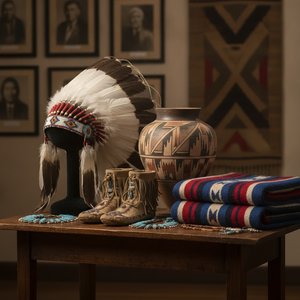
- Native American Heritage: Rendered with a profound respect for tradition and dignity, capturing the spiritual connection to the land.
- Wildlife in Motion: From the powerful surge of a charging buffalo to the subtle grace of desert fauna, Kauba captured the untamed essence of the wilderness.
- Frontier Landscapes: The setting itself acts as a character, with sweeping vistas and dramatic skies that frame the human drama unfolding below.
His influence extends beyond the canvas into the realm of three-dimensional form, where his bronze sculptures carry the same rhythmic intensity found in his paintings. In these works, the weight and permanence of metal are used to freeze moments of extreme tension, allowing the viewer to appreciate the anatomical precision and muscular energy that Kauba so admired. His ability to translate the fleeting motion of a galloping horse into the enduring stillness of bronze remains one of his most significant technical achievements.
Historical Significance and Enduring Resonance
Carl Kauba occupies a unique position in the pantheon of Western art. While many of his contemporaries focused on purely topographical or documentary styles, Kauba embraced a more emotive approach that bridged the gap between historical record and mythic storytelling. He understood that the American West was as much a state of mind as it was a geographical location. By infusing his work with a sense of symbolism and atmosphere, he ensured that his depictions of the frontier would transcend their specific historical moment to become universal symbols of freedom and adventure.
Today, his works continue to captivate collectors and art historians alike, serving as vital touchstones for anyone seeking to understand the visual language of the American West. His legacy is found in every brushstroke that captures a sunset over the canyon and every bronze curve that suggests the strength of a wild stallion. In an increasingly modernized world, Kauba’s art remains a powerful reminder of the raw, unyielding beauty of the natural world and the indomitable spirit of those who once called the frontier their home.