Early Life and Formation in Lombardy
Bernardino Zenale, born around 1460 in the bustling town of Treviglio, Italy, emerged as a significant figure during the High Renaissance. His artistic journey began within the vibrant cultural landscape of Lombardy, a region steeped in tradition yet increasingly open to the innovative currents sweeping across Italy. In 1485, Zenale’s career took its first major stride when he collaborated with Bernardino Butinone on the grand polyptych for the church of St. Martin in his native Treviglio. This early partnership proved formative, establishing a working relationship that would define much of Zenale's professional life. Both artists are believed to have received their initial training under the guidance of Vincenzo Civerchio, whose influence laid the groundwork for their developing styles. The collaborative spirit prevalent in Lombard art during this period fostered a shared aesthetic and technical approach among its practitioners, and Zenale was no exception.
Collaboration with Butinone and Early Commissions
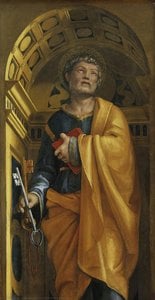
The partnership between Zenale and Butinone extended beyond the St. Martin polyptych, encompassing numerous commissions throughout the late 15th and early 16th centuries. Their joint efforts focused primarily on religious subjects, adorning churches across Milan and its surrounding areas. The Grifi Chapel in San Pietro in Gessate stands as a testament to their combined skill, showcasing intricate frescoes that reflect the devotional fervor of the era. Zenale’s membership in Milan's Scuola di San Luca painters' guild by 1481 further solidified his position within the artistic community and ensured access to important patronage networks. These early works reveal a commitment to detailed realism, vibrant color palettes, and narrative clarity—characteristics that would become hallmarks of Zenale’s mature style.
The Influence of Leonardo da Vinci
Around 1500, a subtle yet profound shift began to emerge in Zenale's artistic approach. While initially rooted in the Ferrarese-expressionist tradition championed by Butinone, Zenale increasingly gravitated towards the innovations of Leonardo da Vinci. This influence is particularly evident in the polyptych created for the Confraternity of the Immaculate Conception in Cantù (1502). The work demonstrates a newfound emphasis on sfumato—the delicate blurring of lines and contours to create a sense of atmospheric depth—and a more nuanced understanding of human anatomy. This transition wasn’t abrupt; rather, it represented a gradual absorption of Leonardo's techniques and philosophical ideas about art and representation.
Architectural Pursuits and Later Life
As Zenale matured, his interests expanded beyond painting to encompass architecture. By 1513, he was actively engaged in architectural projects, culminating in his appointment as architect of the Milan Cathedral in 1519. Three years later, he ascended to the position of chief architect, succeeding Giovanni Antonio Amadeo. This role demanded not only technical expertise but also a deep understanding of structural engineering and artistic design. Zenale’s foray into architecture reflects a holistic approach to art—a belief that painting, sculpture, and architecture were interconnected disciplines essential for creating harmonious and spiritually uplifting spaces. He even penned a treatise on perspective, further demonstrating his intellectual curiosity and commitment to the theoretical underpinnings of his craft. Zenale continued working until his death in 1526, leaving behind a legacy as one of Lombardy’s most accomplished Renaissance artists.
Legacy and Historical Significance
Bernardino Zenale's contributions extend beyond the beauty of his individual works. He embodies the collaborative spirit of the Lombard Renaissance, seamlessly blending tradition with innovation. His willingness to embrace new techniques—particularly those pioneered by Leonardo da Vinci—demonstrates a commitment to artistic progress. The debates surrounding attributions between Zenale and artists like Bernardino Luini underscore the fluidity of stylistic boundaries during this period and highlight the shared aesthetic concerns within the Milanese art world. Zenale’s work, characterized by its detailed realism, vibrant color, and spiritual depth, continues to captivate audiences today, offering a glimpse into the artistic fervor and intellectual curiosity of the Italian Renaissance. His influence can be seen in the works of subsequent Lombard artists, solidifying his place as a pivotal figure in the region's rich cultural history.