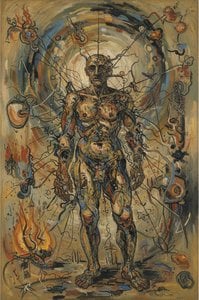
André Normil: A Vibrant Chronicle of Haitian Life
André Normil, born in Port-au-Prince, Haiti, in 1934, and tragically passing away in 2014, remains a pivotal figure in Haitian art. His journey as an artist wasn’t one of formal training but rather a deeply rooted observation of daily life, infused with a distinctive sense of humor and a masterful command of color. Normil's work offers a captivating window into the rhythms and realities of Port-au-Prince, capturing scenes both familiar and extraordinary with remarkable detail and warmth. Initially categorized as a “humorous painter,” his legacy extends far beyond simple amusement; he’s recognized now as a true master of Haitian painting, deeply connected to the nation's cultural fabric.Early Years and Artistic Beginnings
Normil’s artistic path began not in a studio but on the vibrant streets of Port-au-Prince. Before joining the esteemed Centre d’Art in 1951, he honed his skills decorating *tap-taps* – the colorful shared taxis that are an integral part of Haitian transportation. This immersive experience provided invaluable insight into the lives and personalities of the people he would later depict. The Centre d'Art, a hub for Haitian art development, proved to be a crucial stepping stone, exposing him to established artists and fostering his artistic growth. In 1956, a pivotal introduction by Jacques-Enguerrand Gourgue, a gallery owner, led Normil to Issa El-Saieh’s Galerie Issa, where he worked exclusively until the gallery's founder’s death in 2005, establishing a stable and respected career. This association with a prominent gallery ensured his work gained visibility both domestically and internationally.Subject Matter and Artistic Style
Normil’s paintings are instantly recognizable for their bustling compositions and vibrant palettes. He didn’t shy away from depicting the everyday – schoolchildren navigating crowded streets, street vendors hawking their wares, lively cockfights, and the energetic performances of *rara* musicians. These scenes weren't merely sketched; they were meticulously rendered with a keen eye for detail, capturing the nuances of Haitian culture. His subjects often included symbolic elements drawn from history, country weddings, and biblical narratives, adding layers of meaning to his work. A defining characteristic is the presence of three dots arranged in a triangular pattern near his signature – a subtle nod to his Freemason affiliation, reflecting a personal philosophy interwoven into his art. Normil’s compositions are elaborate, teeming with characters engaged in various activities, all bathed in a rich and often dazzling array of colors. He skillfully balanced realism with an element of playful exaggeration, creating works that are both deeply rooted in Haitian reality and imbued with a distinctive charm.Influences and Historical Context
Normil’s artistic vision was shaped by the vibrant cultural landscape of Haiti. The country's rich history, its unique blend of African, European, and indigenous influences, and its strong oral traditions all contributed to his creative spirit. His work reflects a deep appreciation for Haitian folklore, music, and religious practices. He drew inspiration from the *rara* tradition, a complex and deeply rooted musical and dance form that plays a central role in Haitian culture. The influence of Bigaud, another prominent Haitian painter known for depicting scenes of daily life with humor, is often noted, highlighting Normil’s place within a lineage of artists dedicated to capturing the essence of Haitian society. His paintings served not only as artistic expressions but also as a form of cultural documentation, preserving and celebrating the traditions of his homeland.Legacy and Recognition
André Normil's work has been exhibited extensively throughout the Caribbean, Latin America, the United States, and Europe, solidifying his reputation as one of Haiti’s most important artists. His paintings are held in prestigious collections, including those at the Haitian Art Museum of Saint Pierre College in Port-au-Prince and the Milwaukee Art Museum. Beyond the art world, Normil's work has been utilized for tourism promotion by the Haitian Ministry of Tourism, demonstrating its cultural significance and appeal. His legacy extends beyond individual artworks; he represents a vital connection between Haiti’s past, present, and future, offering a powerful visual narrative of a nation’s identity and spirit. He is remembered as a master who captured the heart and soul of Haiti through his vibrant brushstrokes and insightful observations.질의응답
André Normil의 작품을 매체별로 찾아볼 수 있나요?
André Normil의 작품은 작가 페이지인 모든 매체에서 매체별로 둘러보실 수 있습니다.
특정 팔레트의 André Normil 작품은 어떻게 찾을 수 있나요?
컬러 팔레트별 페이지에서는 André Normil의 작품들을 색상 팔레트별로 모아볼 수 있습니다.
André Normil의 작품을 색상별로 모아둔 곳은 어디인가요?
André Normil의 작품은 작가의 색상별 인덱스 페이지에서 색상별로 살펴보실 수 있습니다.