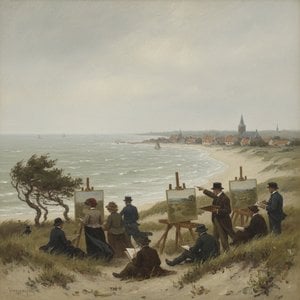
Theophile Emile Achille De Bock의 Landscape, 거장 화가가 손으로 직접 그린 유화 복제화
미리보기 AR로 미리보기 프린트 판매로 전환 디지털 이미지로 전환 공유하기
상세 정보 가이드 보기 즐겨찾기에 추가 다운로드 유사 작품 더 보기 X-레이 슬라이드 쇼 보기 질의응답 통계 정보

Landscape 수작업으로 그린 유화 복제화

규격
29.0 x 27.0 cm

Explore Théophile de Bock’s ‘Landscape,’ a moody Hague School masterpiece. Capturing Dutch nature with visible brushstrokes & atmospheric light. A tranquil, evocative piece for art lovers.

Théophile de Bock (1851-1904) was a Dutch Hague School painter known for his atmospheric, tonalist landscapes & scenes of the Dutch countryside. Influenced by Corot & Maris, he captured the beauty of nature with a unique, often gloomy style. Van Gogh

핸드메이드 유화 복제화

작가가 직접 캔버스에 손으로 그린 유화 작품으로, 원하는 크기와 액자로 맞춤 제작해 드립니다. ( 프린트 판매로 전환 디지털 이미지로 전환)

표준 규격
맞춤형
CM
INCH

작품의 원본 비율을 그대로 유지하는 프리셋 사이즈 중에서 선택해 보세요.

가로 너비
세로 길이

액자나 벽면 크기에 맞춰 필요한 가로와 세로 길이를 입력해 주세요. 본 작품은 수작업으로 제작되므로, 요청하신 비율에 따라 작가가 그림의 가장자리를 조금 더 넓게 그리거나 일부를 조정하여 작업할 수 있습니다. 작업 시작 전, 최종 확인을 위해 디지털 목업 이미지를 보내드립니다. 이 페이지에 표시된 이미지는 실제 결과물과 다를 수 있으며, 오직 목업 이미지만이 정확한 결과물을 보여줍니다.

변경 가능한 예시: 고객님의 사진으로 얼굴 교체, 반려동물 추가(예: 고양이를 강아지로 변경), 배경에 숨겨진 메시지 삽입, 배경 풍경 또는 요소 변경 등
주문 완료 후 WahooArt.com 팀에서 상세 안내를 위해 고객님께 이메일을 보내드리며, 미리보기 시안을 함께 제공해 드립니다.

전 세계 배송()은 표준 5주 대신 3~4주 내에 완료됩니다. (4 11월). 품질에는 어떠한 타협도 하지 않습니다.

전 세계 무료 특급 배송
프리미엄 린넨 캔버스
배송 전 과정 보험 적용
관세 및 수입세 환급 보장 서비스
원본과 동일한 색상 구현 보장
100일 이내 반품 정책 (결함 발생 시)
100% 환불 보장
다량 구매 할인 혜택

총 결제 금액

₩ 364138

Landscape

재현 기법

복제본 크기

-

최종 결제 금액

₩ 364138


작가 정보

The Quiet Master of the Dutch Countryside

Théophile Emile Achille de Bock (1851–1904) remains one of the most evocative, if understated, voices of the Hague School. Born in The Hague, Netherlands, De Bock’s early life was far removed from the bohemian studios of the art world; he initially pursued a pragmatic career as a clerk for the Dutch Railway Company. However, an innate passion for drawing and a profound sensitivity to the natural world eventually pulled him away from the ledger books and toward the easel. This transition marked the beginning of a lifelong devotion to capturing the atmospheric soul of the Dutch landscape, a pursuit that would define his legacy.

His artistic journey was shaped by rigorous training under some of the most significant figures of the era. By studying under masters such as J.W. van Borselen, J.H. Weissenbruch, and Jacob Maris, De Bock became deeply immersed in the principles of Tonalism. These mentors taught him to look beyond mere topographical accuracy, encouraging instead a focus on light, moisture, and the subtle gradations of color that define the Low Countries. His association with Willem Maris further enriched his palette, fostering a collaborative spirit that allowed him to refine his ability to translate the heavy, damp air of the Netherlands onto canvas.

A Vision of Atmospheric Tonalism

De Bock’s work is characterized by a distinctive, often somber temperament. While some contemporary critics occasionally dismissed his style as overly subdued or sketch-like, modern admirers recognize this as a deliberate and masterful choice. He possessed an unparalleled ability to evoke the quietude of the Dutch polders, often utilizing a dark, moody palette to create scenes of profound contemplation. His landscapes are rarely about dramatic action; rather, they are studies in stillness, where the interplay of shadow and soft light suggests the fleeting moments of dusk or the heavy presence of an approaching storm.

The influence of the French Barbizon School played a transformative role in his development. During his frequent travels to Paris and the forests of Barbizon in 1880, De Bock encountered the works of Gustave Courbet and Jean-François Millet. This exposure to French Realism deepened his commitment to depicting rural life and natural landscapes with an unvarnished, honest eye. He sought to capture the essence of the earth—the texture of the soil, the weight of the clouds, and the solitary beauty of a farmstead at twilight—blending the Dutch tonalist tradition with a newfound French-inspired realism.

Legacy and Historical Significance

The historical significance of De Bock lies in his unwavering commitment to his artistic vision. Even when faced with pressure to diversify his subject matter, he remained steadfastly dedicated to the pastoral scenes that resonated most deeply with his spirit. This dedication was noted even by Vincent van Gogh, who recognized De Bock’s inherent talent and temperament, though Van Gogh famously attempted to persuade him to explore more dynamic and varied themes. This interaction serves as a testament to the respect De Bock commanded among his peers.

Today, the works of Théophile de Bock are celebrated for their emotional depth and technical mastery of atmosphere. His paintings serve as windows into a vanished era of the Dutch landscape, offering a sense of peace and melancholy that continues to captivate collectors and historians alike. Through his meticulous observation and devotion to the subtle nuances of nature, De Bock secured his place as a vital contributor to the Hague School, leaving behind a body of work that remains as evocative and timeless as the landscapes he so lovingly depicted.

Theophile Emile Achille De Bock

Theophile Emile Achille De Bock

1851 - 1904 , Netherlands

작가 정보 요약

  • Full Name: Théophile Emile Achille de Bock
  • Nationality: Dutch
  • Date Of Birth: 1851
  • Date Of Death: 1904
  • Place Of Birth: The Hague, Netherlands
  • Notable Artworks:
    • Landscape
    • Schaapskooi - October
  • Artistic Movement Or Style: Hague School
  • Artists Who Influenced This Artist:
    • Jacob Maris
    • Corot
    • Johannes Hendrik Weissenbruch
  • Artists Or Movements Influenced By This Artist: ['Vincent van Gogh']