Children - Charles Douglas Richardson
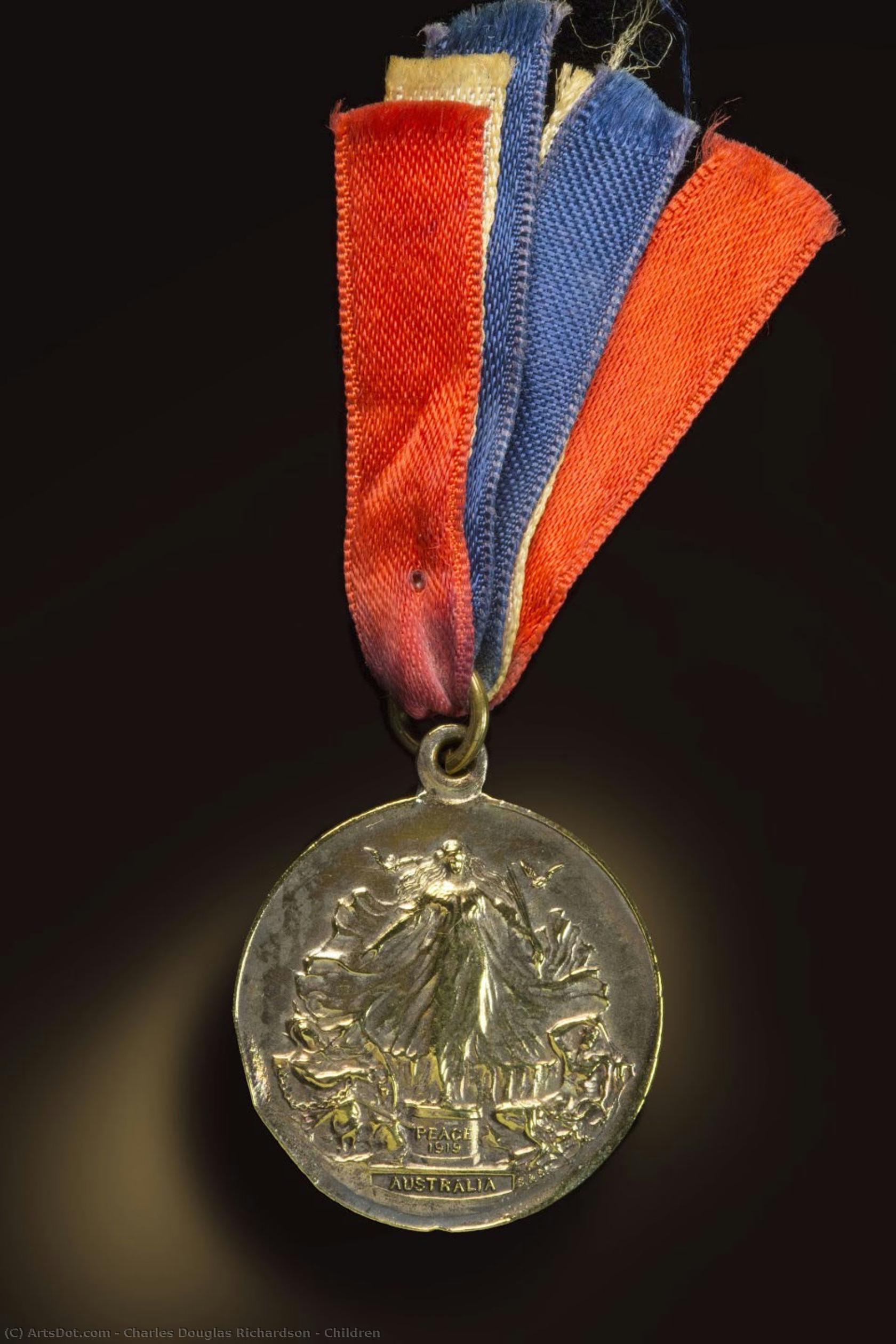
Charles Douglas Richardson (1853–1932), born in Islington, London, was a British sculptor and painter deeply rooted in the Heidelberg School movement—a pivotal force shaping Australian art history. This striking 1919 artwork, titled “Children,” exemplifies Richardson’s signature Impressionistic style, capturing fleeting moments of beauty within the Australian landscape.
- Artist: Charles Douglas Richardson
- Year Created: Unknown
- Medium: Bronze Medal
- Dimensions: 8 x 3 cm
- Location: Private Collection
Richardson’s artistic journey began with a formal education at Scotch College, fostering his innate talent for sketching and observation. He honed his skills further at the Artisans' School of Design in Melbourne and subsequently pursued advanced training at the National Gallery School, establishing connections with fellow Heidelberg School artists like Tom Roberts and Bertram Mackennal.
The 9 by 5 Impression Exhibition (1889) marked a watershed moment for Richardson’s career and solidified his reputation as one of Australia's foremost modernist painters. This exhibition showcased his ability to distill the essence of the Australian bush—the rugged terrain, the vibrant flora, and the interplay of light—into emotionally resonant compositions.
“Children” embodies Richardson’s preoccupation with capturing human emotion and connection within natural surroundings. The central embossed design features a woman standing on a pedestal, holding what appears to be a shield or book – symbols representing protection and knowledge respectively. Above her is a crown signifying royalty, while rays emanating outwards convey hope and aspiration. This meticulous detail reflects Richardson's commitment to portraying the grandeur of nature alongside human dignity.
The medal’s dark background serves as a dramatic counterpoint to the shimmering bronze surface and the bold hues of the ribbon—a deliberate choice intended to heighten visual impact. The frayed edges of the ribbon speak to its history, hinting at years of exposure and conveying a sense of timelessness. Richardson's masterful technique – capturing subtle nuances of light and texture – elevates “Children” beyond mere representation; it invites contemplation on themes of heritage, resilience, and the enduring beauty of the Australian spirit.
Richardson’s legacy extends far beyond his individual artworks. He championed student protests at the National Gallery School and co-founded the Yarra Sculptors' Society, fostering a vibrant artistic community in Melbourne during the late 1880s and 1890s. His influence can be seen in the works of subsequent generations of Australian artists who embraced Impressionism’s expressive power.
A reproduction of “Children” would bring a touch of Heidelberg School elegance to any interior space, offering a captivating glimpse into Richardson's artistic vision and celebrating Australia’s rich cultural heritage.



 미리보기
미리보기
 프린트 구매
 공유하기
공유하기 공유하기
공유하기
 상세 정보
상세 정보

 다운로드
다운로드
 유사 작품
유사 작품 X-레이
X-레이 슬라이드 쇼


 더 보기
더 보기






































 유리 옵션은 110cm 미만 크기에서만 선택 가능합니다.





